
Floral aldehyde parfum: the classic elegance of an iconic family
Twelve years advising customers in-store, and the floral aldehyde family remains the one that sparks the most questions — and the most surprises. Customers who thought it would be "old-fashioned" leave with a Trésor or an Ange ou Démon in hand. Others, who were looking for "something classic", discover that aldehyde is far more than a note: it's an olfactory architecture in its own right.
Born in 1921 with Chanel N°5, this family laid the foundations of a structured, luminous fine perfumery, carried by synthetic molecules that changed the game for all twentieth-century haute couture. Today, it comes in five distinct sub-families, from powdery classics to the most airy of modern aldehydes.
This guide explains it all: composition, history, how to choose, how to wear it, and a selection of eleven references available at Tendance Parfums.
What is a floral aldehyde parfum?
Olfactory definition: the composition of a floral aldehyde parfum
A floral aldehyde parfum combines a structured floral bouquet — typically rose, jasmine, iris, muguet, ylang-ylang — with synthetic aldehyde molecules that radically transform the final result.
Aldehydes play a threefold role in the composition. First, they amplify projection: an infinitesimal quantity is enough to propel the sillage far beyond what the floral bouquet alone could achieve. Second, they bring an effervescent luminosity to the top notes, that sparkling, almost fizzy sensation felt on first inhalation. Finally, they fix the floral materials over time, which explains the remarkable longevity of these parfums.
The result: a sparkling, slightly metallic opening, a silky, dense floral heart note, and a powdery-woody-amber base note that settles on the skin for hours. It is this three-stage progression that gives floral aldehydes their distinctive character — both airy in the top notes and deep in the base note.
The note of jasmine is often at the heart of these compositions, alongside rose and iris, each of which brings its own texture.
Historical origins of the floral aldehyde family
Ernest Beaux, a Russian perfumer working for the house of Chanel, created in 1921 the composition that would change everything. By incorporating aldehydes on a massive scale into a floral bouquet, he signed Chanel N°5 — and with it, the official birth of the floral aldehyde family.
What was new at the time was the scale. Aldehydes had existed in perfumery for a few years, but never at this concentration, never with this level of assertiveness. The result is a fragrance that resembles no natural flower: it is a floral abstraction, luminous, constructed.
The great couture houses embraced the accord in the following decades. Lanvin signed Arpège in 1927, Nina Ricci created L'Air du Temps in 1948, Hermès launched Calèche in 1961, Yves Saint Laurent introduced Rive Gauche in 1971. Each house brought its own variation, but all shared this aldehydic structure, which became the olfactory marker of twentieth-century couture elegance.
Why are floral aldehyde parfums so elegant?
The answer is both chemical and cultural. Chemically, molecules C10, C11 (undecylenic C11) and C12 MNA produce a sparkling, slightly metallic opening that gives an impression of clean, luminous freshness. C10 evokes orange and metal, C11 wax and rose, C12 MNA a very characteristic soapy-violet register. This molecular complexity creates a depth that non-aldehydic florals do not achieve.
Culturally, these parfums carry sixty years of association with French haute couture. When you smell an aldehydic accord, you unconsciously activate a whole imaginary world: the well-dressed woman, the subtle yet present sillage, the timeless elegance that doesn't try too hard to seduce.
That's what I try to explain in-store when a customer hesitates: a floral aldehyde doesn't try to please immediately. It asserts itself over time.
Did you know? Ernest Beaux himself recounted working on several numbered test series while creating Chanel N°5 in 1921. The flacons containing aldehydes C10, C11 and C12 in high concentration are said to have been given to him by mistake — an accidental contamination that is said to have produced the sparkling, luminous effect he was seeking. As the first massive use of a synthetic molecule in fine perfumery, this composition opened up a new era.
The 5 sub-families of floral aldehyde
The floral family aldehyde is not monolithic. Five sub-families with distinct profiles can be identified.
| Name | Olfactory profile | Typical notes | Examples |
|---|---|---|---|
| Classic floral aldehyde | Luminous-powdery-couture | Aldehyde, rose, jasmine, iris, muguet, vetiver | Lancôme Trésor, Nina Ricci L'Air du Temps |
| Modern floral aldehyde | Fresh-luminous-contemporary | Aldehyde, peony, freesia, white musk, cedar | Givenchy Ange ou Démon, Lancôme Miracle |
| Powdery floral aldehyde | Soft-velvety-retro | Aldehyde, iris, heliotrope, violet, powdery amber, sandalwood | Guerlain L'Heure Bleue |
| Woody floral aldehyde | Dry-elegant-structured | Aldehyde, rose, vetiver, cedar, oakmoss, musk | Paco Rabanne Calandre |
| Fruity floral aldehyde | Sparkling-luminous-feminine | Aldehyde, peach, bergamot, rose, jasmine, white musk | Guerlain Mitsouko, Van Cleef & Arpels First |
Classic floral aldehyde
This is the historic heart of the family. The aldehyde accord is assertive, the floral structure dense — rose, jasmine, iris, muguet — and the powdery-woody-vetiver base note gives it a deep foundation. The sillage is ample, couture-like, unmistakable.
Lancôme Trésor, Nina Ricci L'Air du Temps and Cacharel Anaïs Anaïs are the most accessible representatives in our catalogue. Three very different ways of inhabiting the same territory.
Modern floral aldehyde
Here, aldehyde is dosed with greater restraint. The chosen florals — peony, freesia — are fresher, less dense than the classic couture rose. The white musk and cedar base lightens the whole. The sillage remains luminous but no longer asserts itself.
Givenchy Ange ou Démon, Lancôme Miracle and Mugler Alien Goddess illustrate three contemporary ways of using aldehyde: each retains this characteristic aldehydic facet, but in a lighter, more direct register. Useful internal link: our selection by floral family to compare with non-aldehydic florals.
Powdery floral aldehyde
Here, aldehyde meets iris, heliotrope and violet to create something very soft, almost velvety. Powdery amber and sandalwood reinforce this impression of enveloping warmth. This is the sub-family closest to powdery floral, sharing its soft, retro codes.
Guerlain L'Heure Bleue is the absolute reference in this register.
Woody floral aldehyde
Here, aldehyde combines with dry woods — vetiver, cedar, oakmoss — to produce something structured, almost mineral. Rose and jasmine are present but do not dominate: it's the woody structure that gives it character. Paco Rabanne Calandre remains the reference of this sub-family, with an unusually elegant dryness.
Fruity floral aldehyde
Bergamot, peach or hesperidic notes combine with aldehyde to create a luminous, sparkling effervescence. The note of rose remains present, but the fruity facet brings a lightness that makes these compositions more accessible on first approach. Guerlain Mitsouko, Van Cleef & Arpels First and Lancôme Ô de Lancôme represent three different intensities of this profile.
Our selection: the best floral aldehyde parfums for women 2026
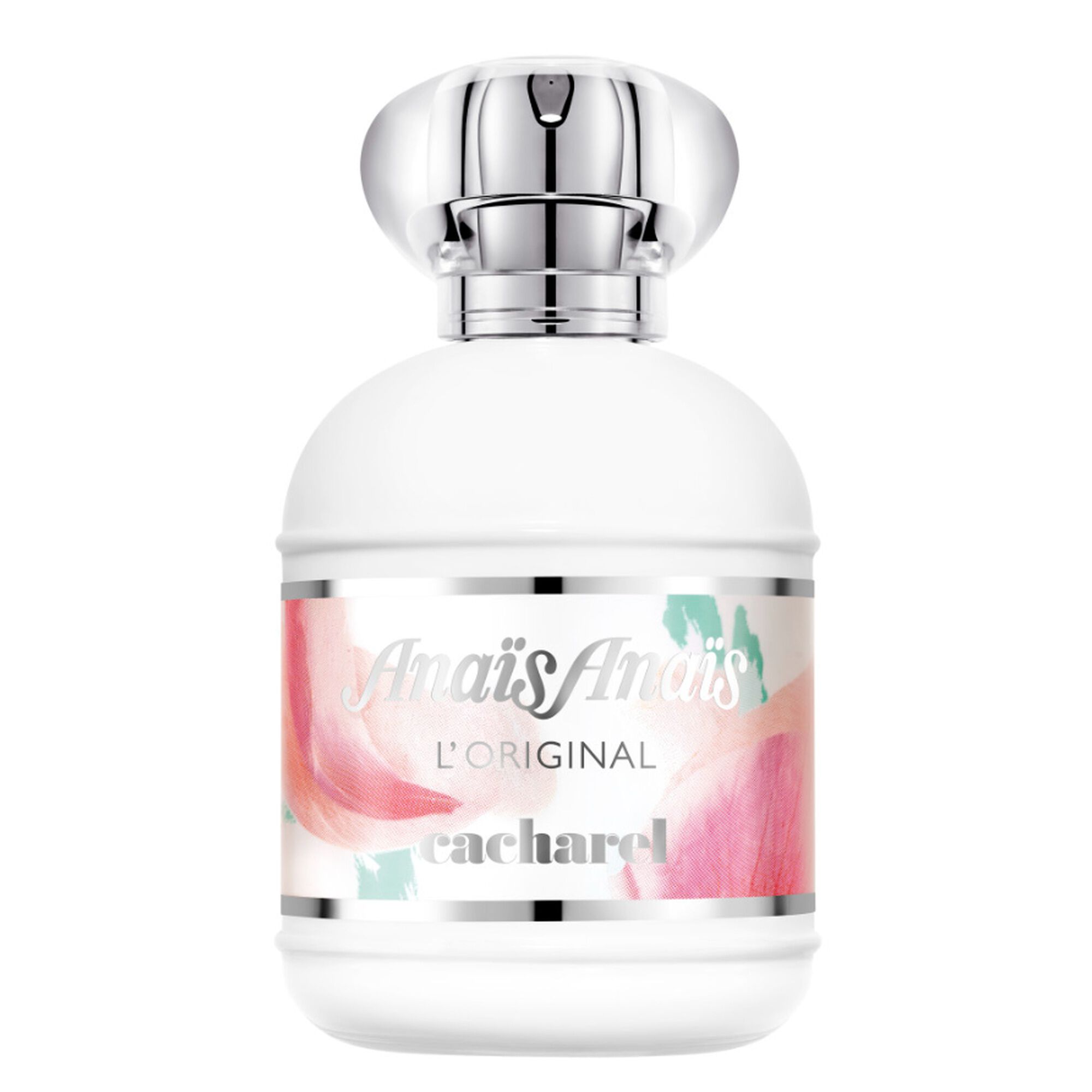
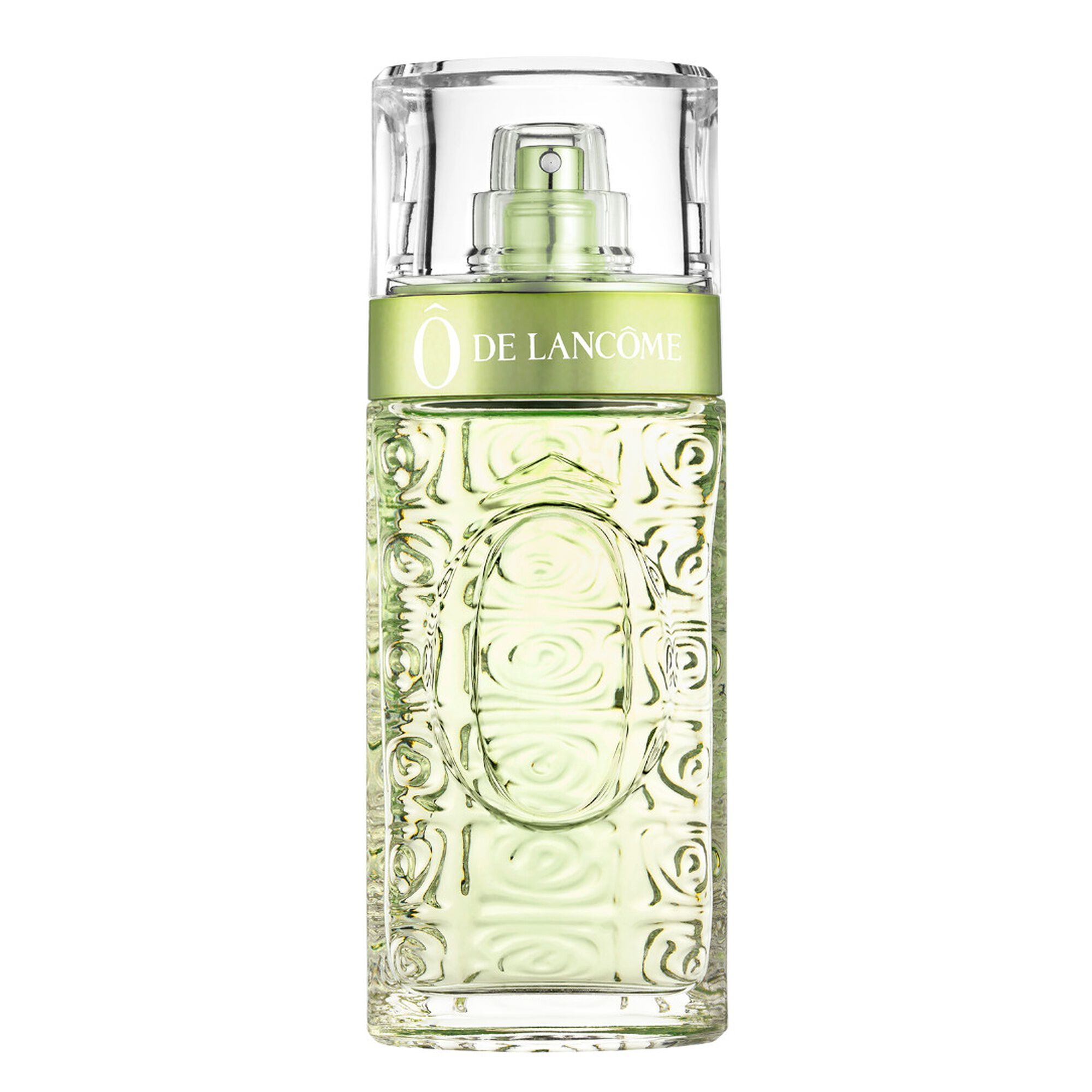
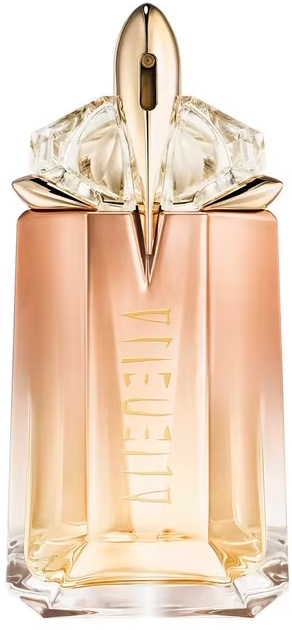
Here are the eleven references I regularly recommend in-store, covering all profiles and budgets. For an even more detailed selection, our floral aldehyde guide for women details each profile with in-depth comparisons.
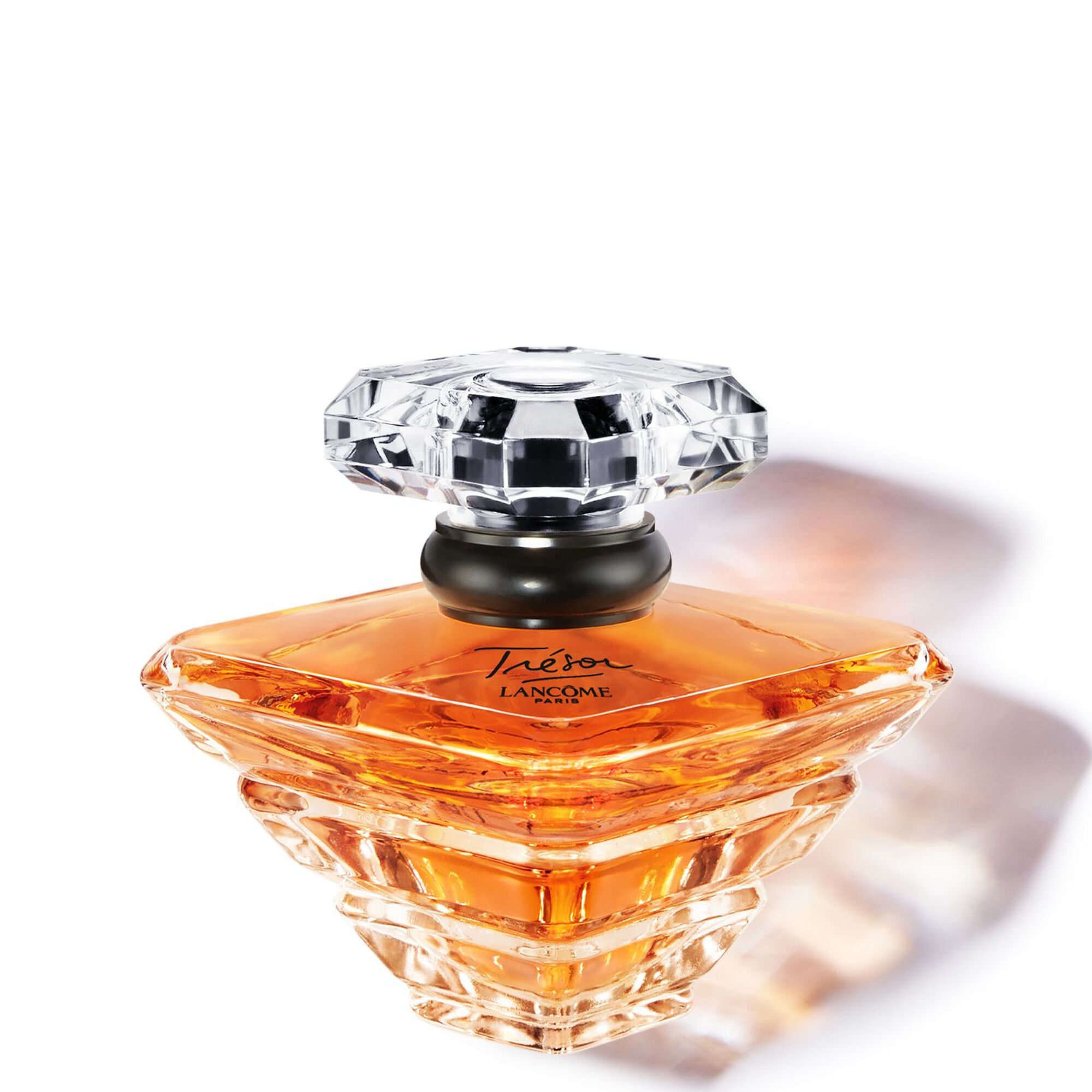
Lancôme Trésor EDP
A Lancôme best-seller since 1990, Trésor is the most accessible entry point into classic floral aldehyde. Rose and iris on a powdery base of heliotrope and amber: a silky, timeless elegance that spans generations without ever seeming dated. For the woman who wants a refined classic without excessive density.
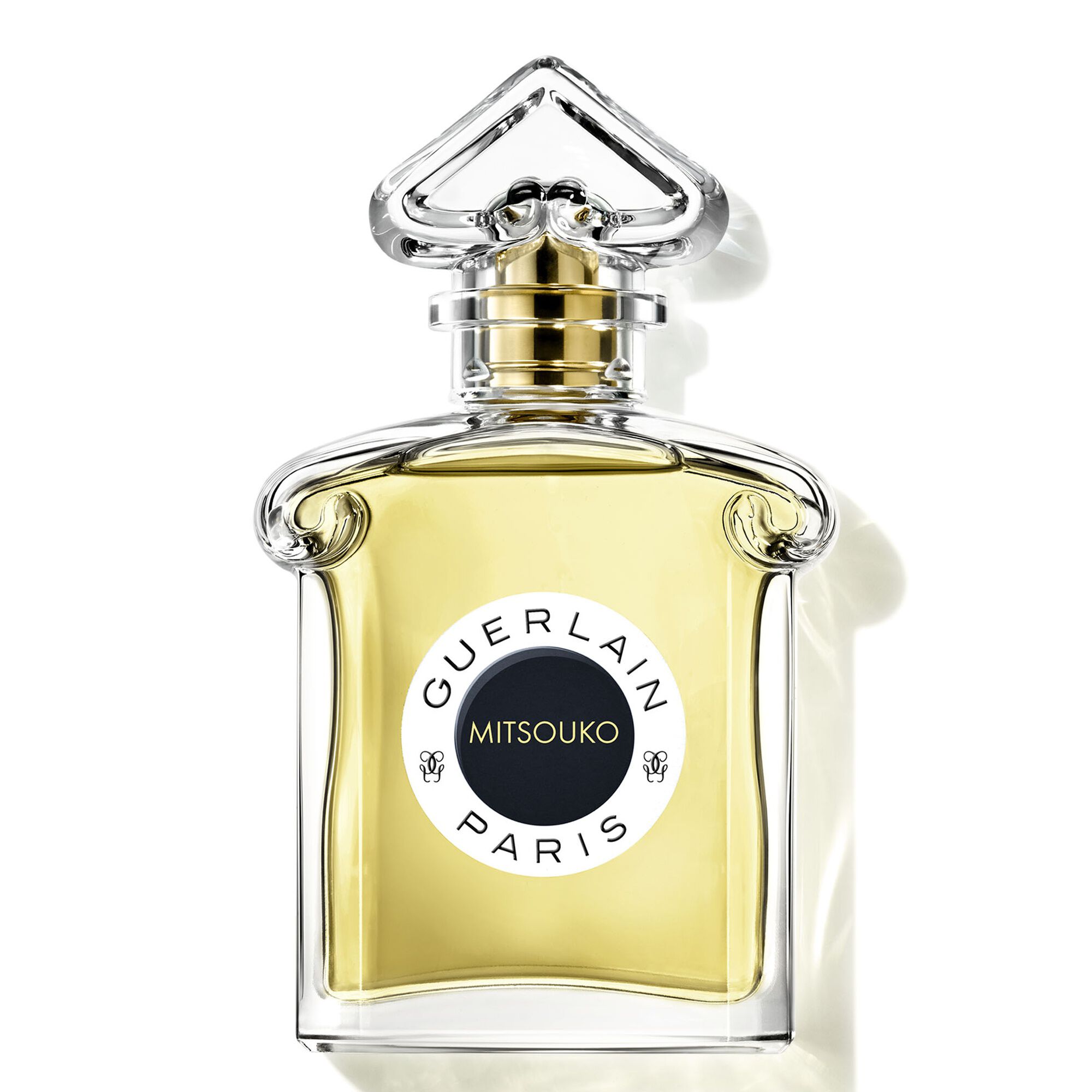
Guerlain Mitsouko EDP
A great Guerlain classic from 1919, Mitsouko is the encyclopaedic reference of fruity floral aldehyde. Velvety peach on a floral chypre base note — oakmoss, vetiver, jasmine — achieves rare complexity. It's the border with the chypre family, and that's precisely what makes it fascinating. For those who want to understand just how far fine perfumery can go.
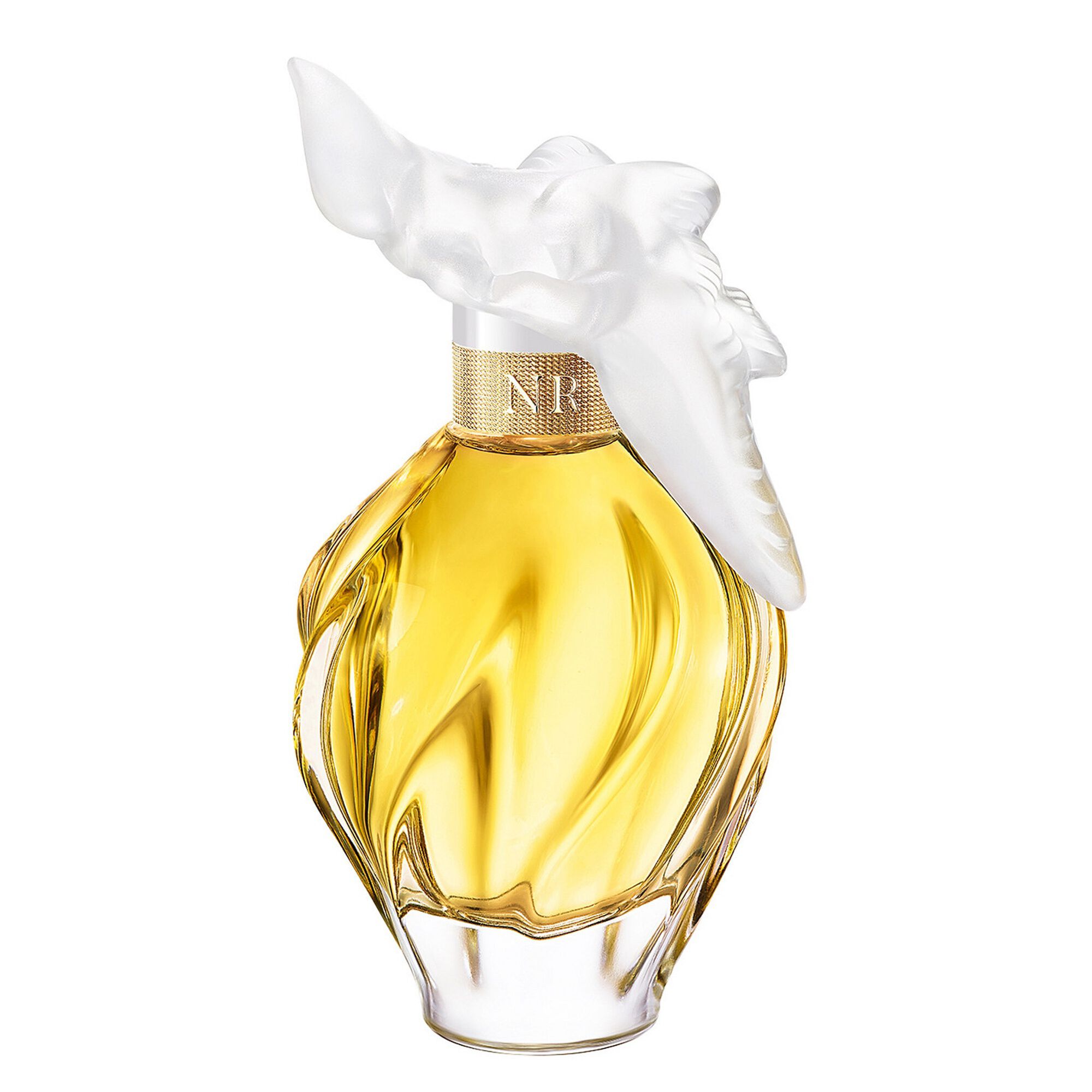
Nina Ricci L'Air du Temps EDT
A 1948 couture classic, with its iconic dove flacon. Sparkling aldehyde in the top notes, rose and carnation in the heart note, soft sandalwood in the base note: an airy lightness that defined post-war French elegance. One of the most refined floral aldehydes in the history of perfumery. For those seeking a classic without heaviness.
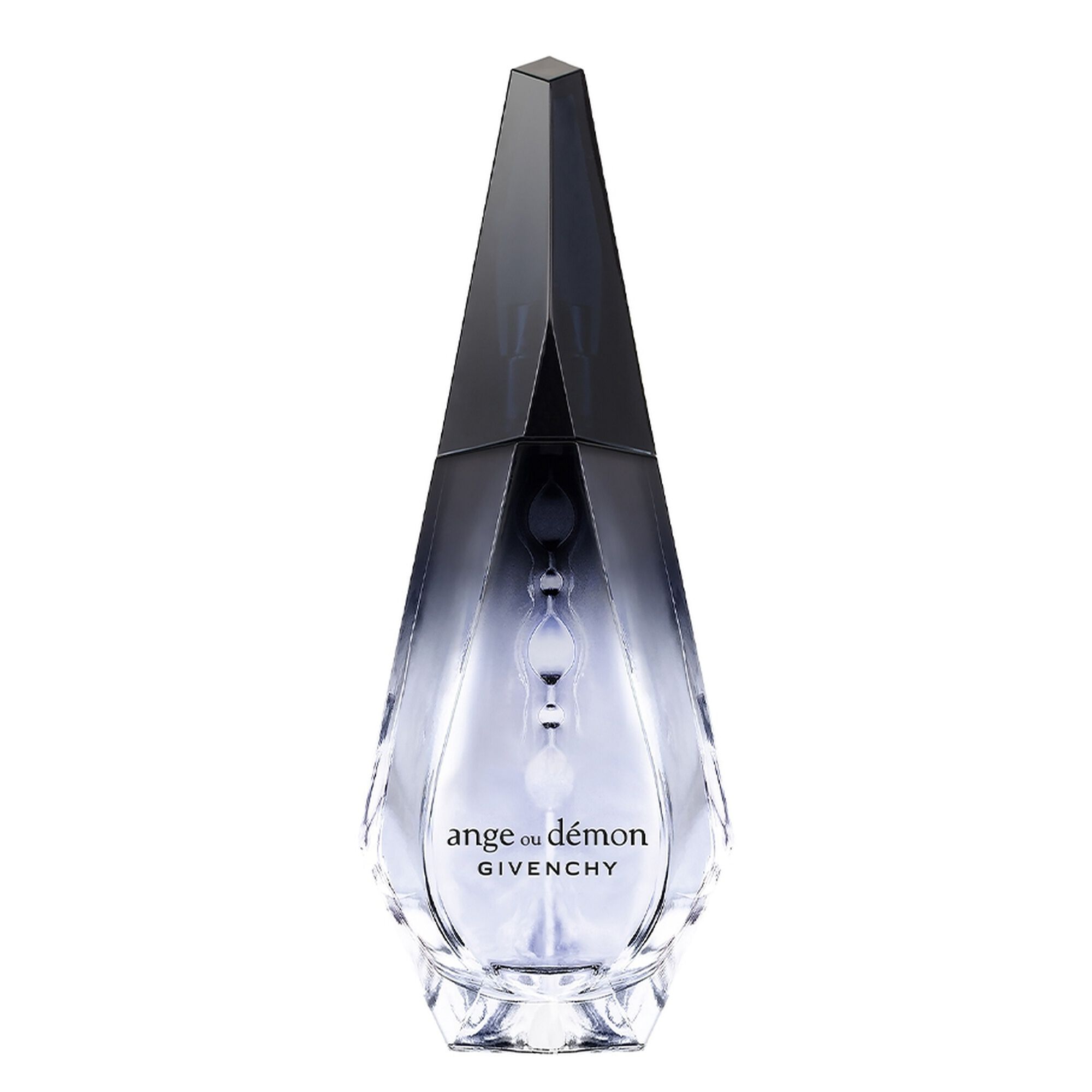
Givenchy Ange ou Démon EDP
Launched in 2006, this Givenchy best-seller embodies modern floral aldehyde at its most luminous. White lily and jasmine on a woody-musky base of guaiac wood and cedar: an elegant, contemporary sillage, without the retro powdery effect of the great classics. For the woman who wants aldehyde in a contemporary register.
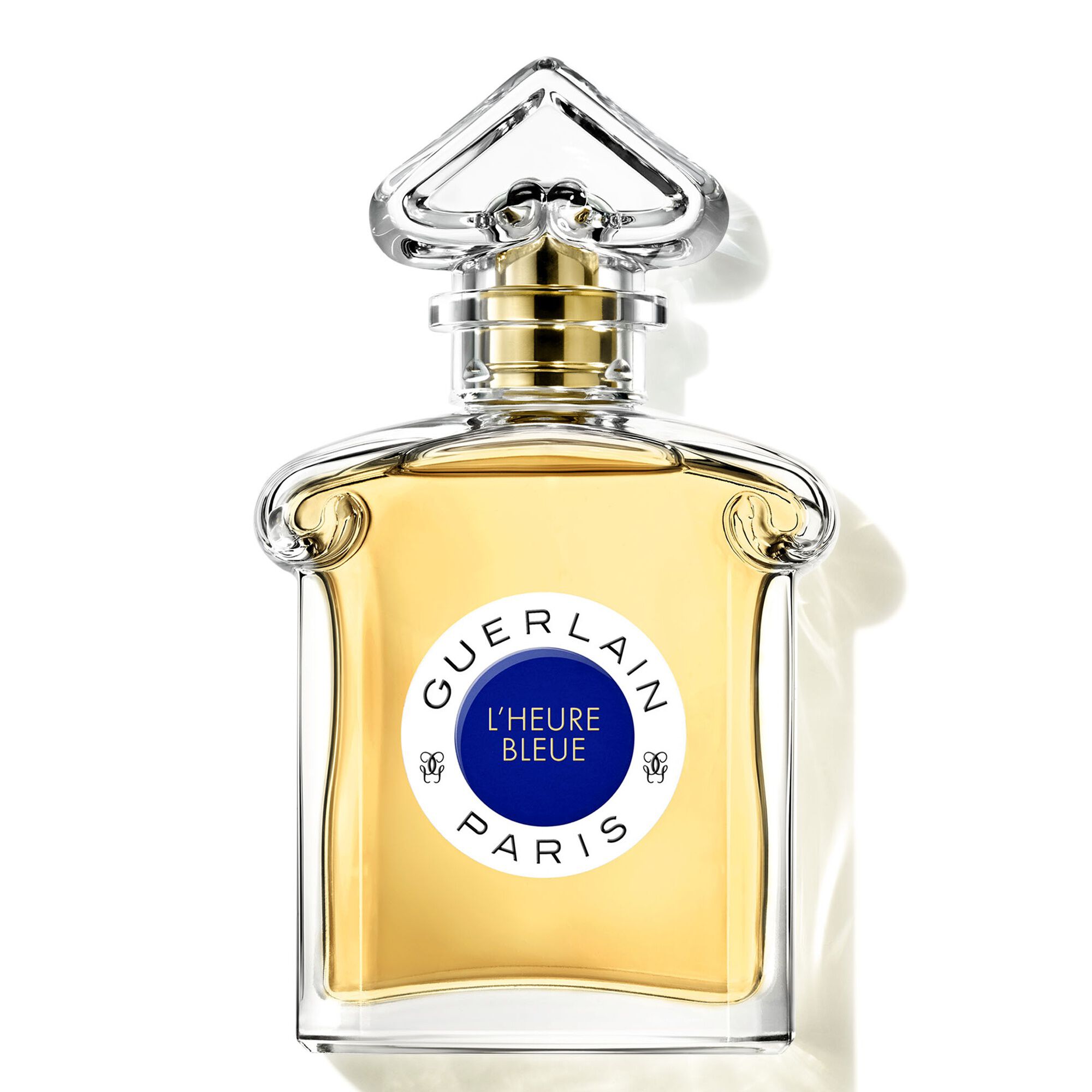
Guerlain L'Heure Bleue EDP
A Guerlain classic from 1912, the pivot of the powdery sub-family. Iris and violet on a base of heliotrope and powdery amber, with sandalwood in support: a velvety, almost melancholic softness. This is powdery floral aldehyde in its most accomplished form. For those who love soft, enveloping florals, ideal for an autumn evening.
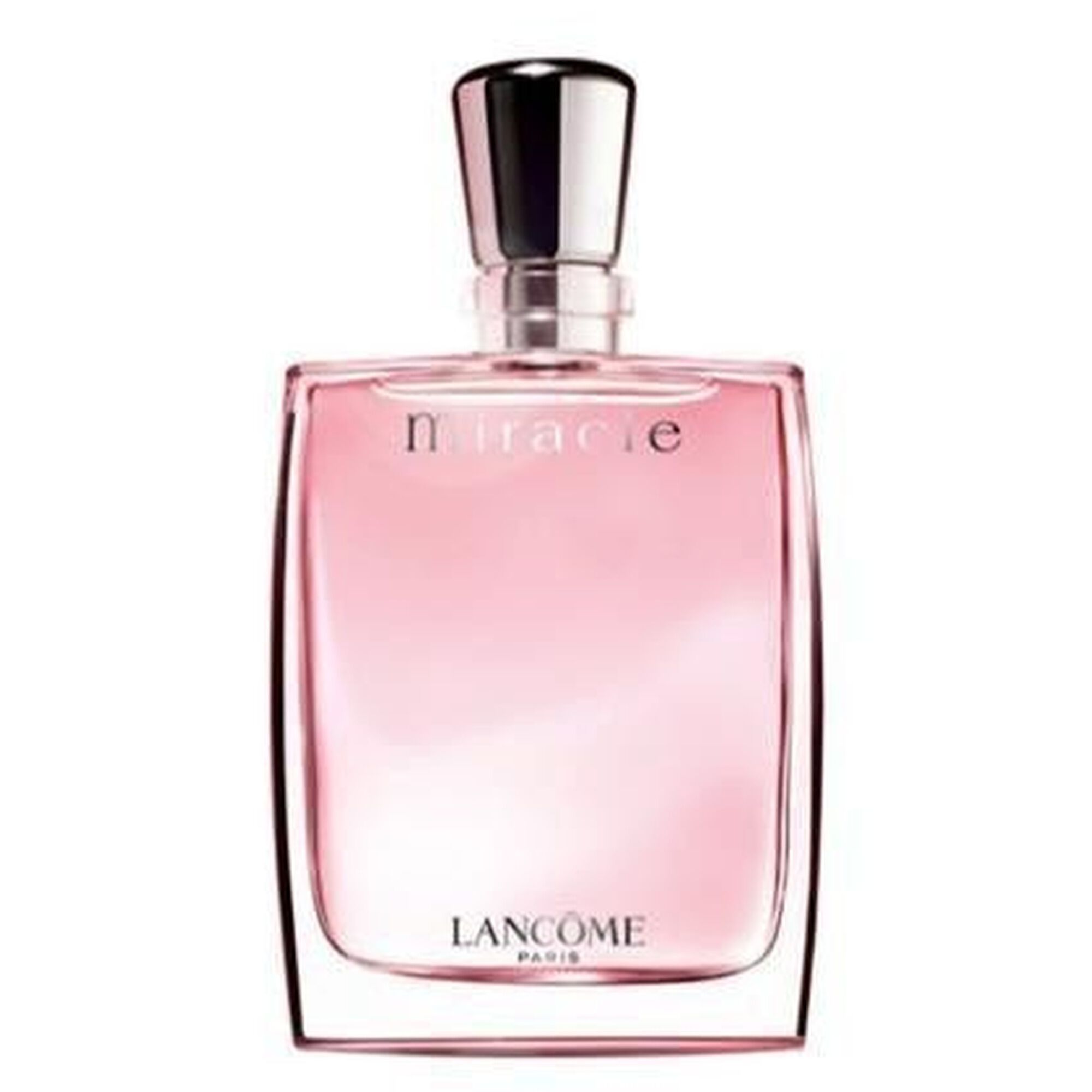
Lancôme Miracle EDP
A fresh, contemporary aldehydic floral, a Lancôme best-seller of the 2000s. Freesia and peony on a musky-cedar base with a touch of ginger: light, luminous, perfect for everyday wear. This is the most subtle aldehyde in our selection — ideal for starting out with the family without being overwhelmed by the aldehydic facet.
Cacharel Anaïs Anaïs EDT
A 1978 classic with strong nostalgic appeal. A generous white bouquet — muguet, rose, jasmine, ylang-ylang — on a base of soft sandalwood and iris: an accessible floral aldehyde composition that has accompanied generations. One of the few classic aldehydes under €40. For those seeking an authentic floral aldehyde at an affordable price.
Paco Rabanne Calandre EDT
The reference for woody floral aldehyde since 1969. Rose and jasmine on a base of vetiver, cedar and oakmoss: a structured, dry, almost mineral elegance. Calandre embraces an assertive woody structure that contrasts with the powdery softness of couture classics. For those who want an aldehyde without sweetness, drier and more geometric.
Van Cleef & Arpels First EDP
A fruity floral aldehyde from 1976, from the great French jeweller. Bergamot and sparkling aldehyde in the top notes, a rose-jasmine-iris bouquet in the heart note, musky-sandalwood in the base note: a luminous, refined effervescence. Less dense than Mitsouko, more accessible in sillage — a lovely gateway into elegant fruity floral aldehyde.
Lancôme Ô de Lancôme EDT
A Lancôme pivot in a hesperidic register. Lemon and bergamot in the top notes, orange blossom and neroli in the heart note, white musk in the base note: a light, almost aquatic floral aldehyde, ideal for summer. This is the freshest aldehyde in our selection — for those who want aldehydic luminosity in a summery, airy register.
Mugler Alien Goddess EDP
A premium modern floral aldehyde, a best-seller in our catalogue. Sun-kissed jasmine and luminous aldehyde on a vanilla-cashmere and white musk base: a warm, contemporary floral aldehyde with generous projection. For those who want a seductive, high-end modern aldehyde that lasts all day.
Our selection: the best floral aldehyde parfums for men 2026
The codes of men's floral aldehyde rely on a different dosage: aldehyde is used with restraint, the chosen florals are structured — iris, lavender, geranium — and dry woods (vetiver, cedar, sandalwood) dominate the base note. The result is drier, less powdery than classic feminine versions, but retains the characteristic luminosity of the aldehydic accord.
An emerging men's cluster has been developing in niche perfumery for a few years now. Creators such as Frédéric Malle, Serge Lutens and independent houses are exploring unisex aldehydes, embracing the molecule's metallic-waxy facet in deliberately androgynous compositions. These fragrances are aimed at a man who knows perfumery and is looking for something unusual, far from conventional woody-amber notes.
Recently, a customer asked me for a parfum "like his mother's Trésor, but for him". I spent a good while letting him smell several niche unisex aldehydic references before finding what suited him. This is exactly the kind of exploration our floral aldehyde guide for men allows you to do at your own pace.
Classic vs modern floral aldehyde parfum: how to choose?
| Era | Aldehydic intensity | Sillage | Emblematic examples |
|---|---|---|---|
| Classic (1921-1980) | Strong, assertive, waxy-metallic | Ample, persistent, 8-12h | Chanel N°5, Arpège Lanvin, Calèche Hermès, Rive Gauche YSL |
| Modern (1990-2026) | Dosed, subtle, luminous | Controlled, luminous, 6-8h | Lancôme Trésor, Givenchy Ange ou Démon, Mugler Alien Goddess |
The great aldehydic classics (1921-1980)
This period is one of assertiveness. Chanel N°5 in 1921 laid the foundations: strong aldehyde, abstract floral bouquet, ample and persistent sillage. Lanvin signed Arpège in 1927 in the same couture spirit. Nina Ricci's L'Air du Temps (1948) brought relative lightness, but remained rooted in the codes of the era. Hermès's Calèche (1961) and YSL's Rive Gauche (1971) carried this tradition through to the 1980s.
What characterises these compositions: a high aldehydic concentration, a sillage that precedes and follows the wearer, a powdery-woody structure that settles in for the day. These are parfums that "wear" you as much as you wear them.
Modern aldehydes (1990-2026)
The turning point came in the 1990s with reformulations and new creations that retained the aldehydic structure but considerably lightened the dosage. Lancôme Trésor in 1990 is emblematic of this shift: the aldehydic accord is there, recognisable, but in a silkier, less assertive register.
Givenchy Ange ou Démon in 2006 pushed this modernisation even further: aldehyde becomes almost one luminous facet among others, rather than the central pillar of the composition. The sillage remains elegant, but no longer fills the entire room.
Vintage aldehyde vs contemporary aldehyde
The main difference lies in intensity and presence. A 1921-1980 classic can be smelled before you enter the room. A 1990-2026 modern accompanies without overwhelming. It's not a question of quality — it's a question of relationship to space and to others.
The table above shows this clearly: 8-12h of ample sillage for classics, 6-8h of controlled projection for moderns. Classics are also more resistant to weather conditions — heat, humidity — which makes them particularly suited to autumn and winter.
How to get used to an aldehydic parfum as a beginner?
I often recommend starting with modern or fruity aldehydes: Lancôme Miracle or Van Cleef & Arpels First are gentle gateways. Test on skin, not on paper — aldehyde evolves considerably with body heat. Wait 20 minutes before judging: the sparkling opening can be surprising, but the floral heart note that follows is often far more accessible than expected.
As for seasons, spring and autumn are ideal for the classics. In summer, favour modern or hesperidic sub-families such as Lancôme Ô de Lancôme.
Aldehyde in perfumery: the molecule that revolutionised parfum
What is an aldehyde, chemically speaking?
An aldehyde is a synthetic molecule characterised by a carbonyl group at the end of the chain. In perfumery, three main families are used: C10 (decanal), undecylenic C11 and C12 MNA.
Each has a distinct olfactory profile. C10 evokes orange and metal, with an almost fatty facet. Undecylenic C11 smells of wax and rose, softer and more floral. C12 MNA, the most famous of the three, produces a clean, soapy effect with a very characteristic violet facet. It is this last one that is found in high concentration in the great couture classics.
Ernest Beaux, in 1921, was the first to use them on this scale in a fine perfumery composition. Since then, the note of aldehyde has become one of the most studied and documented in all of perfumery.
Our floral aldehyde selection at Tendance Parfums
Three references perfectly illustrate the different ways of using the aldehydic accord:
Lancôme Trésor — Classic aldehydic accord, powdery rose-iris. The accessible reference of modern floral aldehyde at Lancôme: aldehyde carefully dosed, an immediately appealing powdery-floral structure.
Guerlain Mitsouko — Fruity-chypre aldehydic accord, maximum complexity. The absolute encyclopaedic reference at Guerlain: aldehyde, peach, oakmoss, a depth that few compositions achieve.
Nina Ricci L'Air du Temps — Airy floral aldehydic accord, couture lightness. The 1948 classic in its most elegant form: aldehyde, rose, carnation, sandalwood — an airy, refined construction.
Aldehyde and longevity
Aldehydes act as natural fixatives in a composition. By bonding with floral materials, they slow their evaporation and extend their presence on the skin. This is why the great aldehydic classics last so well — sometimes 10 to 12 hours on warm skin.
Concentration also plays a role: an aldehydic EDP will consistently last longer than an EDT of the same composition. For Trésor or L'Heure Bleue, I always recommend the EDP if you're seeking maximum longevity.
How to wear a floral aldehyde parfum
Floral aldehyde parfum for which season?
Spring and autumn are the seasons of choice for classic floral aldehydes. The mild warmth activates the aldehydic molecules without making them oppressive, and the luminous sillage expresses itself fully.
In summer, opt for modern or hesperidic sub-families: Lancôme Miracle, Lancôme Ô de Lancôme, or light fruity floral aldehydes. Powdery classics can become overwhelming in intense heat.
In winter, the great powdery classics — L'Heure Bleue, Trésor — come into their own. Dry indoor warmth carries them well, and their enveloping sillage is particularly well suited to evenings out.
Floral aldehyde parfum for day or evening?
For daytime, modern sub-families and EDTs are more suitable. A Lancôme Miracle or an Ange ou Démon in EDT accompanies you without overpowering, even at the office.
In the evening, EDPs and the great classics come into their own. Guerlain L'Heure Bleue EDP or Van Cleef & Arpels First EDP are obvious choices for a special occasion. For a couture evening, the great aldehydic classics — assertive, with ample sillage — are exactly what's needed.
How much does a good floral aldehyde parfum cost?
The accessible segment falls between €30 and €60: Cacharel Anaïs Anaïs EDT, Nina Ricci L'Air du Temps EDT. The premium segment covers €60 to €120: Lancôme Trésor EDP, Lancôme Miracle EDP, Givenchy Ange ou Démon EDP. Above €100, you enter luxury and niche territory: Guerlain Mitsouko EDP, Guerlain L'Heure Bleue EDP, Van Cleef & Arpels First EDP, Mugler Alien Goddess EDP.
For a first purchase, I recommend not limiting yourself by price: a €45 floral aldehyde that suits you will always be more satisfying than a €120 flacon that doesn't speak to you.
Frequently asked questions about floral aldehyde parfums
What is a floral aldehyde parfum?
A floral aldehyde parfum combines a bouquet of flowers — rose, jasmine, iris, muguet — with synthetic aldehyde molecules that amplify projection, bring a sparkling luminosity to the top notes and fix the floral materials over time. It's this combination that produces the family's characteristic couture sillage.
What is an aldehyde in perfumery?
An aldehyde is a synthetic molecule with a terminal carbonyl group. In perfumery, the most widely used are C10 (orange and metallic notes), undecylenic C11 (wax and rose) and C12 MNA (clean-soapy, violet facet). They amplify, illuminate and fix floral compositions.
What are the best floral aldehyde parfums for women?
Among our references, Lancôme Trésor remains the accessible sure bet, Guerlain Mitsouko is the encyclopaedic reference, and Givenchy Ange ou Démon represents the best of modern floral aldehyde. The choice depends above all on the desired profile: classic, modern, powdery, woody or fruity.
What is the most famous floral aldehyde parfum?
Chanel N°5, created by Ernest Beaux in 1921, is the absolute archetype of the family. As the first massive use of aldehydes C10, C11 and C12 in fine perfumery, it set the codes for all classic floral aldehyde that followed for sixty years.
What is the difference between a floral parfum and a floral aldehyde parfum?
A classic floral parfum reproduces or evokes natural flowers. A floral aldehyde adds synthetic aldehyde molecules that create an abstraction: the composition no longer smells of a specific flower, but of a luminous, powdery, airy bouquet that does not exist in nature. It's this abstract dimension that defines the family.
Which floral aldehyde parfum lasts the longest?
Classic aldehydic EDPs are the most persistent: Guerlain Mitsouko and Guerlain L'Heure Bleue easily last 10 to 12 hours on warm skin. Aldehydes act as natural fixatives for floral materials, which explains the remarkable longevity of these compositions.
Are there floral aldehyde parfums for men?
Yes, and it's a rapidly developing territory. Men's codes rely on aldehyde used with restraint, structured florals and dominant dry woods. Niche perfumery is actively exploring unisex and men's aldehydes. Our floral aldehyde guide for men presents the references and creators to know in this register.
Why do aldehydic parfums smell 'clean' or 'soapy'?
This is the signature of C12 MNA, which produces a very characteristic clean-soapy facet. This is not a flaw: it's precisely this "fresh laundry" effect that gives floral aldehydes their distinctive luminosity. On skin, this impression fades quickly, giving way to the silky floral heart note and the powdery-amber base note.