
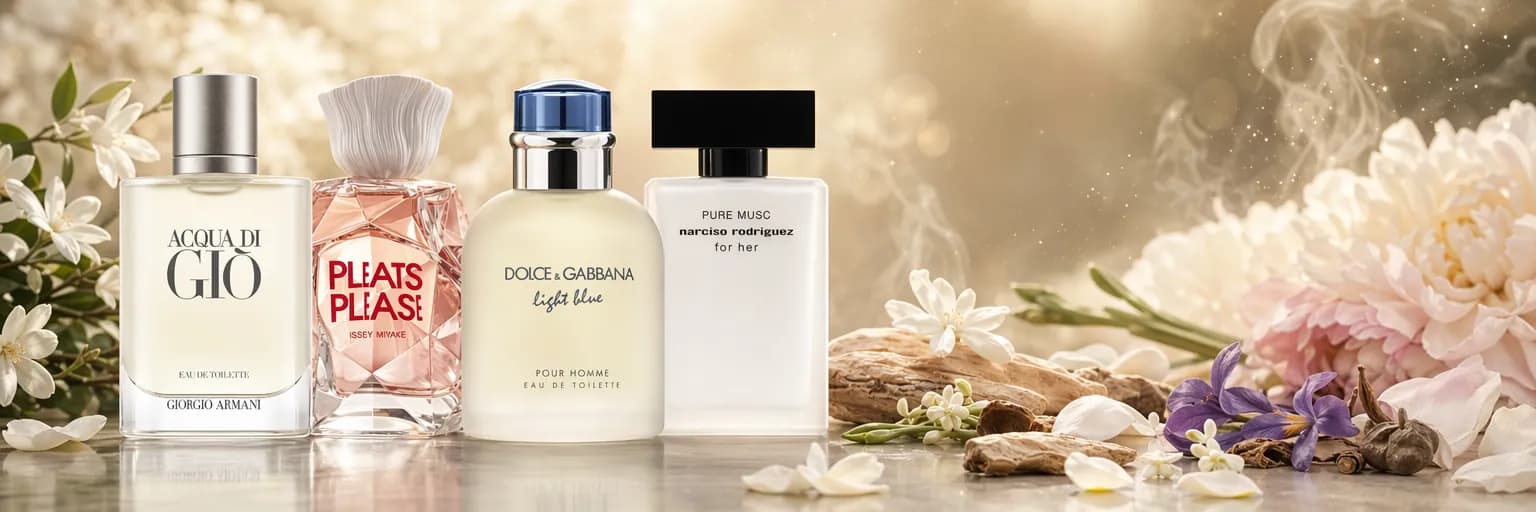
Floral fruity perfume: the joyful lightness of a landmark family
A floral fruity perfume combines floral heart notes — rose, peony, jasmine — with fruit notes such as peach, raspberry or pear, for a fresh, luminous result that is neither heavy nor overly sweet. It is the most represented olfactive family in women's launches over the past twenty years, and the exact answer to a common request: "something floral, but light, with a fruity touch." This guide describes its five sub-families, explains the difference between floral fruity and fruity gourmand, and offers eleven references selected by our team — from accessible classics to more assertive compositions.
What is a floral fruity perfume?
Olfactive definition: the composition of a floral fruity perfume
A floral fruity perfume, as the name suggests, combines a floral heart note with fruity notes. But the underlying chemistry is more subtle than this description suggests.
The floral heart note most often rests on rose, peony, jasmine, muguet or iris. These flowers bring the roundness, softness and romantic character that form the backbone of the fragrance. Around this heart note, fruity notes act as a catalyst: they energise, lighten, and make the floral more accessible and immediate.
The typical structure of a floral fruity fragrance follows a fairly consistent pattern. At the top: vibrant notes, often citrus or berries — bergamot, blackcurrant, raspberry, pear. At the heart note: the generous floral bouquet. In the base note: a soft white musk or a light wood that fixes the whole without weighing it down.
What sets a floral fruity apart from a pure floral is precisely this vibrancy in the opening. The fruit gives it a lift, a sparkling and joyful first impression, before giving way to the flowers.
Origins and rise of the floral fruity family
The floral fruity family as we know it today was born in the 1980s-1990s, driven by advances in synthetic chemistry. Before that, fruity notes in perfumery relied mainly on aldehydes and costly natural materials that were difficult to stabilise.
The arrival of synthetic peach lactones — delta-undecalactone and gamma-undecalactone — changed everything. These molecules precisely reproduce the velvety, juicy character of ripe peach. At the same time, blackcurrant bud accords derived from ribes nigrum made it possible to create a black berry note that was both fresh and deep, a far cry from the artificial fruit notes of earlier decades.
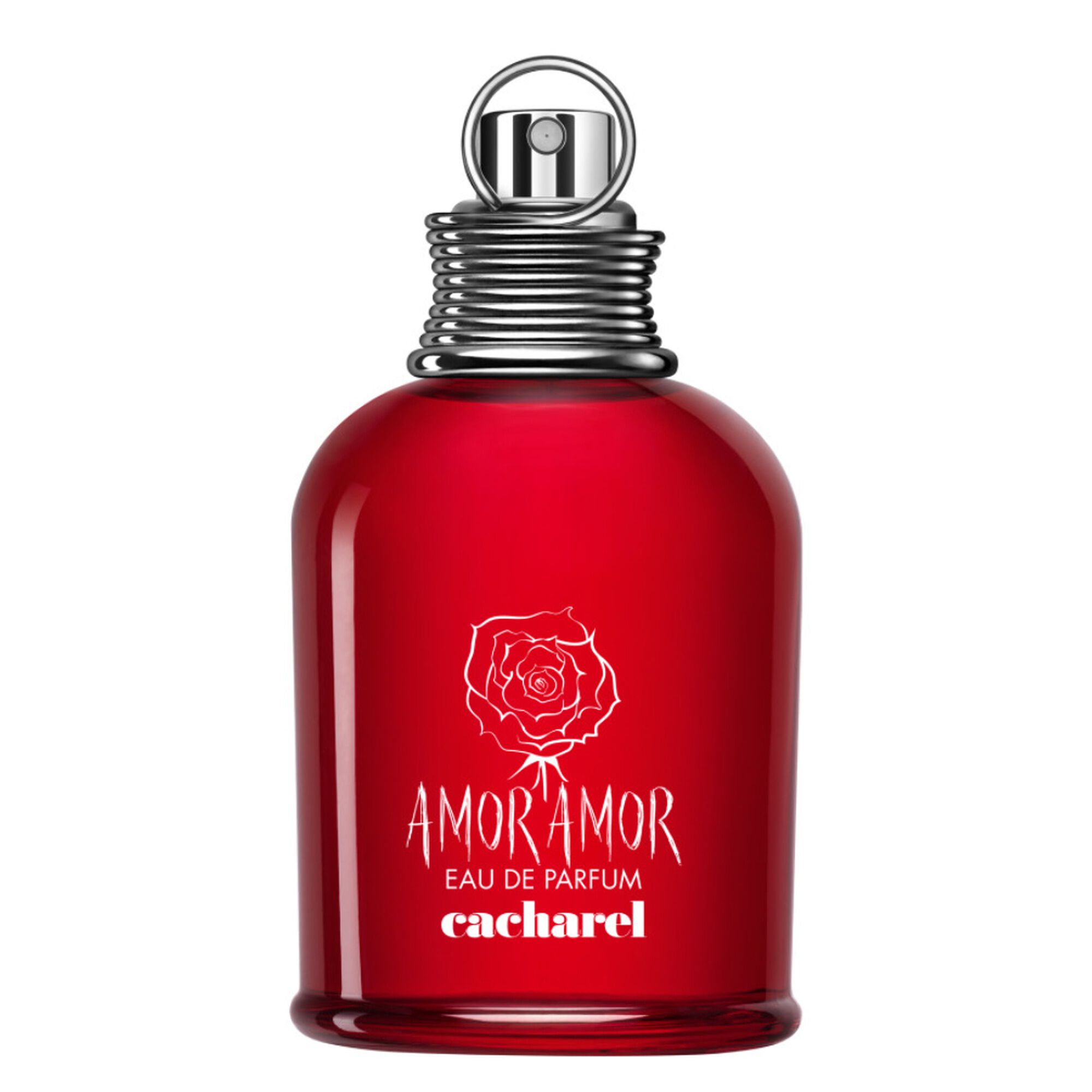
The 2000s cemented the family's success. Cacharel Amor Amor, launched in 2003, popularised the blackcurrant-rose accord for a very wide audience. Since then, floral fruity launches have never stopped growing, today accounting for a major share of women's new releases each year.
Why are floral fruity perfumes so popular?
Several factors explain this lasting appeal. First, olfactive accessibility: floral fruity does not require any learning curve. It is immediately pleasant, with no rough edges, no confusing notes. You understand straight away what you're smelling.
Then there's the chemical lightness of the molecules used. Fruity lactones and modern floral accords have a controlled diffusion: the sillage is present but never overwhelming, which meets contemporary expectations. We want to smell good without being intrusive.
Finally, there is a psychological dimension. Floral fruity evokes spring-like freshness, lightness, a certain joie de vivre. It's a register that reflects a modern, relaxed femininity, far removed from the heavy, solemn perfumes of another era.
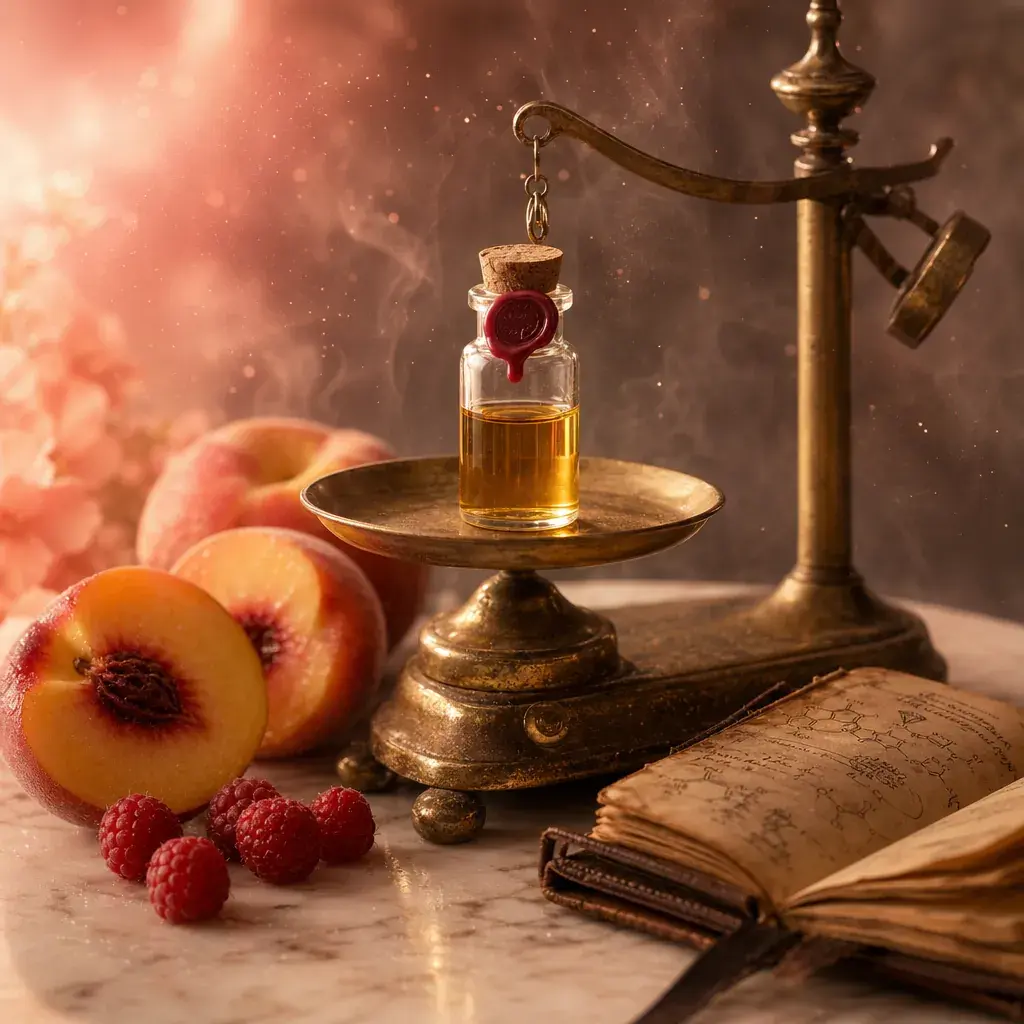
Did you know? The rise of floral fruity in the 1990s is directly linked to the arrival of synthetic peach lactones (delta-undecalactone, gamma-undecalactone) and blackcurrant bud accords derived from ribes nigrum. These laboratory molecules enabled perfumers to create fruity accords of unprecedented precision, without resorting to costly or unstable natural materials. Cacharel Amor Amor (2003) popularised the blackcurrant-rose accord among the general public, making floral fruity the best-selling olfactive family in women's launches of the 2000s.
The 5 sub-families of floral fruity
| Name | Olfactive profile | Typical notes | Examples |
|---|---|---|---|
| Classic women's floral fruity | light-romantic | rose, peony, peach, raspberry, lychee | Lancôme La Vie Est Belle, Nina Ricci Nina |
| Sunny / tropical floral fruity | sun-kissed, exotic | mango, passion fruit, tiare flower, pineapple, coconut | Versace Bright Crystal |
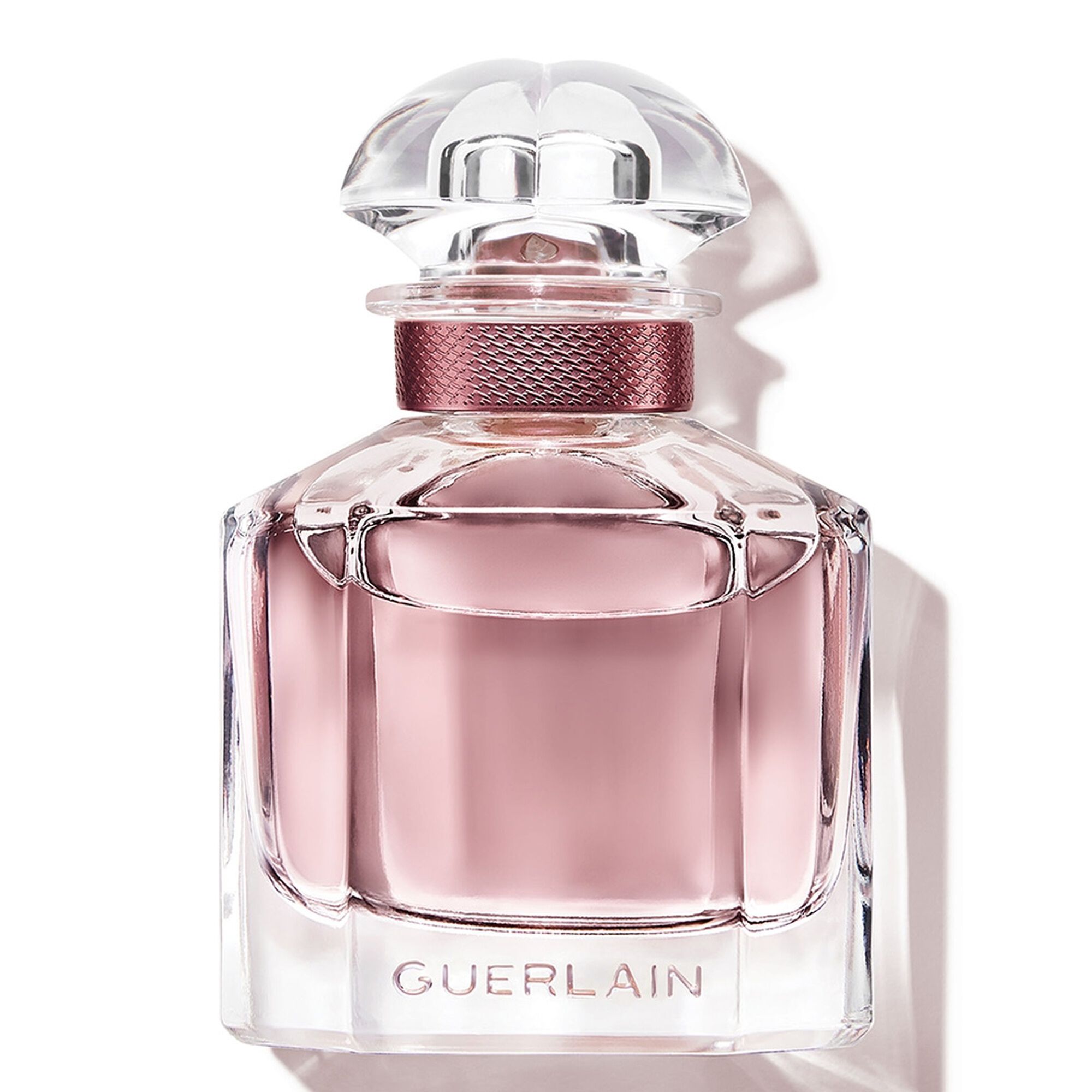
| Sparkling / citrus floral fruity | fresh-vibrant | grapefruit, bergamot, blackcurrant, muguet, white tea | Chanel Chance Eau Tendre, Guerlain Mon Guerlain Bloom of Rose |
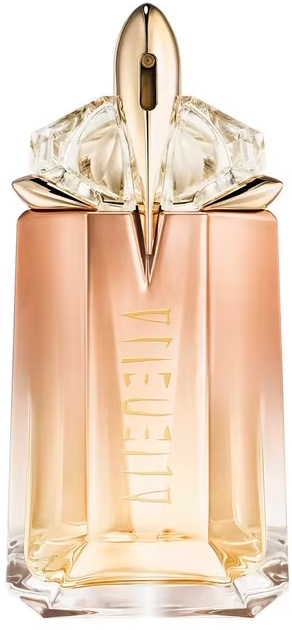
| Gourmand floral fruity | sweet-soft | pear, strawberry, light vanilla, jasmine, fruity caramel | Lancôme Idôle Peach'n Roses, Mugler Alien Goddess |
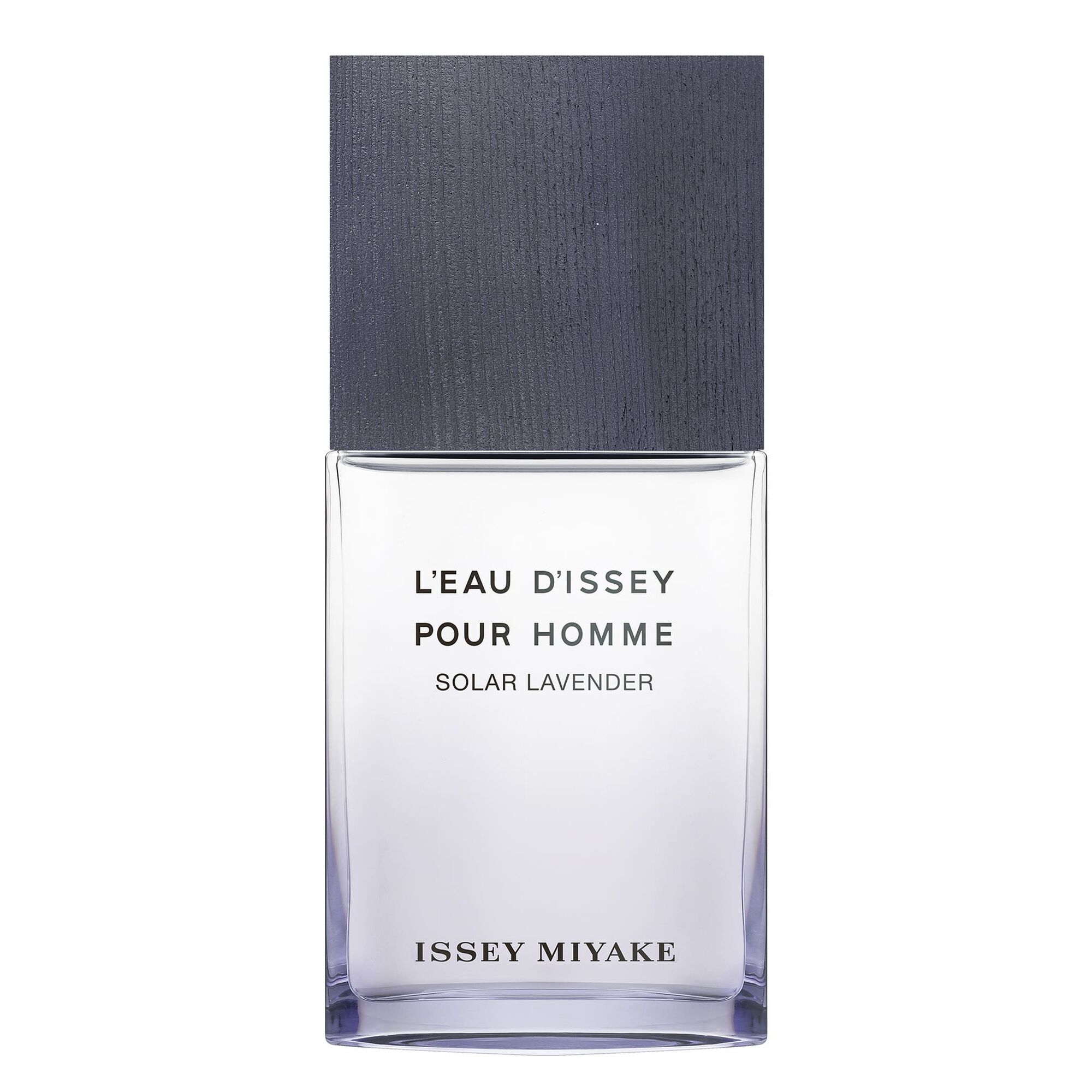
| Men's / unisex floral fruity | fresh-modern | green apple, black berries, cedar, iris, white musk | Issey Miyake L'Eau d'Issey Pour Homme, Hugo Boss Bottled |
Classic women's floral fruity
This is the historical heart of the family, the one spontaneously associated with the term floral fruity. Rose and peony form the central bouquet, backed up by top notes of peach, raspberry or lychee. The base note stays light — white musk, powdery woods, subtle vanilla.
This romantic, light profile applies to a large majority of women's fragrances on the market. Lancôme La Vie Est Belle, Nina Ricci Nina and Cacharel Amor Amor are its most iconic representatives. To dig deeper, our dedicated page on the floral family covers purely floral profiles, without the fruity dimension.
Sunny / tropical floral fruity
Here, the fruits travel to the tropics. Mango, passion fruit, pineapple, tiare flower: the notes evoke warmth, sunshine, holidays. The floral side remains present but fades behind the juicy exoticism.
Versace Bright Crystal is the best-known representative of this sub-family on the mass market. For fans of purely fruity notes with no marked floral dimension, another family also deserves attention.
Sparkling / citrus floral fruity
This profile relies on freshness and vibrancy. Grapefruit, bergamot, white tea, muguet, blackcurrant: everything contributes to an airy, sparkling impression. The fruit here isn't fleshy — it's vibrant, almost electric.
Chanel Chance Eau Tendre is a factual reference for this register, often cited as the definition of the genre. Guerlain Mon Guerlain Bloom of Rose comes close with a touch of raspberry that softens the citrus vibrancy.
Gourmand floral fruity
The boundary with fruity gourmand is at its finest here. What sets this sub-family apart is the still-legible fruity presence — pear, strawberry, fruity caramel — over a base note of jasmine and light vanilla. Sweetness is present but not dominant.
Lancôme Idôle Peach'n Roses, Mugler Alien Goddess and Givenchy Irresistible illustrate this territory well: gourmand without being confectionery, floral without being powdery.
Men's / unisex floral fruity
Long underrated, this sub-family has nonetheless built some of the greatest men's classics. Green apple, black berries, cedar, iris, white musk: the codes are fresh and modern, without the fruity roundness of the women's counterpart.
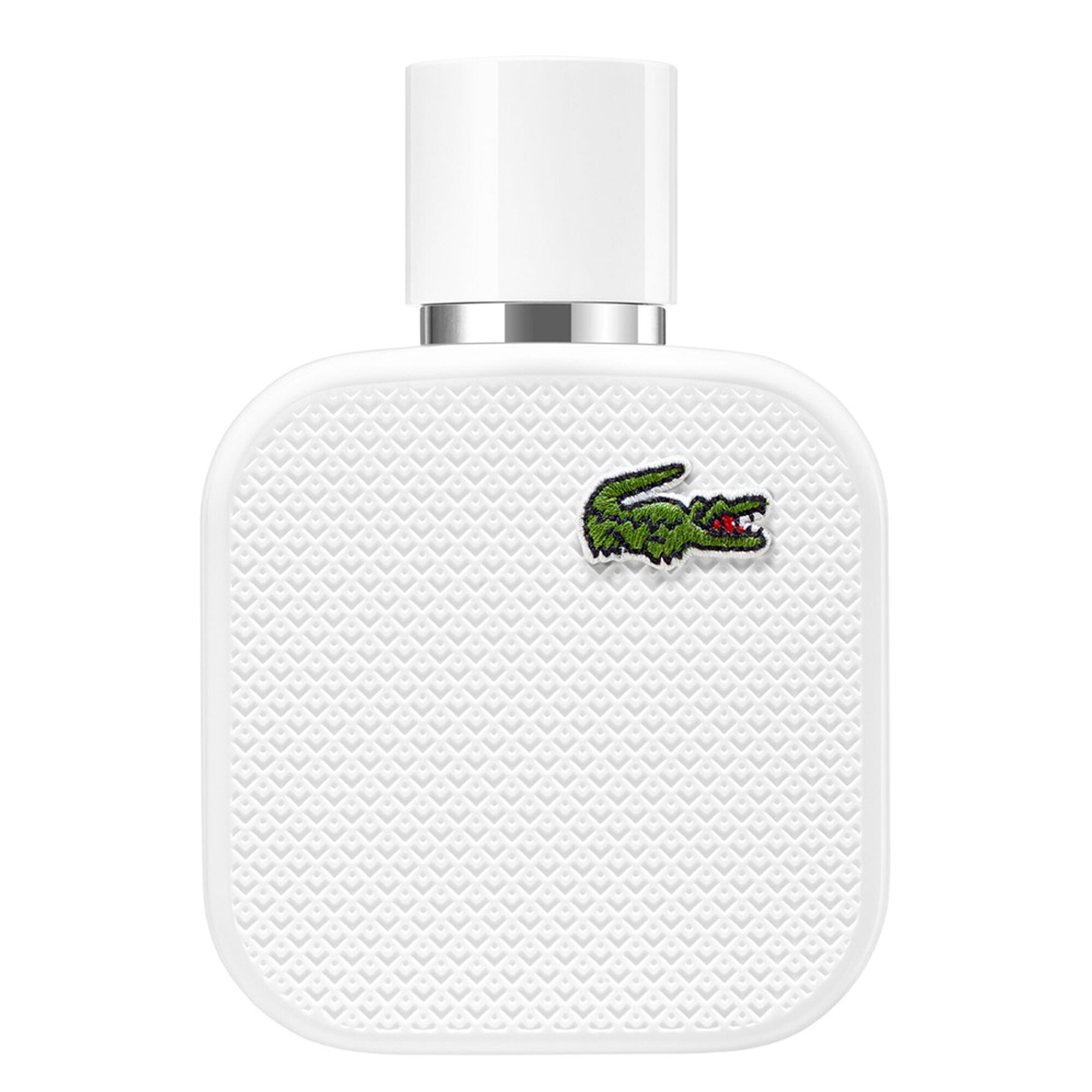
Issey Miyake L'Eau d'Issey Pour Homme, Lacoste L.12.12 Blanc and Hugo Boss Bottled have each, in their own way, laid the foundations of this register. I'll come back to this in detail in the section dedicated to men.
Our selection: the best floral fruity perfumes for women 2026
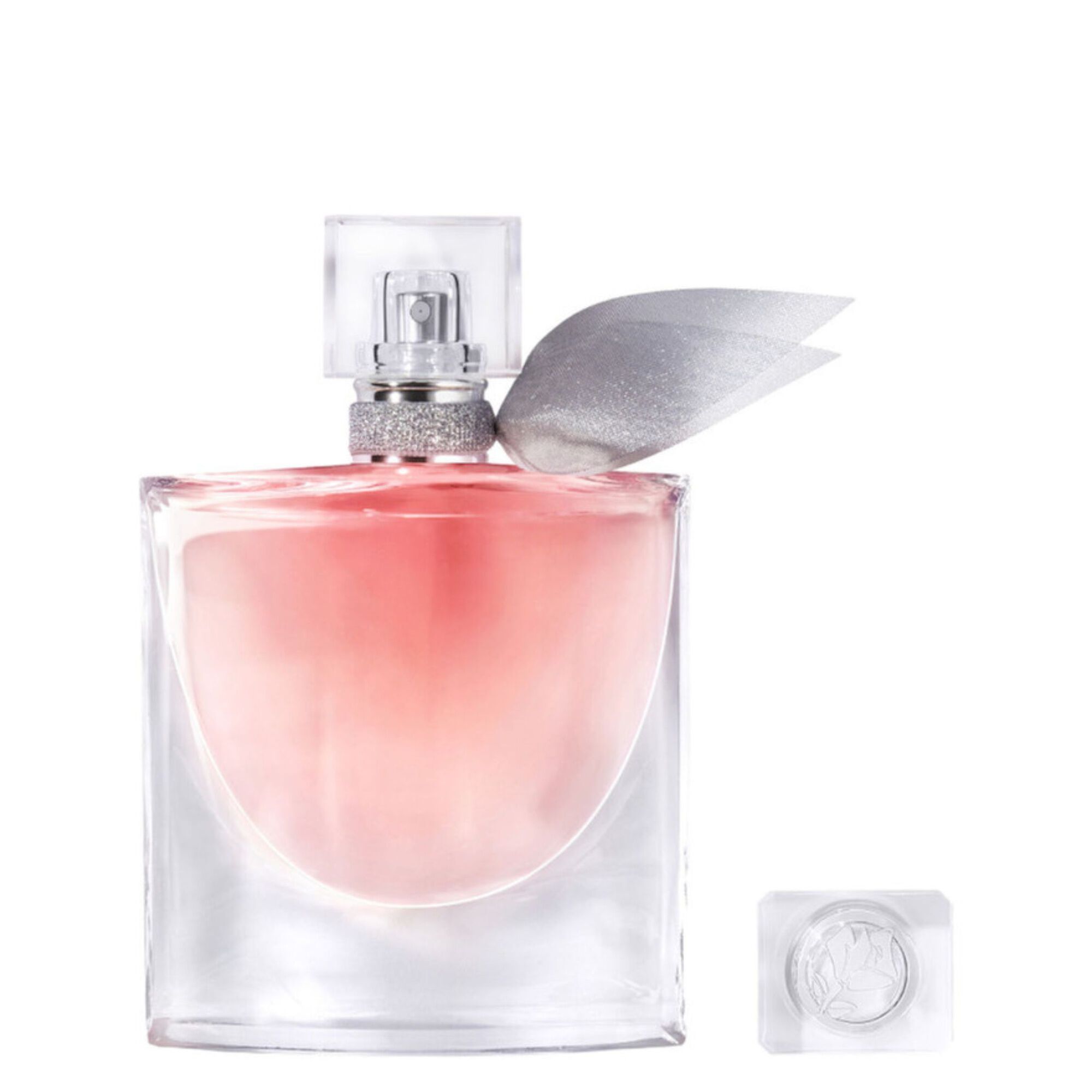
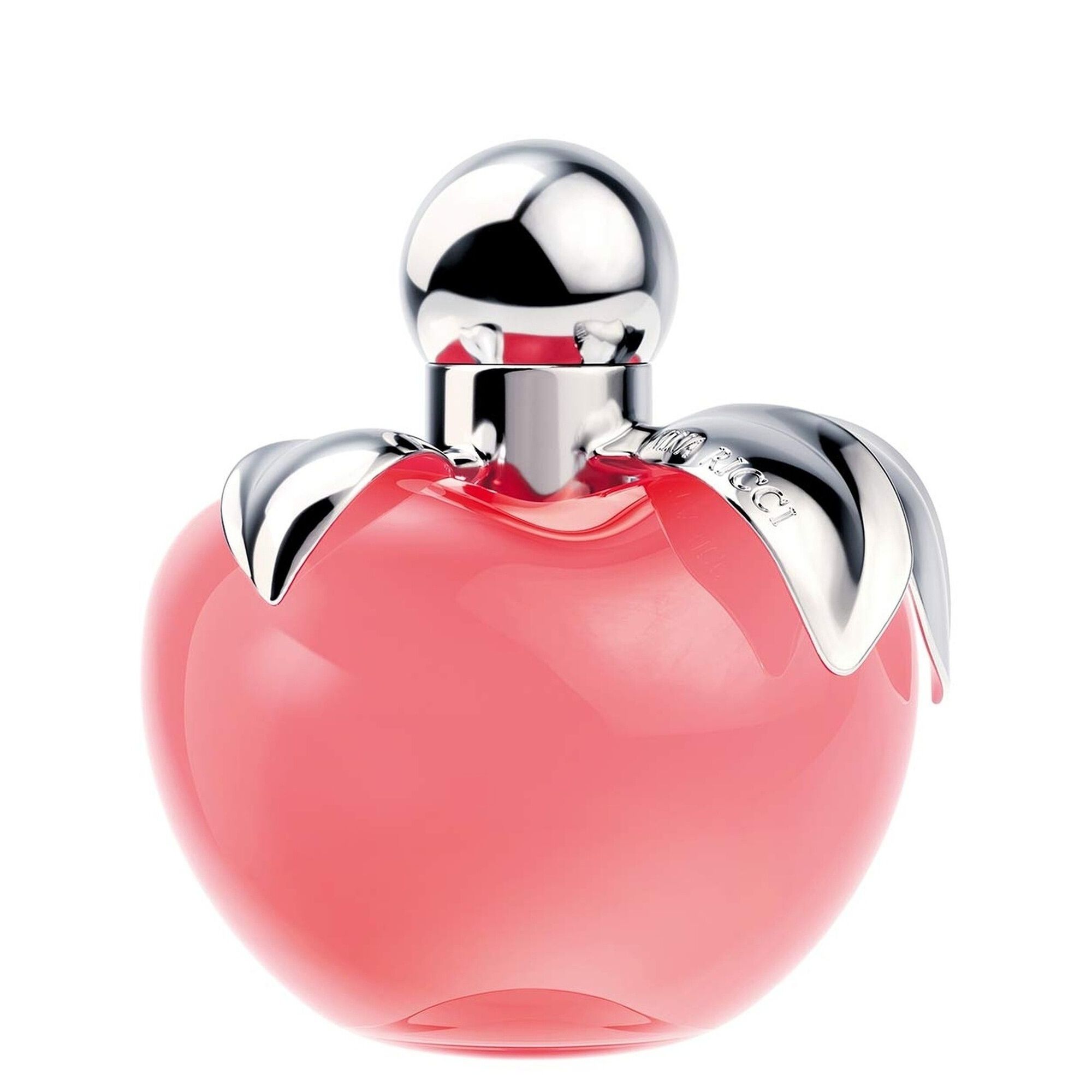
For those who wish to take their search further, our floral fruity women's selection page groups profiles by occasion and season. Here are the eight references I recommend most often in-store, from Lancôme as well as other houses.
Lancôme La Vie Est Belle — Lancôme
The house's absolute best-seller, an icon of gourmand floral fruity. A powdery iris settles over a base note of praline and light vanilla, with a fruity top note that lightens the whole. For the woman who wants a radiant gourmand floral, to be worn all year round with a warm sillage.
Nina Ricci Nina — Nina Ricci
The archetype of the family, in its iconic apple-shaped flacon. Crisp green apple at the top, rose and white musk in the base note: a romantic lightness that never goes out of style. The Nina Ricci reference for anyone seeking a classic, accessible and immediately pleasing floral fruity.
Cacharel Amor Amor — Cacharel
An accessible icon of the family and a historic milestone of the 2000s. Blackcurrant and rose at the top, light vanilla base note: a joyful, spring-like accord that remains a mass-market reference. The Cacharel brand delivers excellent value for money here, ideal as a first step into floral fruity.
Lancôme Idôle Peach'n Roses — Lancôme
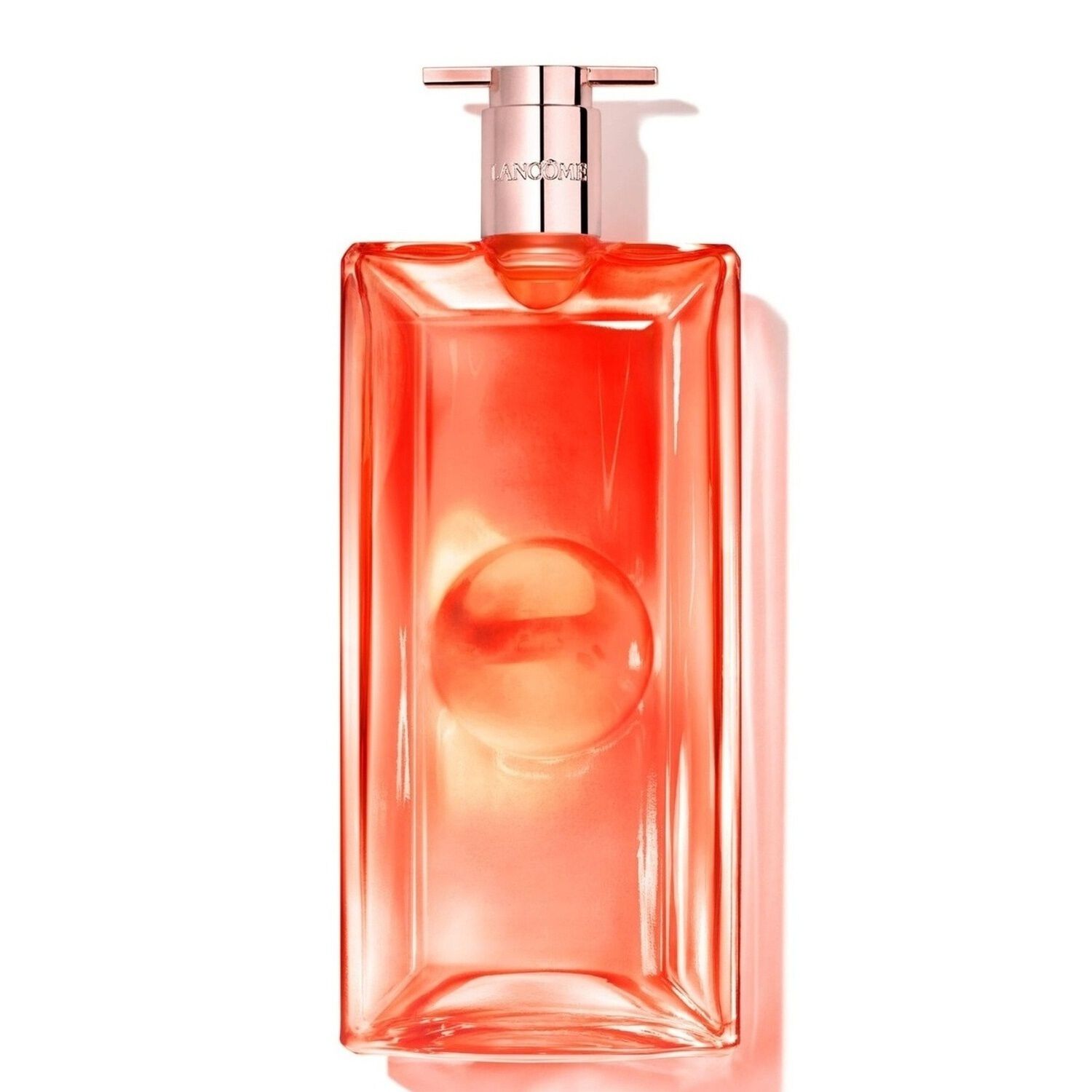
The peach variation of Idôle, recent and highly anticipated. Velvety peach over a heart note of rose and jasmine: juicy, luminous, lightly sweet without tipping into gourmand territory. A modern composition that perfectly covers the peach sub-cluster, backed by Lancôme's expertise.
Versace Bright Crystal — Versace
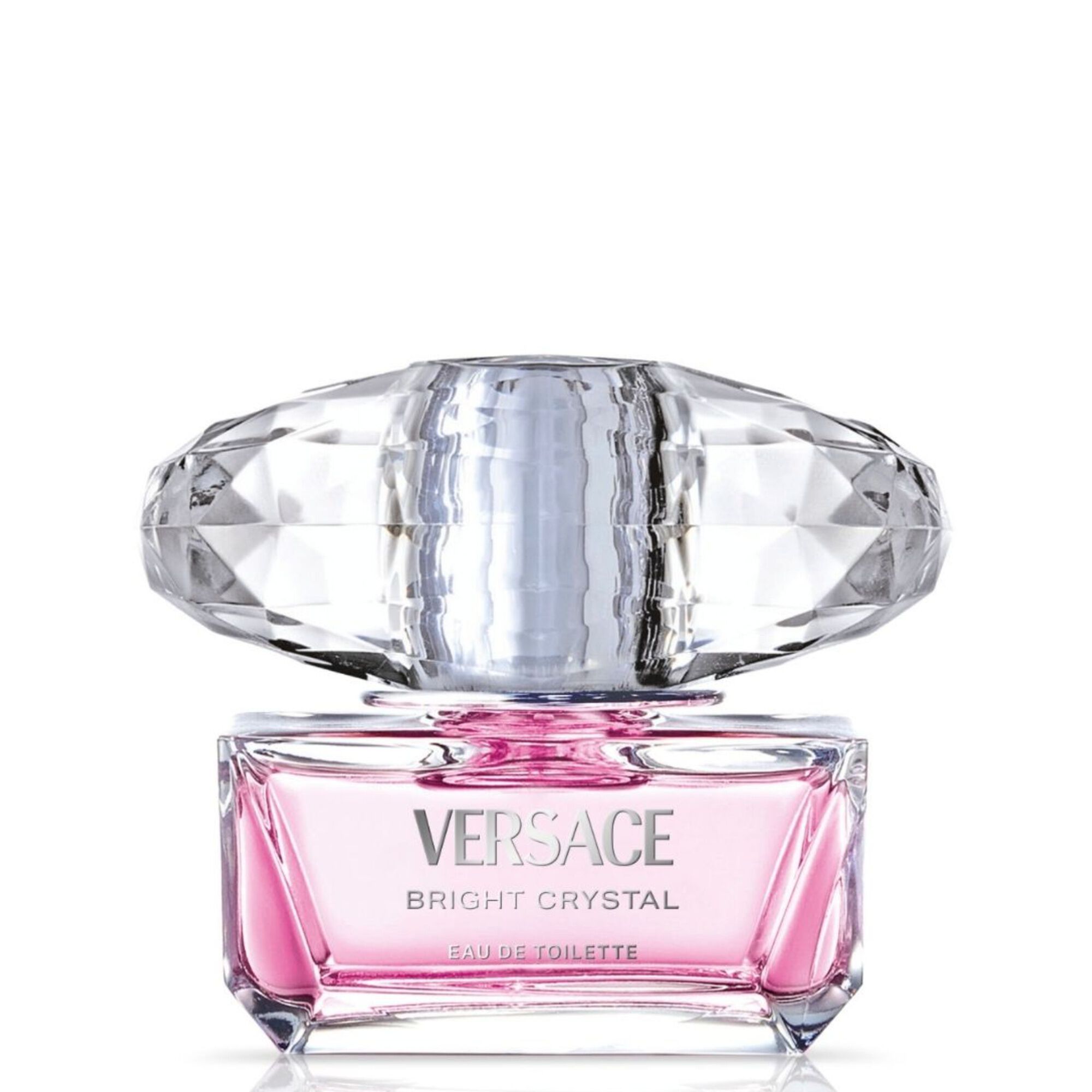
A best-seller of sunny floral fruity, with very strong mass-market recognition. Pomegranate and yuzu at the top, peony at the heart note, white musk in the base note: airy, fresh, luminous. For the woman looking for a subtle, versatile floral fruity, equally at ease during the day and on relaxed evenings.
Givenchy Irresistible — Givenchy
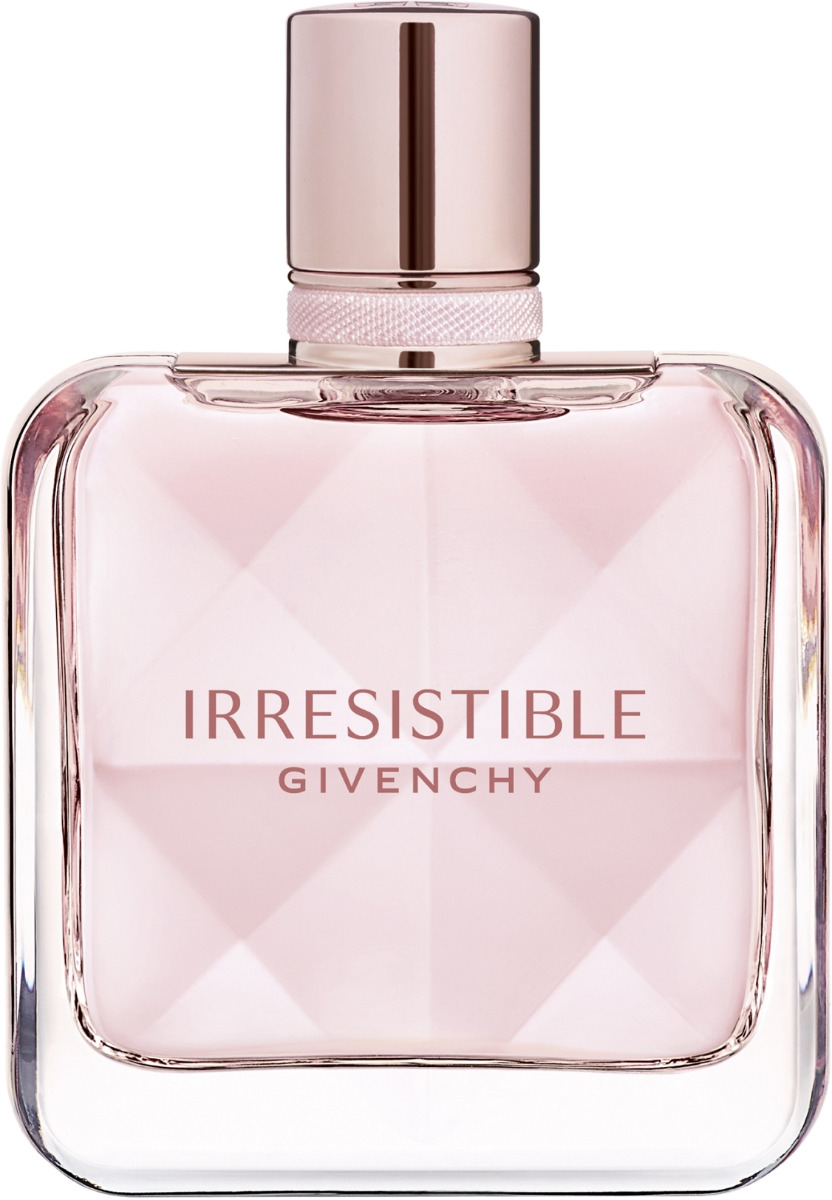
A modern premium floral fruity, rose-raspberry over a base note of soft sandalwood. Romantic without being sweet, with good longevity for the category. For the woman who wants a dressed-up floral fruity, capable of carrying through the day and holding up in the evening.
Guerlain Mon Guerlain Bloom of Rose — Guerlain
Rose and raspberry over a light vanilla base note: fresh, luminous, sparkling. A more airy and fruity version of the classic Mon Guerlain, ideal for spring. This fruity, citrus-led profile particularly suits women who find pure florals too sedate.
Mugler Alien Goddess — Mugler
A modern gourmand floral fruity with Mugler's signature style. Sun-kissed jasmine and blackcurrant at the top, vanilla in the base note: an enveloping composition, more intense than the family average. For those who want a floral fruity with character, capable of making an impression without tipping into excess.
Our selection: the best floral fruity perfumes for men 2026
Men's floral fruity rests on codes quite distinct from its women's counterpart: green apple at the top, black berries or citrus at the heart note, cedar and white musk in the base note. Fewer creamy lactones, more vibrancy and woody dryness. Our men's floral fruity selection page covers these profiles in more depth.
Issey Miyake L'Eau d'Issey Pour Homme — Issey Miyake
The absolute reference of men's floral fruity. Yuzu and citrus at the top, sage and lotus flower at the heart note, cedar and white musk in the base note: fresh, airy, clean. A classic that paved the way for men's floral fruity fragrances back in the 1990s, and remains remarkably modern.
Lacoste L.12.12 Blanc — Lacoste
An accessible-segment men's best-seller. Bergamot and citrus at the top, iris and tiare flower at the heart note, white musk in the base note: fresh, clean, versatile. For the man looking for an effortless everyday floral fruity, to be worn from morning to night in any season.
Hugo Boss Bottled — Hugo Boss
The archetype of men's floral fruity, with very strong recognition. Green apple at the top, geranium and cinnamon at the heart note, sandalwood and musk in the base note: a fresh-woody accord that has defined the codes of men's fruity fragrances since the 1990s. Reliable, recognisable, effective.
Men's floral fruity perfume: a rising trend
| Profile | Dominant notes | Ideal season | Target audience |
|---|---|---|---|
| Women's floral fruity | rose, peony, peach, raspberry, white musk | spring, summer | women, all ages |
| Men's floral fruity | green apple, black berries, cedar, iris, citrus | spring, summer, autumn | men, unisex |
| Fruity gourmand | pear, strawberry, vanilla, jasmine, fruity caramel | autumn, winter, mid-season | women, unisex |
Men's floral fruity: an olfactive revolution
The word "floral" was long seen as incompatible with a men's fragrance. The 2000s shook up the codes. Issey Miyake had already shown the way in 1994 with L'Eau d'Issey Pour Homme: an aquatic-floral-fruity accord that proved a man could wear notes of lotus and yuzu without it feeling out of place.
Hugo Boss Bottled, launched in 1998, reinforced this direction with green apple as its fruity men's signature. Lacoste, throughout the 2000s-2010s, popularised the register in the accessible segment. These three houses laid the foundations of an olfactive territory that is now fully embraced.
Today, men's floral fruity is one of the most dynamic sub-families on the market. Launches are multiplying, and men are increasingly drawn to it as a matter of course.
Fruity notes for men: green apple, black berries, citrus
What sets men's fruity apart from women's fruity is, first of all, the chemistry. Men's formulas use few peach lactones — those creamy, velvety molecules associated with the women's register. Instead, we find drier, more vibrant accords: green apple (often reconstructed with herbaceous aldehydes), black berries (a darker, deeper accord), citrus such as grapefruit or bergamot.
Wood plays a central role in the base note. Cedar, in particular, anchors the fruity note in a clearly masculine register. White musk, meanwhile, provides softness without adding sweetness. The result: a fresh, modern profile that wears just as well in spring as on a mild autumn day — a seasonal versatility that women's floral fruity does not always have.
Our Tendance Parfums men's floral fruity selection
Three references I regularly recommend to customers who don't identify with heavy woody fragrances or intense orientals. Issey Miyake L'Eau d'Issey Pour Homme for the airy classic, Lacoste L.12.12 Blanc for an effective entry point, Hugo Boss Bottled for the structured woody-fruity. These three flacons cover the main men's expectations in this family — from office to holidays.
Peach and red berries in perfumery: signature notes of floral fruity
Peach in perfumery: between velvety softness and sensuality
Peach in perfumery is almost entirely a synthetic construction. Once extracted, the natural fruit quickly loses its olfactive characteristics — it is too unstable to be used directly. This is why perfumers rely on lactones, mainly delta-undecalactone and gamma-undecalactone, to recreate this velvety, juicy accord.
These molecules produce a very distinctive creamy effect, at once sweet and skin-like. Peach in perfumery is not market-stall peach — it is rounder, more enveloping, with a slight lactic dimension that sometimes brings it close to skin. It is this subtle sensuality that makes it such an effective note in modern floral fruity fragrances.
Jo Malone Peony & Blush Suede and Diptyque Ilio show well, in the niche register, how peach can be integrated into a floral accord without overpowering it.
Red berries: raspberry, blackcurrant, blackberry — the most widely used notes
Raspberry in perfumery relies mainly on frambinone, a ketone that reproduces the sweet, slightly tart character of the fruit. It is a highly diffusive molecule, which explains why raspberry is often noticeable as soon as the flacon is opened.
Blackcurrant, for its part, relies on derivatives of ribes nigrum — the blackcurrant bud, in particular, produces a note that is both fruity and vegetal, slightly sulphurous, giving character without heaviness. The blackcurrant-rose accord has been one of the most widely used in women's floral fruity fragrances since the 2000s. Blackberry, less common, brings a darker depth that leans towards fruity woody territory.
These red berry accords pair naturally with florals: raspberry with peony, blackcurrant with rose, blackberry with jasmine. It is this chemical complementarity that makes the family so cohesive.
Our Tendance Parfums peach & red berries selection
Idôle Peach'n Roses — Lancôme: velvety peach + rose + jasmine, juicy and luminous. The peach reference in the Tendance Parfums catalogue, signed by a Lancôme house at the height of its floral fruity expertise.
Nina Ricci Nina — Nina Ricci: apple-rose, the archetype of light red berries. Romantic and spring-like, this iconic flacon remains the ideal gateway into light red berry notes.
Cacharel Amor Amor — Cacharel: blackcurrant-rose, a classic red berry accord. Joyful and accessible, this is the most popular representative of the blackcurrant-rose accord in mass-market perfumery.
How to wear a floral fruity perfume?
Which season suits a floral fruity perfume?
Floral fruity is tailor-made for spring and summer. Its lightness, freshness and spring-like character make it a natural choice from the first warm days onwards. The sunny and tropical sub-families — mango, passion fruit, tiare flower — are particularly suited to summer, and even holidays.
In mid-season and mild autumn, gourmand floral fruity takes over: pear, strawberry, light vanilla bring a soft warmth that offsets the cooler air. A sparkling floral fruity can stretch into autumn if temperatures remain mild.
Floral fruity perfume for day or evening?
During the day, EDTs and classic or sparkling sub-families are best suited. Their controlled sillage and freshness suit the office, commuting and daily activities. A customer recently asked me for something subtle for work: I pointed her towards a citrus-led floral fruity, with bergamot at the top and white musk in the base note.
In the evening, you can afford more depth. EDPs, particularly in the gourmand or tropical sub-families, last longer and project more. Sunny floral fruity also works very well for summer evenings or holidays.
How much does a good floral fruity perfume cost?
The accessible segment ranges from 25 € to 50 € for a 50ml EDT — Cacharel Amor Amor and Nina Ricci Nina are good examples. The premium segment, between 50 € and 100 €, covers the majority of references in our selection (Versace, Givenchy, Guerlain). Above 100 €, you enter luxury and niche territory, with more elaborate compositions and higher-quality raw materials.
Frequently asked questions about floral fruity perfumes
What exactly is a floral fruity perfume?
A floral fruity perfume combines a floral heart note — rose, peony, jasmine, muguet — with fruity notes at the top or heart note: peach, raspberry, blackcurrant, lychee, pear. The structure is light, with a base note of white musk or soft wood. It is the best-selling olfactive family in women's launches over the past twenty years.
What are the best floral fruity perfumes?
Among the most reliable references: Lancôme La Vie Est Belle for gourmand floral, Nina Ricci Nina for light classic, Versace Bright Crystal for airy sunny, and Cacharel Amor Amor for accessible and joyful. The choice depends on the profile sought and the season.
What is the best floral fruity perfume for women?
There's no single answer: it all depends on the profile. For a romantic, light floral fruity, Nina Ricci Nina remains a safe bet. For more warmth and sillage, Lancôme La Vie Est Belle is the absolute best-seller. For something more modern and juicy, Lancôme Idôle Peach'n Roses is an excellent option.
Are there floral fruity perfumes for men?
Yes, and it's a well-established sub-family. Issey Miyake L'Eau d'Issey Pour Homme is its founding classic. Hugo Boss Bottled and Lacoste L.12.12 Blanc are two accessible best-sellers that perfectly illustrate the codes of men's floral fruity: green apple, cedar, white musk.
What is the difference between a floral fruity perfume and a fruity gourmand perfume?
In a floral fruity, the floral heart note remains clearly identifiable — rose, peony, jasmine. In a fruity gourmand, the sweet notes take over: vanilla, caramel, praline. Fruity gourmand is more enveloping and heavier. A fragrance like Mugler Alien Goddess sits on the border between the two, with a sun-kissed jasmine over an intense vanilla base note.
Which fruits are most commonly used in a floral fruity perfume?
Peach, raspberry and blackcurrant are the three most common fruity notes. Next come pear, lychee, mango and green apple for men's fragrances. These fruits are almost always synthetically reconstructed — peach via lactones, raspberry via frambinone, blackcurrant via ribes nigrum derivatives.
What does a floral fruity perfume smell like?
Fresh, light, joyful and lightly sweet without being confectionery. The first impression is vibrant and fruity, then the flowers settle in gradually — rose, peony or jasmine depending on the formula. In the base note, a white musk or soft wood brings warmth. It is an immediately pleasant profile, easy to wear and rarely polarising.
Which floral fruity perfume has good longevity?
EDPs last longer than EDTs, all else being equal. Lancôme La Vie Est Belle is renowned for its longevity within the family. Mugler Alien Goddess and Givenchy Irresistible also offer long-lasting sillage. Gourmand sub-families generally last longer than sparkling or citrus-led profiles, which are more volatile by nature.