
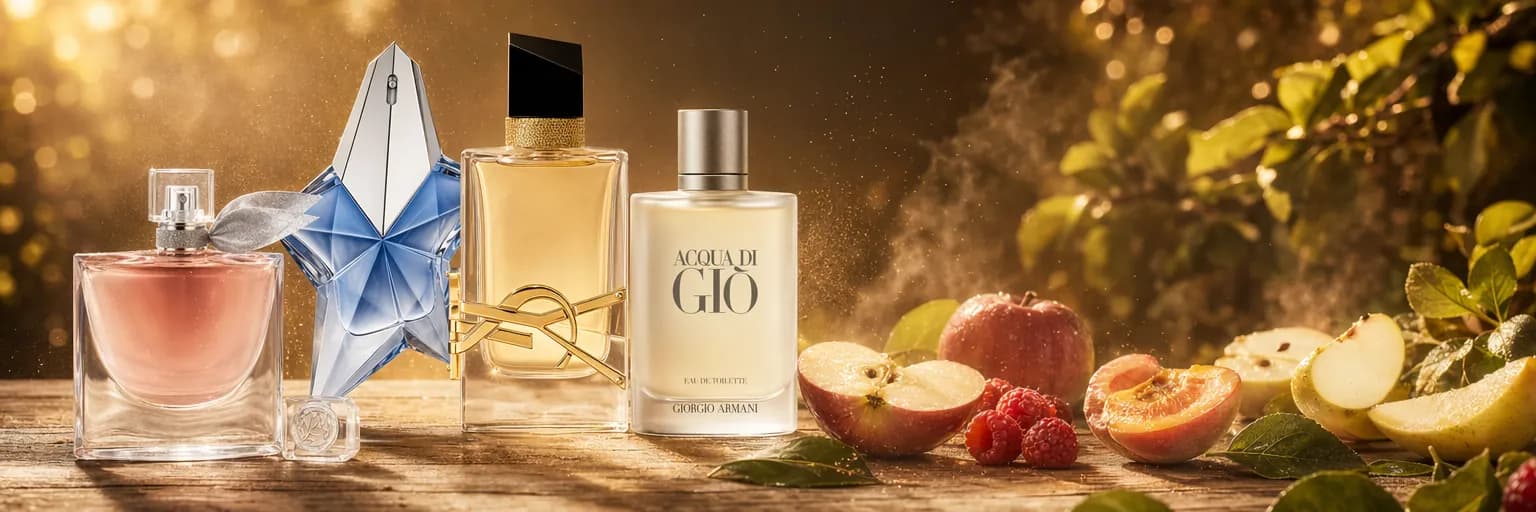
Fruity perfume: the juicy freshness of a sun-drenched fragrance family
A fruity perfume places fruit notes — peach, raspberry, pear, lychee, citrus — at the top or heart note of the composition, often paired with florals or musks to balance their vibrancy. It is the most sought-after fragrance family in spring and summer, whether in a fruity perfume for women or a fruity perfume for men. This guide covers the precise definition of the family, its five sub-families, a selection of eleven references and answers to the most frequently asked questions — so you can choose with method, whether you're just starting out or refining your collection.
What is a fruity perfume?
Olfactory definition: the composition of a fruity perfume
A fruity perfume is recognisable from the very first second on the skin: there is something juicy, pulpy, that directly evokes the fruit itself. But behind this spontaneous impression lies a precise construction.
The family brings together several major categories of fruit. Stone fruits — peach, apricot, cherry — bring a velvety roundness and a light sensuality. Pip fruits — pear, green apple — give freshness and a slightly tangy edge. Red berries — raspberry, blackcurrant, blackberry, strawberry, redcurrant — add vibrancy and a sparkling juiciness. Citrus fruits — lemon, grapefruit, bergamot, mandarin — lean towards the fresh and luminous. Exotic fruits, finally — lychee, mango, pineapple, passion fruit — point towards the sun-drenched and tropical.
What sets a fruity perfume apart from a Citrus perfume is texture. A Citrus fragrance is sharp, volatile, almost mineral in its freshness. A fruity fragrance is fleshier, rounder, with a pulpy dimension that citrus alone cannot give. The two families often overlap — fruity aquatic is the clearest example — but their character remains distinct.
Origins and history of the fruity family
The fruity family is absent from the earliest major French classifications. The Roudnitska wheel, long used as a reference, does not mention it. For decades, fruits were merely accents within floral or chypre compositions — never a structuring pillar in their own right.
Everything changed in the 1980s, with the rise of synthetic lactones. Gamma-undecalactone reproduces velvety peach with striking precision. Delta-decalactone adds a softer, almost milky peach-cream dimension. Calone, a synthetic molecule patented in 1966 but popularised in the 1990s, opened the way to melon-marine-cucumber accords that define fruity aquatic fragrances.
These molecules finally made it possible to build self-sufficient, stable fruity accords capable of lasting on the skin. The fruity family then became a category in its own right, and it has continued to grow ever since.
Why do fruity perfumes appeal so much?
The answer is partly chemical. Fruity molecules are light and volatile — they rise quickly and make an immediate impression. The sillage is spring-like, approachable, rarely intimidating. You don't need to "understand" a fruity perfume to enjoy it.
The other part is psychological. Fruits evoke joy, spontaneity, sunshine, youth — without this being reductive in any way. A well-constructed fruity chypre can be as sophisticated as an oriental, but with a lightness of character that makes it more versatile.
In the boutique, I notice that fruity fragrances cross ages and occasions. A fruity floral suits the office just as well as lunch on a terrace. A fruity chypre holds its own in the evening. It's this adaptability that explains their dominance in spring and summer sales.
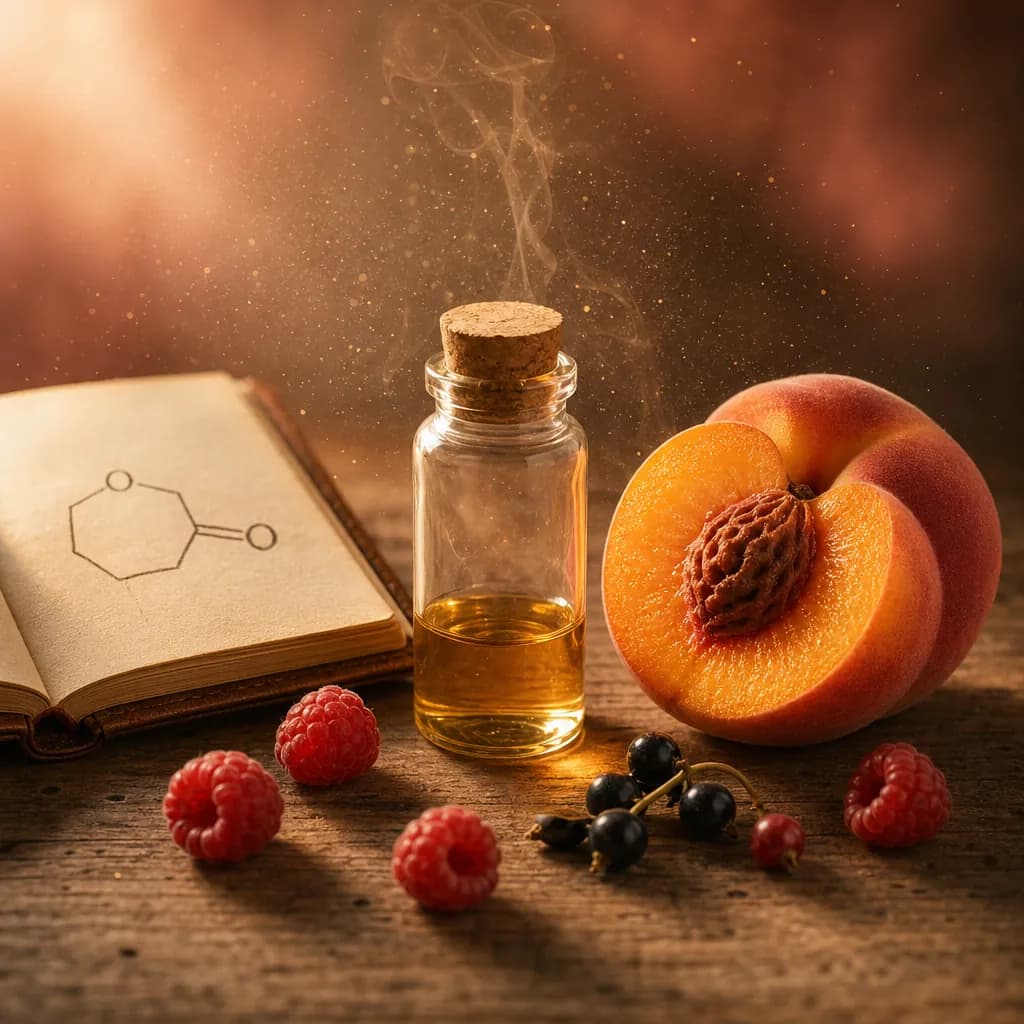
Did you know? The fruity family is one of the most recent in olfactory classification: absent from the Roudnitska wheel, it was only formalised from the 1980s onwards, thanks to the rise of synthetic lactones which made it possible to recreate peach, pear and red berries in fine perfumery with unprecedented fidelity.
The 5 fruity sub-families
| Name | Olfactory profile | Typical notes | Examples |
|---|---|---|---|
| Fruity floral | Light, feminine | Peach, pear, peony, rose, jasmine, raspberry | La Vie Est Belle, Mon Paris, Burberry Her |
| Fruity gourmand | Sweet, appetising | Red berries, cherry, caramel, vanilla, strawberry, blackberry | Angel Nova, Idôle Peach'n Roses |
| Fruity chypre | Sophisticated, tangy | Blackcurrant, peach, bergamot, oakmoss, patchouli | Mitsouko, Nina Ricci Nina |
| Fruity exotic | Tropical, sun-drenched | Lychee, mango, pineapple, passion fruit, melon | Amor Amor |
| Fruity aquatic | Fresh, sparkling | Grapefruit, lemon, mandarin, green apple, green tea | Cool Water Woman, Aqua Allegoria Pera Granita |
Fruity floral
Fruity floral is by far the best-selling sub-family. It pairs tender fruit notes — peach, pear, raspberry — with floral hearts such as peony, rose or jasmine. The result is light, feminine, romantic without being overwhelming.
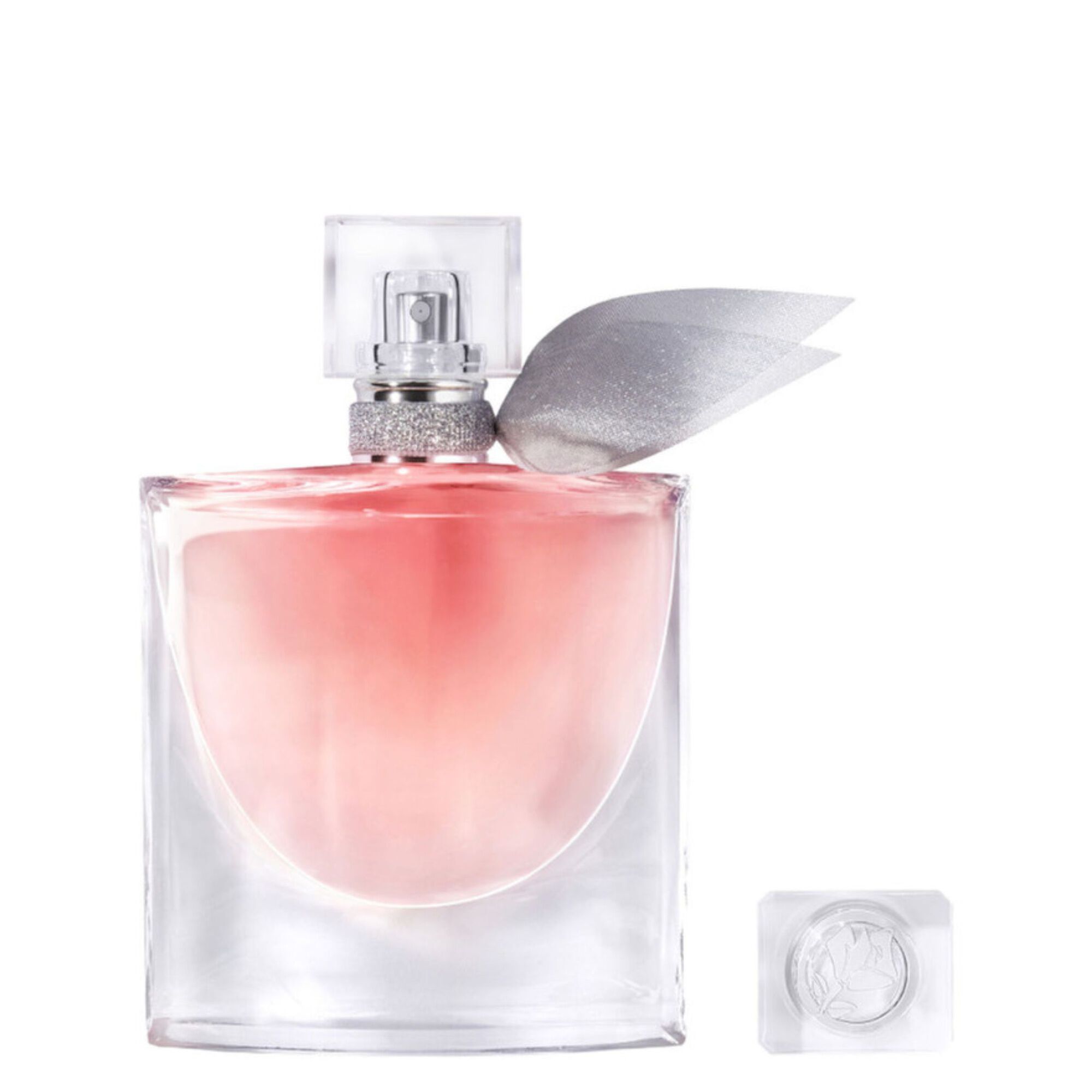
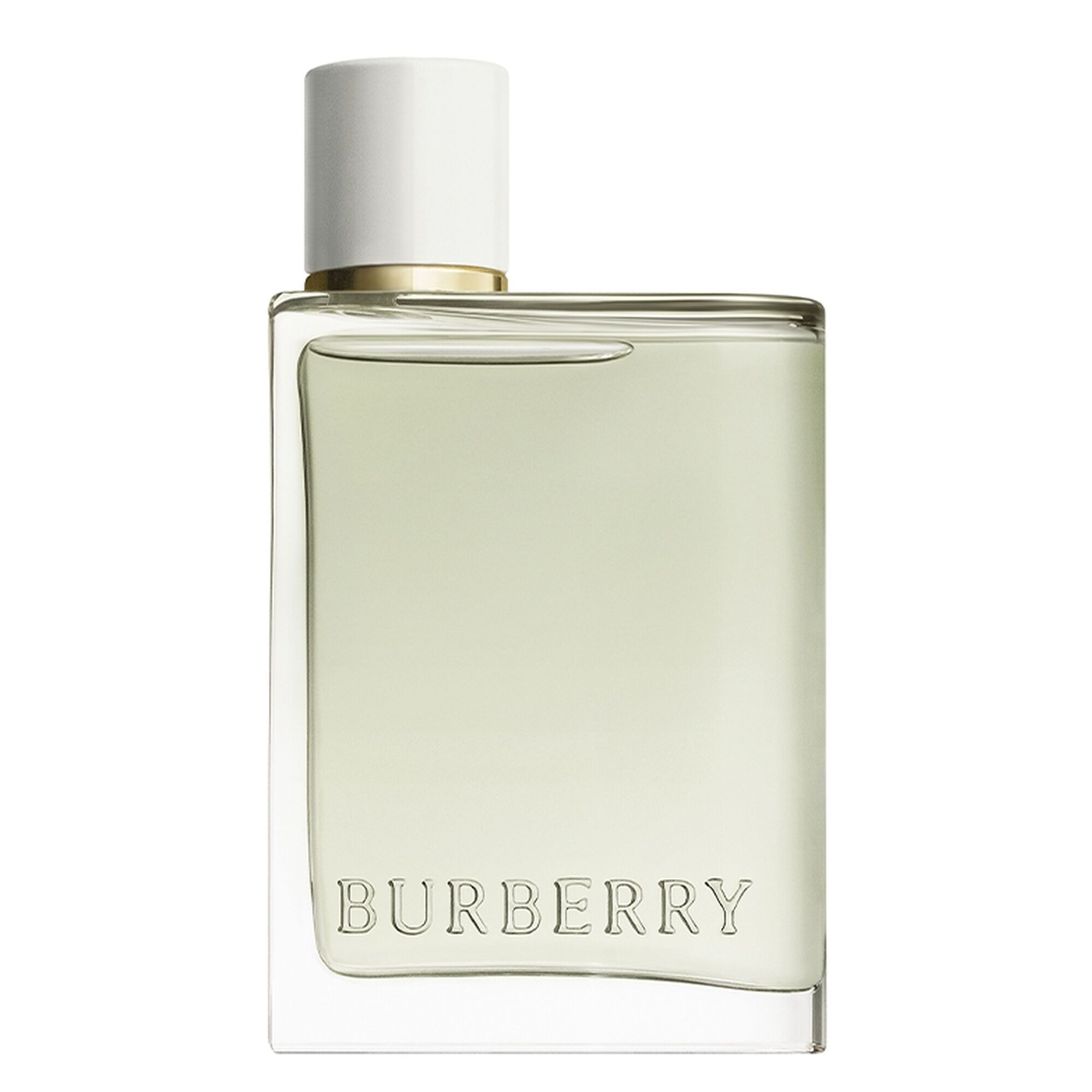
This is the territory of Lancôme La Vie Est Belle, YSL Mon Paris and Burberry Her. Three different approaches — the first leaning more gourmand, the second more tangy, the third more floral — but all three within this soft, luminous register that works for everyday wear. Having smelled hundreds of fruity florals over twelve years, what sets the best ones apart is precisely this balance between the juiciness of the fruit and the softness of the flower — neither ever taking over.
Fruity gourmand
Fruity gourmand leans towards the sweet and appetising. Red berries — cherry, strawberry, blackberry — combine with base notes of caramel, vanilla or praline. This is a warm sub-family that works better in autumn than in high summer.
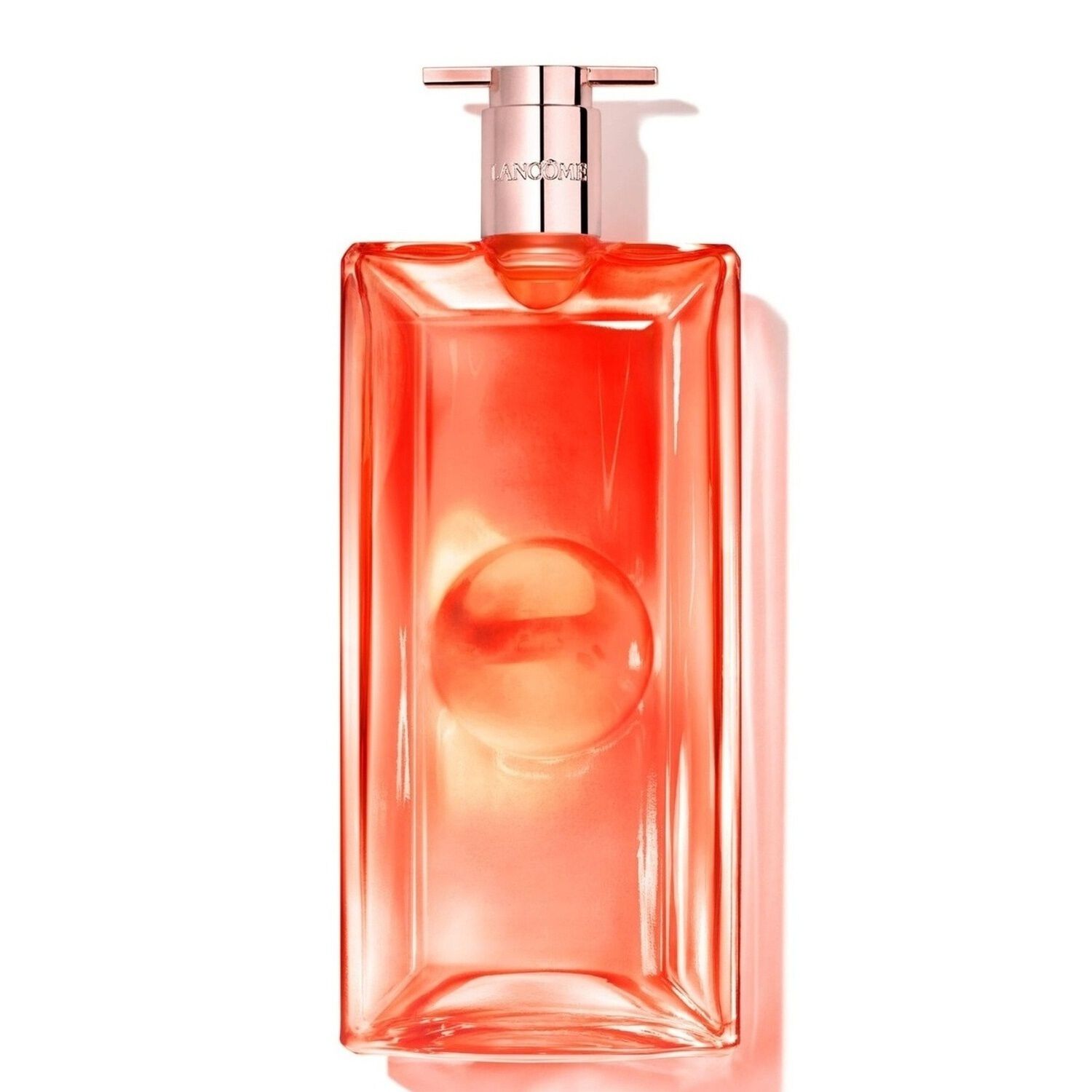
Mugler Angel Nova is the most cited example: concentrated raspberry and blackcurrant over a musky base, gourmand without being heavy. Idôle Peach'n Roses by Lancôme plays in a similar register, but with peach as the central note.
Fruity chypre
Fruity chypre is the most structured sub-family. It inherits the classic chypre architecture — bergamot at the top, oakmoss and labdanum at the base — while grafting on tangy fruity accords: blackcurrant, peach, pear. The result is sophisticated, with remarkable longevity.
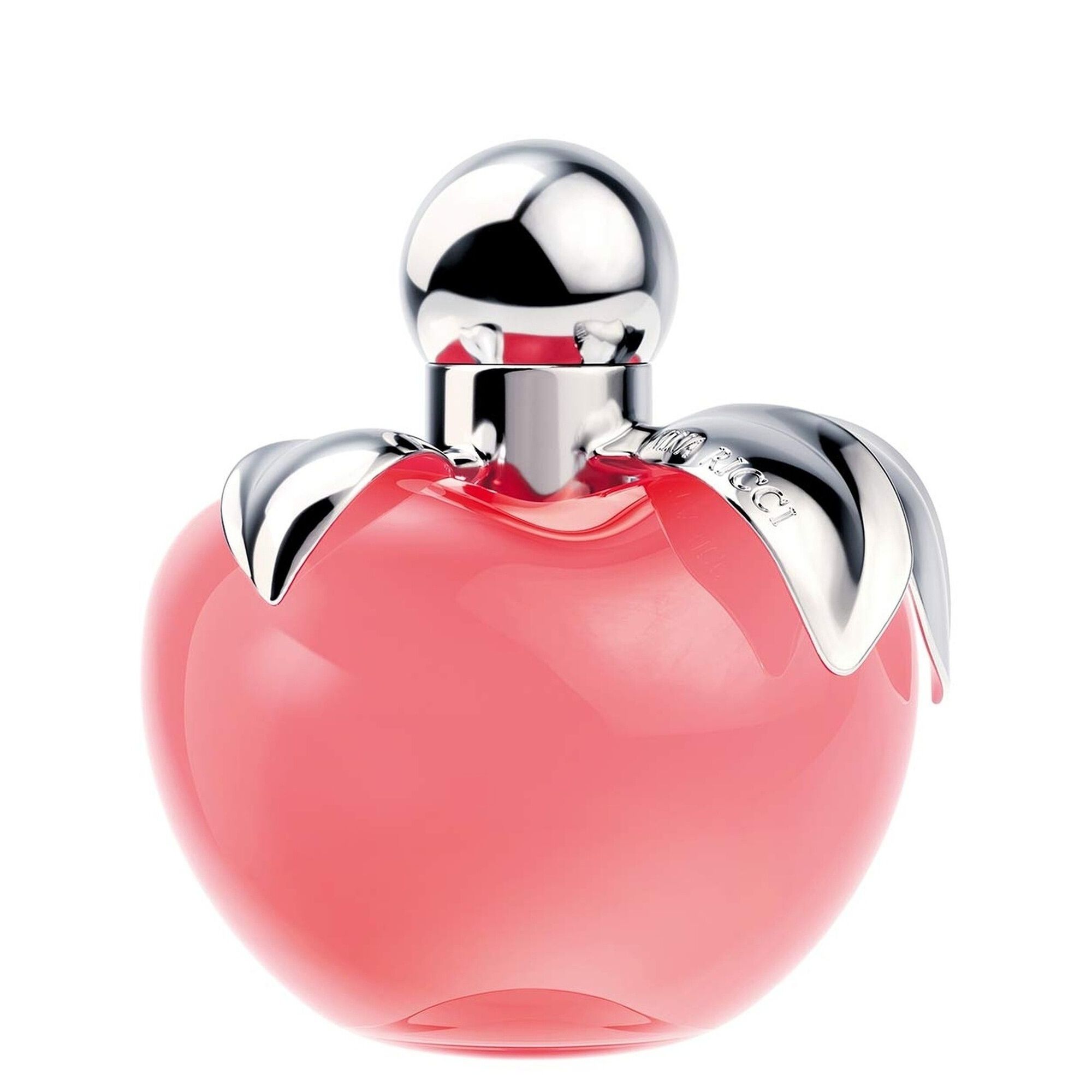
Guerlain Mitsouko (1919) is the historic reference here, even though its profile extends well beyond the fruity register alone. More accessible and more contemporary, Nina Ricci Nina is a fine illustration of the modern version of this pairing.
Fruity exotic
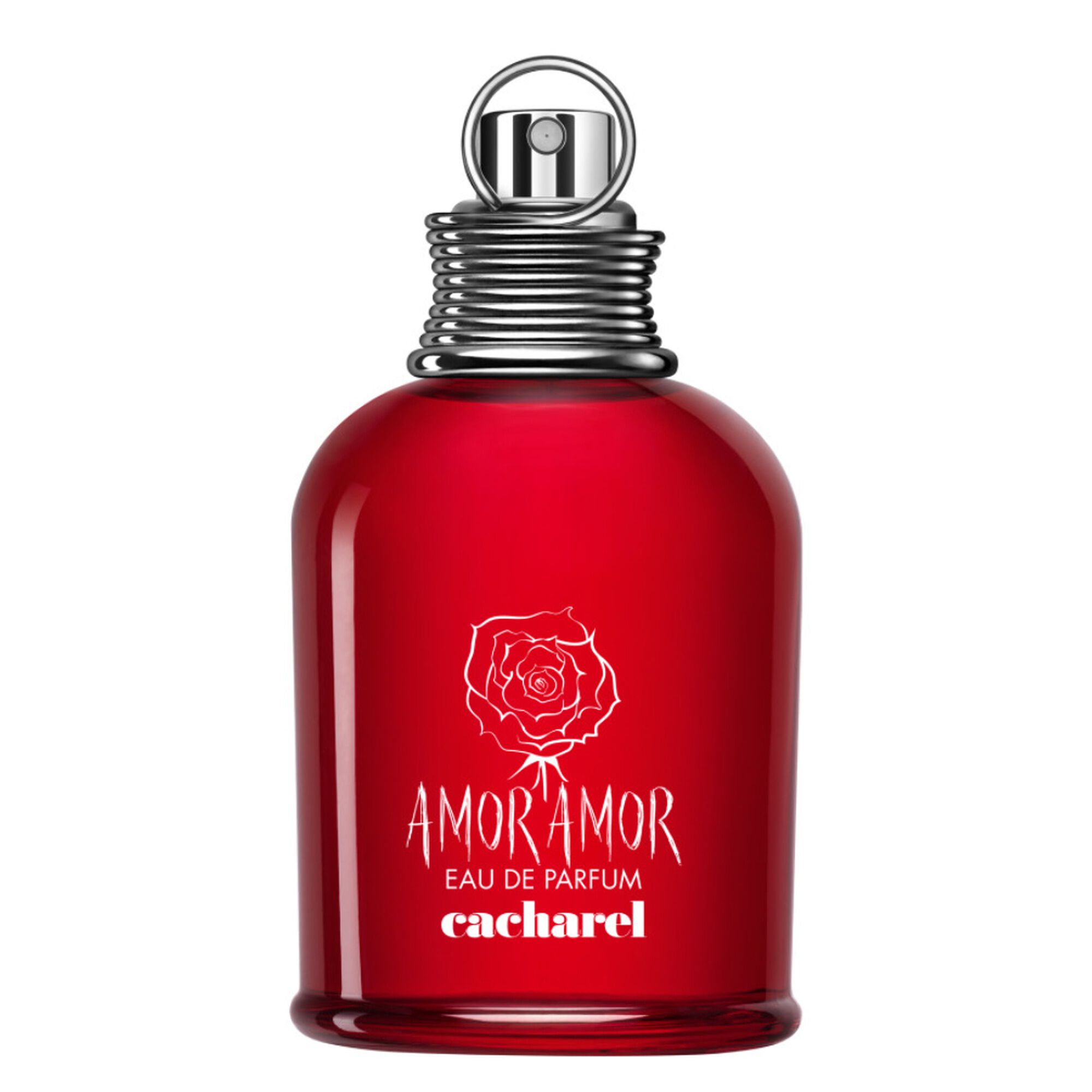
Fruity exotic transports you to the tropics: lychee, mango, pineapple, passion fruit, melon. It is summery, sun-drenched, with a generosity that can sometimes verge on excess if the composition isn't well balanced. Cacharel Amor Amor remains the accessible reference of the genre, with its blackcurrant-orange-grapefruit opening over a musky vanilla base.
Fruity aquatic / Citrus
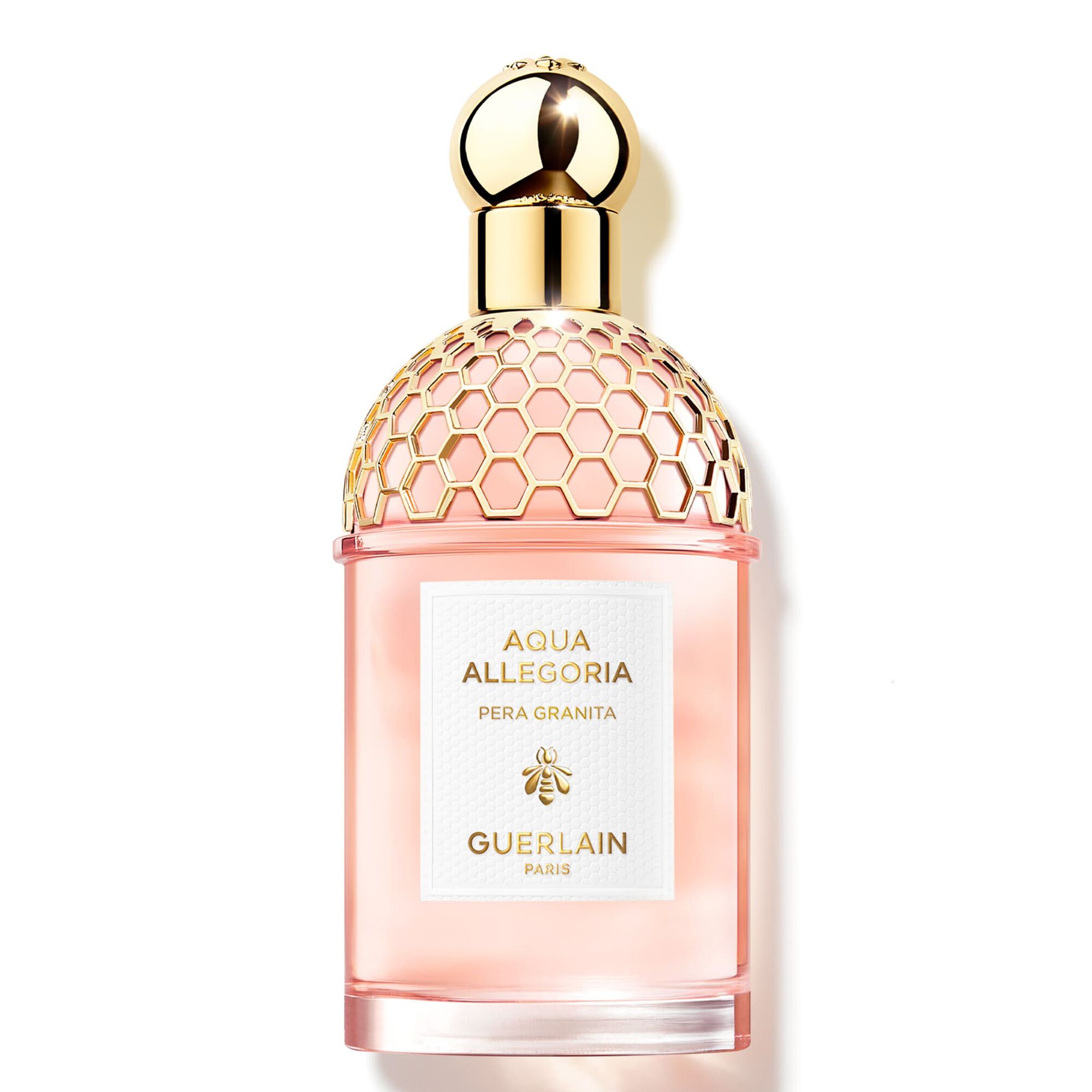
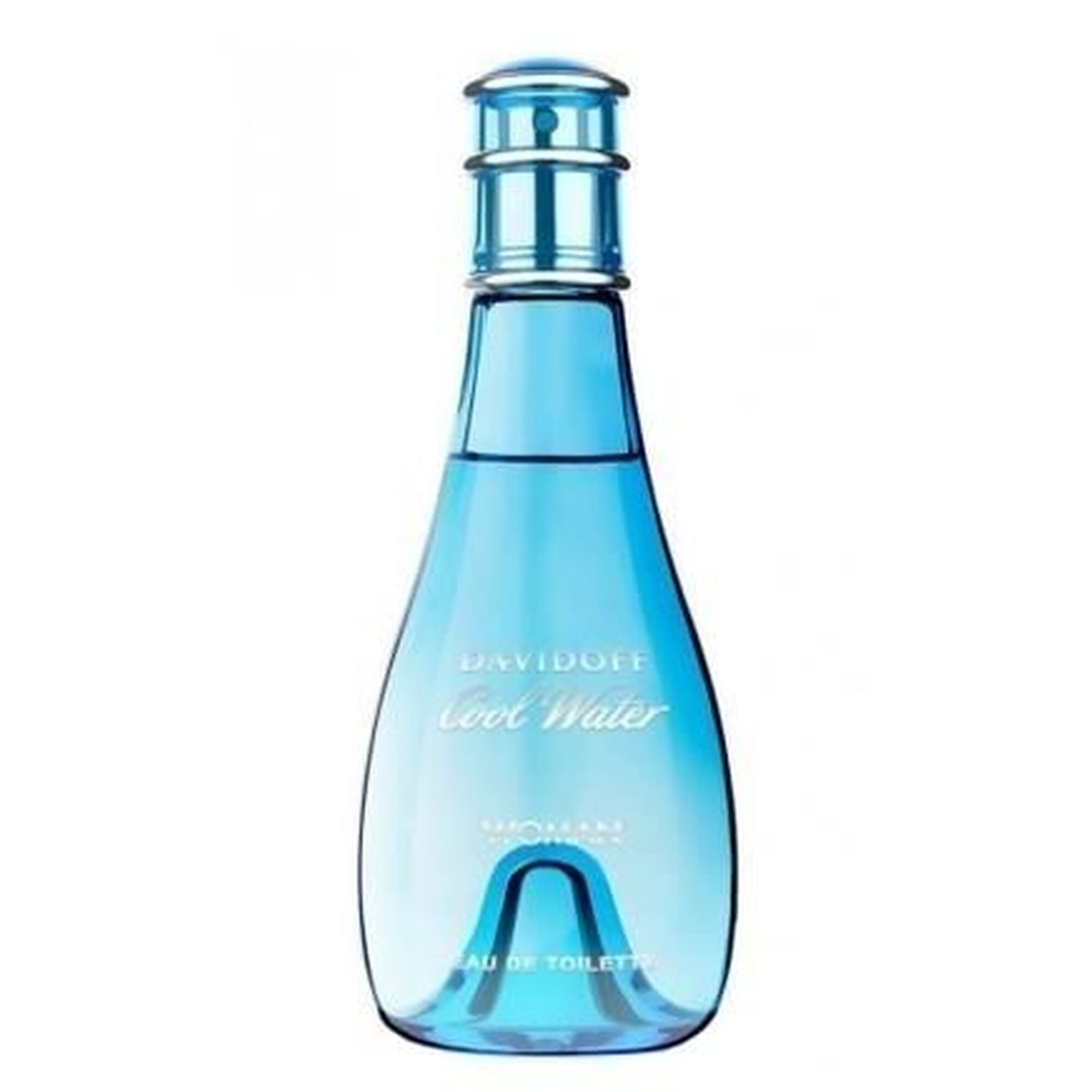
Fruity aquatic crosses the freshness of citrus with watery or lightly fruity accords. Grapefruit, lemon, mandarin, green apple, cucumber — everything here is sparkling and fresh. Calone is often the central molecule in these compositions. Davidoff Cool Water Woman and Guerlain Aqua Allegoria Pera Granita represent two variations on this register: the first more marine, the second centred on pear with almost photographic precision.
Our selection: the best fruity perfumes for women 2026
To take your search further, our fruity for women selection breaks down profiles by occasion and intensity.
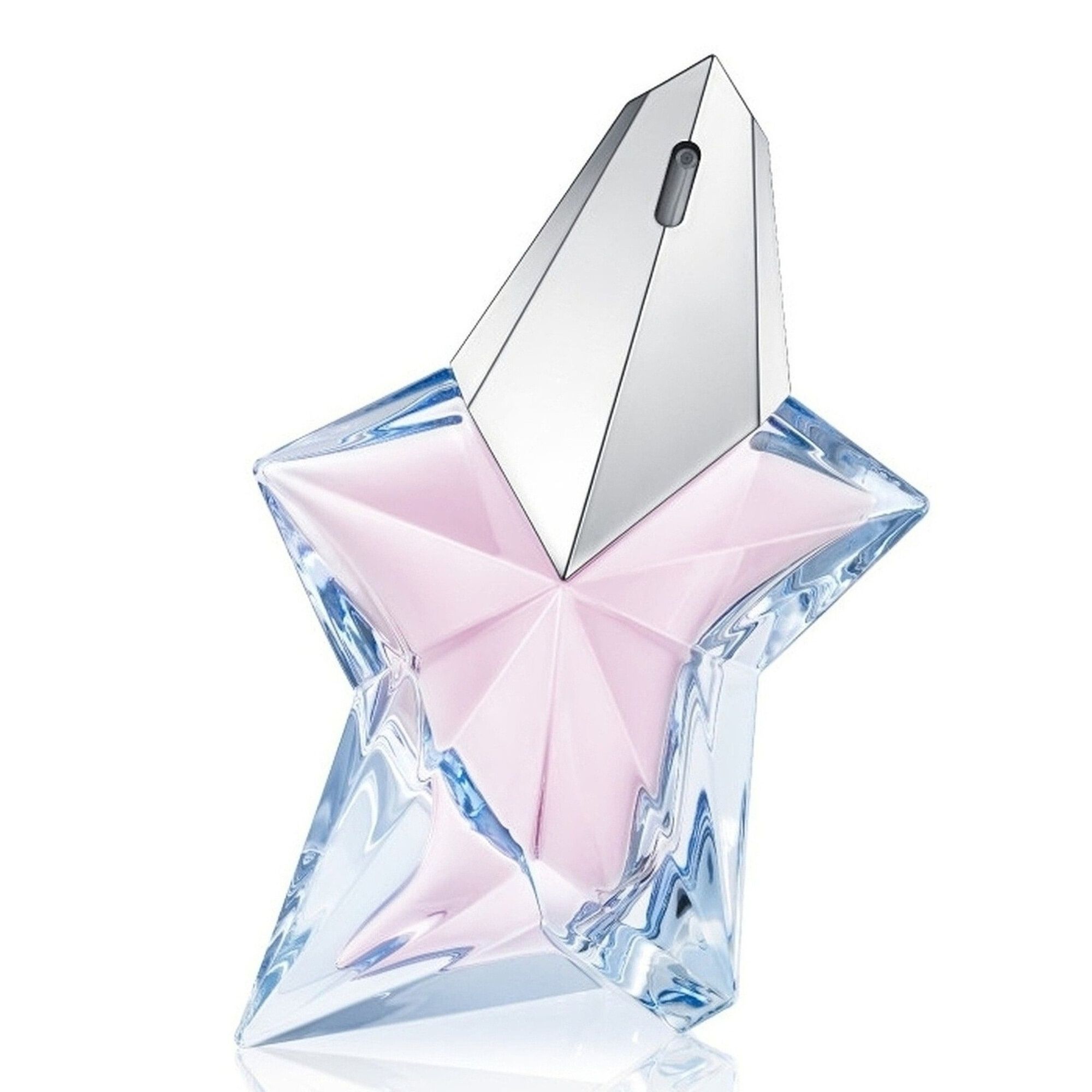
Angel Nova EDP — Mugler
Mugler delivers here its most accomplished fruity gourmand. Raspberry, blackcurrant and redcurrant concentrated over a soft musky base — juicy, direct, full of character. This is not a timid fruity fragrance. For the woman who wants something assertive without tipping into excessive sweetness.
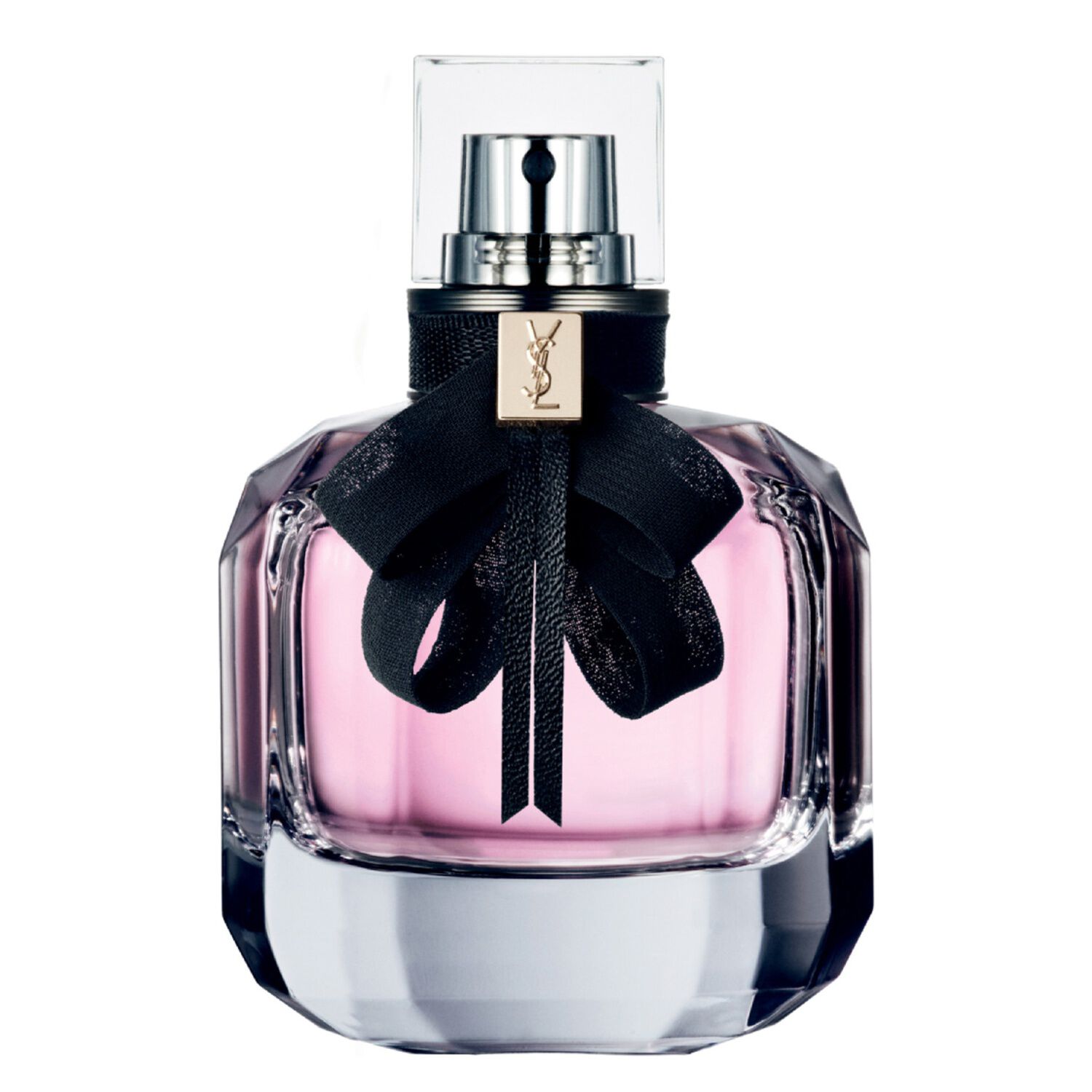
Mon Paris EDP — Yves Saint Laurent
Raspberry and strawberry at the top, peony and rose at the heart note, musky patchouli base. Yves Saint Laurent offers here a modern fruity floral, romantic and spontaneous, with that soft-tangy contrast which so defines the house. The perfume for the Parisian woman who doesn't care for anything too demure.
La Vie Est Belle EDP — Lancôme
Pear and blackcurrant on opening, iris and jasmine at the heart note, gourmand praline-vanilla base. With this perfume, Lancôme has built the best-selling fruity floral in France. Luminous, joyful, accessible to all olfactory profiles. A reference that fully earns its bestseller status.
Idôle Peach'n Roses EDP — Lancôme
Velvety peach and rose as a central duo, precise peach lactone treatment, without excessive sweetness. Lancôme succeeds here in making peach elegant rather than appetising. A springtime and summery fruity floral, appetising in the best sense of the word. For those seeking a luminous, sun-drenched femininity.
Her EDP — Burberry
Blackberry, raspberry and blueberry at the top, jasmine and rose at the heart note. A tangy, modern fruity floral, both fresh and feminine, with excellent longevity for an accessible price. Burberry Her is one of the best value-for-money options in the premium segment — I often recommend it as a first approach to the family.
Nina EDT — Nina Ricci
Green apple and bergamot at the top, rose and gardenia at the heart note, musky woody base. An accessible, fresh and slightly tangy fruity chypre. The apple-shaped flacon has become iconic, but it's the composition that deserves attention: structured, clean, easy to wear. A good entry point into fruity chypre.
Amor Amor EDT — Cacharel
Blackcurrant, orange and grapefruit at the top, rose and jasmine at the heart note, musky vanilla base. A sun-drenched, joyful fruity exotic, among the most accessible on the market. Amor Amor remains a safe bet for starting out in the fruity family without going wrong — and without breaking the bank.
Our selection: the best fruity perfumes for men and unisex 2026
Fruity fragrances for men have their own codes, and they're worth dwelling on. This isn't about velvety peach or concentrated raspberry as in feminine fruity fragrances: here, sparkling freshness dominates. Citrus fruits — grapefruit, lemon, bergamot —, green apple, melon, pineapple, fruity aquatic. The lightness is deliberate, the sillage is spring-like, and the whole remains legible without being simplistic.
The unisex segment is particularly interesting: houses such as Maison Francis Kurkdjian with À la Rose, or Byredo with Mojave Ghost, have shown that fruity fragrances can be just as sophisticated in niche as in mainstream perfumery — with pear-amber or musky-fruity accords of remarkable finesse. I often notice in the boutique that men discovering this segment are surprised by the complexity that fruity notes can achieve — far from the "simple" image they had assumed.
Our fruity for men and unisex selection covers profiles from the freshest to the most structured.
Aqua Allegoria Pera Granita EDT — Guerlain
Juicy pear and bergamot at the top, jasmine and vetiver at the base. A sparkling, fresh fruity aquatic, unisex and sun-drenched. Guerlain treats pear with almost photographic precision — you recognise the fruit, its texture, its light tartness. Perfect for summer, on both women and men.
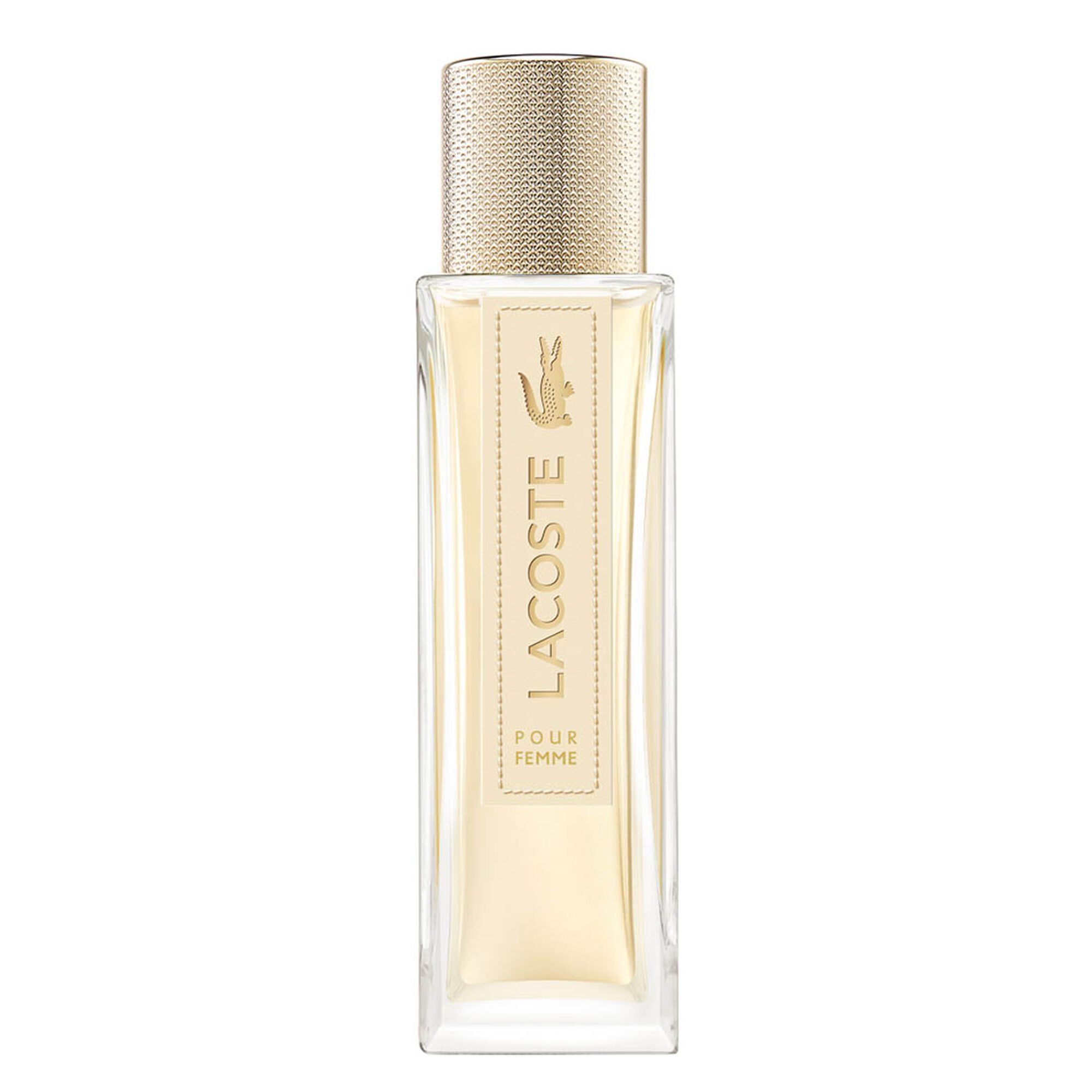
Pour Femme EDT — Lacoste
Grapefruit and mandarin at the top, peony and jasmine at the heart note, musky woody base. A light, fresh, summery fruity fragrance, ideal for hot everyday wear. The value for money is hard to beat in the fruity aquatic segment — it's the kind of flacon you'll grab without hesitation for holidays.
Classique Essence de Parfum — Jean Paul Gaultier
Mandarin and bergamot at the top, rose and orange blossom at the heart note, vanilla woody base. A more concentrated, more fruity version of the original Classique. A warm, unapologetically feminine fruity floral, with superior longevity to the EDT. Recommended for mid-season evenings.
Cool Water Woman EDT — Davidoff
Melon, pineapple and lychee at the top, jasmine and rose at the heart note, musky cedar base. A fresh, sun-drenched fruity aquatic, among the most accessible on the market. For those seeking a light, sparkling fruity fragrance, without fuss — and with decent longevity for an EDT at this price.
Fruity floral and fruity chypre: two worlds worth knowing
| Sub-family | Dominant character | Ideal season | Target audience |
|---|---|---|---|
| Fruity floral | Light, romantic, feminine | Spring, summer | Women 20-40, everyday |
| Fruity chypre | Sophisticated, tangy, structured | Spring, autumn | Women 30-50, occasion |
| Fruity gourmand | Sweet, warm, appetising | Autumn, winter | Women 20-35, evening |
Fruity floral: where flowers meet fruit
Fruity floral is the most intuitive sub-family. It brings together pairings that have become classics: peach-peony, raspberry-rose, pear-jasmine. The fruits bring freshness and juiciness, the flowers structure the heart note and give femininity.
What characterises the modern fruity floral is its balance. The fruits don't dominate to the point of overpowering the flowers, and vice versa. Peach in perfumery, treated via its lactones, gives a velvety roundness that pairs perfectly with peony or rose — without ever tipping into an appetising register.
Lancôme La Vie Est Belle and YSL Mon Paris illustrate two approaches to this territory: the former leans towards gourmand-floral, the latter towards tangy-romantic. Frédéric Malle En Passant, in niche perfumery, explores a more pared-back version with its lilac-cucumber accord of rare delicacy.
Fruity chypre: tangy sophistication
Fruity chypre is a different story altogether. The chypre architecture — bergamot at the top, oakmoss and labdanum at the base — imposes a structure, a longevity, a depth that fruity floral doesn't have. When blackcurrant, peach or fruity bergamot is grafted onto it, the result is both tangy and sophisticated.
Guerlain Mitsouko (1919) remains the founding reference for this pairing, even though its profile is more complex than a simple fruity chypre. The genre's revival in the 2000s produced more accessible versions, of which Nina Ricci Nina is the most cited example. A customer recently told me she was looking for "something fruity but that doesn't smell teenage" — that is precisely the territory of fruity chypre, and Nina Ricci Nina was my immediate answer.
Our catalogue covers this sub-cluster well: Nina EDT by Nina Ricci is available and represents an ideal entry point into feminine fruity chypre.
How to tell the two families apart when buying?
In practice, the distinction comes down to two criteria: longevity and structure.
A fruity floral fades faster — it's designed to be fresh, light, spring-like. It suits everyday wear perfectly, the office, summer days. A fruity chypre lasts longer on the skin, with a more assertive sillage and a complexity that reveals itself in the base note. It's better suited to occasions, evenings, mid-seasons.
If you're torn in the boutique: apply the fruity floral on one wrist, the fruity chypre on the other. Wait twenty minutes. The fruity floral will still be fresh and light; the fruity chypre will have begun to unfold, revealing its layers. It's this development over time that makes all the difference.
Fruity perfume with peach and red berries: the family's star notes
Peach in perfumery: between velvety softness and sensuality
Peach in perfumery is a synthetic note before it is a natural one. Direct extraction from the fruit yields little result — it's chemistry that allows this characteristic velvety softness to be recreated.
Gamma-undecalactone is the key molecule: it reproduces ripe peach with striking precision, slightly creamy, almost milky. Delta-decalactone adds an even softer peach-cream dimension. These two lactones, combined with fruity aldehydes, allow the construction of peach accords ranging from light and fruity to sensual, depending on the dosage.
Guerlain Mitsouko (1919) was one of the first great perfumes to use peach as a central note, within a chypre context that gave it unexpected depth. A century later, Lancôme Idôle Peach'n Roses treats the same note with contemporary precision, in a lighter, more summery register.
Red berries: blackcurrant, raspberry, cherry — vibrancy in a flacon
Red berries in perfumery are treated differently depending on the fruit. Blackcurrant is often rendered through blackcurrant bud notes — a natural material that exists and brings an almost sharp vibrancy. Raspberry is largely synthetic, built around raspberry ketone (para-hydroxyphenyl butan-2-one). Cherry and blackberry are obtained through combinations of lactones and esters.
Recently, a customer told me she was looking for a perfume "that smells like strawberry jam but not like sweets." The distinction is precise and important: a well-constructed red berries fruity fragrance has acidity, vibrancy, something natural about it — not that flat sweetness associated with confectionery. Mugler Angel Nova achieves this balance with its concentrated red berries over a musky base. Burberry Her and YSL Mon Paris play in the same register, with different floral approaches.
Our Tendance Parfums fruity favourites: 3 top picks
Idôle Peach'n Roses EDP — Lancôme — Velvety peach and rose as a central duo, precise peach lactone treatment, sun-drenched fruity floral. The most elegant peach in the catalogue.
Angel Nova EDP — Mugler — Concentrated red berries, raspberry and blackcurrant over a musky base. A fruity indulgence without excessive sweetness, full of character.
Nina EDT — Nina Ricci — Green apple and tangy bergamot, accessible fruity chypre. The most structured fresh feminine fruity fragrance in the selection.
How to wear a fruity perfume
Which season suits a fruity perfume?
Fruity is above all a spring and summer family. Its lightness, its freshness, its sun-drenched sillage make it the natural choice as temperatures rise. Fruity aquatic and fruity floral fragrances are particularly well suited to hot days.
In autumn, you can turn to warmer sub-families: fruity chypre, with its woody structure and longevity, carries well through the mid-season. Fruity gourmand, with its vanilla bases and concentrated red berries, suits the first cold days. On the other hand, a fruity aquatic in the depths of winter risks feeling out of place — too light, too volatile for low temperatures.
Fruity perfume for day or evening?
By day, opt for a fruity floral or a fruity aquatic in EDT: fresh, light, spring-like, it fits effortlessly into any context. The office, commuting, an outdoor lunch — all suit it.
In the evening, fruity gourmand and fruity chypre in EDP take over. Their longevity is superior, their sillage more assertive, their depth better suited to enclosed spaces and occasions where you want to be noticed. A sophisticated fruity chypre like Nina Ricci Nina can even hold its own at a formal evening event.
How much does a good fruity perfume cost?
The accessible segment starts around 20-40 €: Cacharel Amor Amor, Davidoff Cool Water Woman, Lacoste Pour Femme cover this range well. Between 50 and 100 €, you enter the premium segment with Burberry Her, Nina Ricci Nina, YSL Mon Paris, Mugler Angel Nova, Lancôme La Vie Est Belle. Beyond 100 €, niche houses offer fruity fragrances of superior precision and originality — but quality exists at every price point in this family.
Frequently asked questions about fruity perfumes
What are the best fruity perfumes?
It all depends on the profile you're after. For a luminous fruity floral, La Vie Est Belle by Lancôme remains the best-selling reference. For a fruity gourmand with character, Angel Nova by Mugler is hard to beat. For a structured fruity chypre, Nina by Nina Ricci is an ideal entry point.
What exactly is a fruity perfume?
A fruity perfume is an olfactory composition whose dominant notes evoke fruits — peach, pear, raspberry, blackcurrant, citrus, exotic fruits. The family relies heavily on synthetic lactones and fruity esters. It differs from Citrus fragrances through its more pulpy, rounder texture.
What is the best fruity perfume for women?
La Vie Est Belle by Lancôme is the absolute bestseller in this segment in France — pear, blackcurrant, iris, praline-vanilla base. Mon Paris by YSL is a more tangy, romantic alternative. For peach as the central note, Idôle Peach'n Roses by Lancôme is the reference. Discover all our recommendations on our fruity for women page.
Which fruity perfume should I choose for a man?
Fruity fragrances for men play on citrus, green apple, melon and aquatic notes rather than red berries or peach. Aqua Allegoria Pera Granita by Guerlain is a lovely unisex option centred on pear. Cool Water Woman by Davidoff covers the accessible fruity aquatic segment. Our fruity for men selection details profiles by budget.
What is the difference between a fruity floral perfume and a fruity gourmand perfume?
Fruity floral pairs tender fruits (peach, pear, raspberry) with floral hearts (rose, peony, jasmine) — the result is light, romantic, suited to everyday wear. Fruity gourmand leans towards the sweet with concentrated red berries and vanilla or caramel bases — warmer, better suited to autumn evenings.
What are the best fruity chypre perfumes for women?
Nina by Nina Ricci is the accessible reference of the genre: green apple, bergamot, rose, musky woody base — both structured and fresh. For a more historic and complex version, Guerlain Mitsouko (1919) remains the founding reference, even though its profile extends beyond the fruity register alone. Fruity chypre is a sub-family worth exploring patiently.
Do fruity perfumes last long?
It depends on the sub-family and the concentration. A fruity aquatic in EDT will last two to four hours — that's its light, volatile nature. A fruity chypre in EDP can last six to eight hours, sometimes more. Fruity gourmands, with their vanilla bases, generally have good longevity. To maximise longevity, apply on warm points of the body (wrists, neck, inner elbow) and on moisturised skin.
What is the fruity family's place in olfactory classification?
The fruity family is one of the most recent in modern perfumery. Absent from the earliest French classifications, it was only formalised from the 1980s onwards with the rise of synthetic lactones. Today it sits between the floral, Citrus and gourmand families, with which it frequently overlaps. To learn more, see our guide to fragrance families.