
Winter perfume for women: warmth, sillage and depth
In winter, orientals, woody and amber fragrances last longer on skin. Discover which fragrance families to favour and how to apply them by occasion.
In winter, a woman does well to choose an oriental, woody or amber parfum: the cold slows down evaporation and allows warm materials — resins, thick musks, vanilla, smoky woods — to unfold fully on the skin rather than disappearing within minutes. Lighter families take a back seat; dense compositions reveal their full amplitude from the very first hours. On this page: the criteria for choosing according to the occasion, the priority fragrance families for the cold season, recommended concentrations and a concrete selection.
Winter and women's perfumery — when the cold calls for olfactory warmth
As soon as temperatures drop, our relationship with parfum changes. The cold tightens the skin's pores and alters the diffusion of odour molecules: light, hesperidic notes evaporate faster, while warm, resinous materials unfold with greater amplitude and longevity. This is a purely physical reaction, but it naturally steers choices towards more enveloping, denser compositions, capable of creating that sensation of warmth we instinctively seek in the cold season.
Winter is also a period of strong contrasts: the biting cold outdoors against the warmth of an interior, scarce daylight against lit candles, thick coats against dressed-up outfits for festive occasions. Parfum plays a particular, almost tactile role here — it becomes a second skin, an olfactory presence that accompanies cosy mornings just as much as sophisticated evenings. Women who wear vanilla orientals or amber woody scents in winter are not doing so by chance: these families answer something profound in how we experience the season.
What the winter context demands
In winter, a parfum needs to last. Not just in terms of longevity — although longevity is an essential criterion when you're bundled up and can't reapply — but also in intensity. Sillage that's too subtle gets lost under scarves and high collars; projection that's too timid doesn't make it through the layer of fabric. Compositions with high molecular density, those built on base notes rich in resins, warm musks or dark woody notes, are naturally at an advantage.
That said, there's no question of saturating the atmosphere. Winter cocooning has its own codes: the truest winter perfumes are not olfactory assaults, but generous, sensual presences that reveal themselves gradually over the hours. The notes to avoid in the cold season are those that work on lightness and immediacy — very fresh aquatics, sharp greens, isolated citrus notes without an oriental base note. Not that they lack interest, but their mode of expression is thwarted by the cold and by thick clothing.
Families and notes suited to women's winter perfumery
Three main fragrance families dominate women's winter perfumery. Vanilla Oriental, first of all, with its accords of gourmand vanilla, tonka bean, caramel or chocolate, which play on softness and sensoriality. These compositions have an immediate, almost edible warmth, which appeals just as much in cosy everyday contexts as in festive settings. Amber Woody, next, brings more substance and complexity: amber here is often paired with musk, sandalwood or patchouli to create deep, sustained sillages, more subtle than vanilla orientals but remarkably persistent on skin and clothing. Spicy Oriental, finally, introduces a dramatic, assertive dimension through warm spices — cinnamon, clove, cardamom — which literally warm up perception and give the parfum a theatrical presence, particularly well suited to winter evenings.
Among the notes to favour: vanilla, of course, the quintessential olfactory anchor of winter, present in almost all recommended compositions; amber, often achieved through accords of resins, labdanum or benzoin, which lends depth and longevity; cinnamon and warm spices, which create a pleasant tension between warmth and bite; cacao and gourmand notes, which add an almost synaesthetic sensory dimension; and finally patchouli, an earthy, warm note that serves as the foundation for many orientals and amber woody scents.
Selection for everyday winter wear
For ordinary winter days — the office, errands, lunches with friends, afternoons at home — everyday perfumes need to be both warm and subtle enough not to weigh down the atmosphere. Angel (Mugler) is probably the ultimate reference in this exercise. This foundational composition of the gourmand family pairs sweet candyfloss and luminous coconut in the top notes, before moving into a fruity, floral heart note, and settling into an intense base note of patchouli, chocolate, caramel, vanilla and tonka bean. The result is both distinctive and enveloping, with a sillage that lingers for hours without ever becoming overpowering at the right dosage.
La Nuit Trésor (Lancôme) follows the same everyday profile with a fresher top note approach — pear, bergamot — before the heart note of orchid vanilla, black rose and passion fruit takes over the composition. It's in the base note that this parfum reveals all its winter richness: praline, caramel, vanilla, coffee, incense and patchouli form a complex, gourmand base note, at once soft and lightly smoky. This base note has remarkable longevity on dry skin, making it a reliable ally for long winter days.
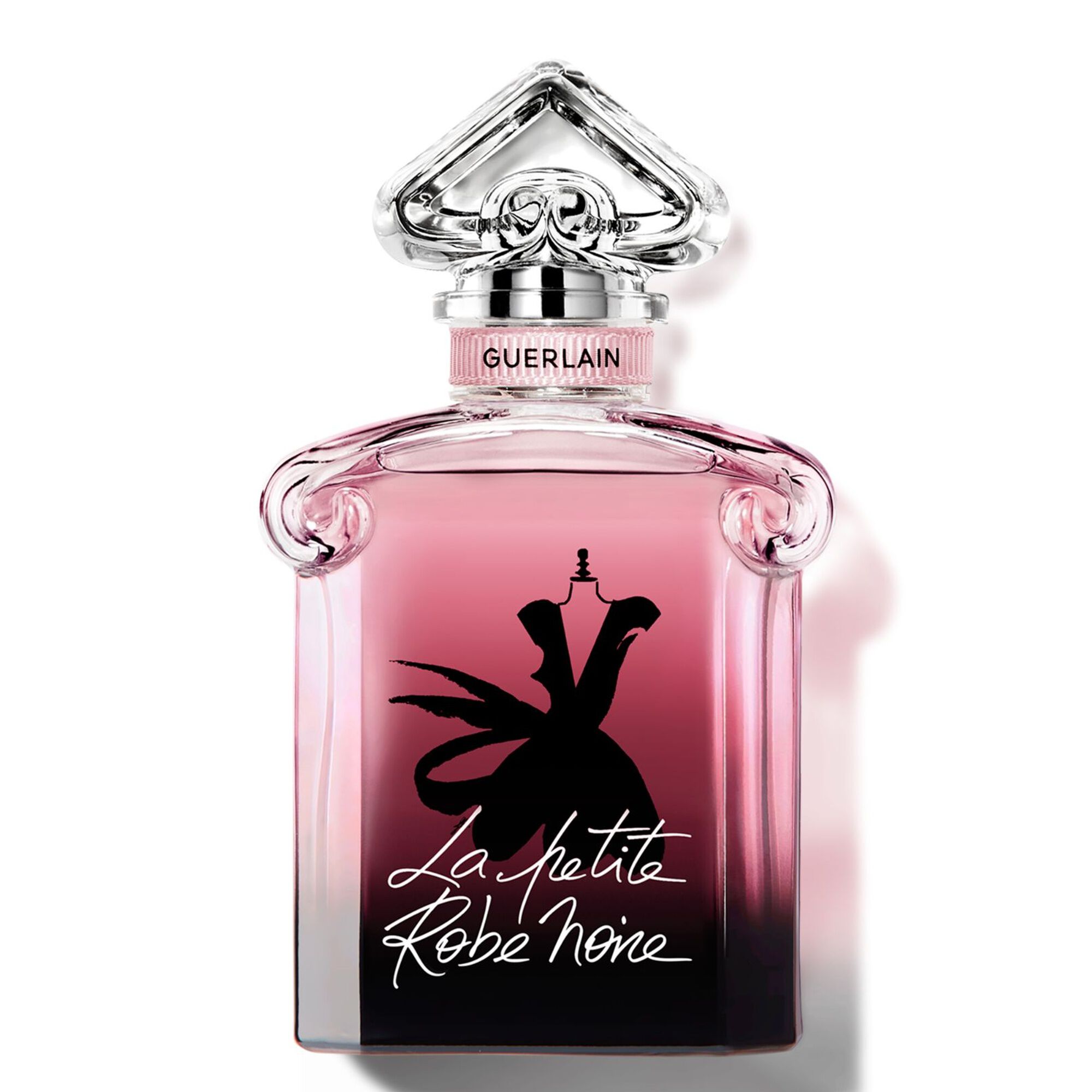
La Petite Robe Noire (Guerlain) takes a more Parisian, slightly retro approach. Almond and anise in the top notes set the tone: this is a parfum that fully embraces its gourmand character without ever tipping into one-dimensional sweetness. The macaron and liquorice heart note is a recognisable signature, while the vanilla, patchouli and tea base note brings a dry, elegant touch. This subtle patchouli avoids excessive sweetness and keeps the composition in a sophisticated register. The intensified version — La Petite Robe Noire Intense (Guerlain) — amplifies these characteristics for an even more assertive rendering in the cold season.
Born in Roma Extradose Donna (Valentino) is a bolder proposition, built around a blackcurrant, rum and vanilla trio that creates an accord both fruity, slightly boozy and deeply warm. The vanilla base note is generous without being overwhelming, and the rum brings a spicy, sensual note that sets this parfum apart from smoother vanilla orientals. It's a composition suited to skin types that love perfumes with an assertive character, even in everyday situations.

Selection for winter occasions
Winter evenings, end-of-year celebrations, dressed-up dinners, New Year's Eve nights — so many contexts where a parfum can afford to be more intense, more theatrical, more memorable. The rule, however, remains the same: no saturation, but an olfactory presence that leaves a lasting impression.
La Belle (Jean Paul Gaultier) is a composition that surprises with its duality. A luminous pear-bergamot opening precedes a floral-leather heart note with beautiful tension, before the vanilla, vetiver, amber and musk base note creates a sillage that is both soft and lightly smoky. This vetiver-laced base note brings an almost masculine dimension to the composition, lending it an understated elegance perfectly suited to dressed-up occasions without excessive sophistication.
A great oriental classic from a Parisian house on the Right Bank — which perfumery soberly refers to as Coco — remains an essential reference for the most formal winter evenings. Its pyramid opens on Bulgarian Rose paired with coriander, jasmine and mandarin, before clove, rose and orange blossom structure a spicy-floral heart note of rare elegance. The base note — amber, sandalwood, opoponax, tonka bean, labdanum and vanilla — has a richness and depth that few compositions have matched since its creation. This is a parfum that demands substance: it comes into its own on warm skin and in the intimately lit settings of festive dinners.
Another great oriental from a Parisian house, born from the range and often referred to by its version featuring vanilla and almond notes, offers a more sensual and enveloping approach. This parfum — whose base note pairs vanilla, almond, tonka bean, Tolu balsam, sandalwood and cashmeran — has an almost powdery softness in the base note, carried by Damask and Grasse roses and orange blossom in the heart note. Bitter orange and cedrat in the top notes bring a slightly bitter contrast that keeps the composition from tipping into excessive sweetness. It's precisely this tension between bitterness and softness that makes it a highly sophisticated evening parfum.
La Nuit Trésor Vanille Noire (Lancôme) offers a darker, more mysterious alternative to the classic La Nuit Trésor, leaning further towards deep, resinous notes. For nocturnal occasions calling for an intense, memorable sillage, this composition is a confident choice.
Application tips for winter
In winter, the classic application zones remain the wrists, the inner elbow and the neck — but the season calls for a few adjustments. Since body warmth is the main driver of parfum diffusion, it's best to spray on areas where blood flow is close to the surface: the inside of the wrists, the base of the neck, the sternum. These areas stay warm even outdoors, ensuring continuous diffusion throughout the day.
The temptation to over-apply in winter to compensate for the smothering effect of clothing is real, but best avoided: vanilla orientals and amber woody scents are dense compositions that project more strongly in heated, enclosed spaces. Two to three sprays are generally enough to achieve a noticeable sillage without saturating the indoor atmosphere. On clothing, textiles such as wool or cashmere retain odour molecules for many hours — a light spray on the underside of a collar or scarf can extend the parfum's presence by several additional hours, with a soft, continuous diffusion as you move.
Dry skin holds parfum less well than hydrated skin: applying an unscented moisturiser or neutral cream before your parfum significantly improves longevity. This is a particularly useful step in winter, a season during which skin tends to be drier due to central heating and cold temperatures. For the most intense perfumes — compositions with a pronounced patchouli base note or spicy orientals — this precaution also prevents projection from being too strong first thing in the day.



Frequently asked questions
Orientals (vanilla, resins, incense), warm woody scents (oud, sandalwood, smoky cedar) and amber florals hold up better in the cold and last longer on skin. Hesperidic and aquatic fragrances, being too volatile, evaporate quickly as temperatures drop and are best kept for milder seasons.
In winter, favour eau de parfum or extrait de parfum: their high concentration of raw materials ensures long-lasting diffusion despite the cold. Eau de toilette remains suitable for heated environments, but requires more generous application to maintain the sillage throughout the day.
Spray on areas of body warmth — the base of the neck, wrists, inner elbows, décolletage — right after your shower, on slightly damp or moisturised skin. Avoid rubbing your wrists together: this breaks down the top notes and disrupts the composition's olfactory development.
Soft spicy scents (cardamom, pink pepper, cinnamon) suit evenings and dressed-up outfits. For everyday wear or the office, opt for a milky woody or amber floral: the sillage stays enveloping without dominating. Save intense spicy and smoky notes for nights out or weekends.