Autumn parfum for men: woody warmth and spicy elegance
Spicy woods, amber, aromatic notes: which parfums suit men in autumn? Fragrance selection and seasonal application tips.
Autumn and men's fragrance — when the season dictates its own olfactory rules
Autumn imposes a transition that the parfum feels before the nose even does. Temperatures drop gradually, the air grows denser and more humid, laden with the scent of wet earth, decomposing leaves and freshly burned wood. In this particular sensory context, the light, watery fragrances of summer suddenly seem out of place, too volatile to hold on skin that itself reacts differently to the cold.
This is a season that calls for contained warmth rather than solar brightness, understated elegance rather than summer projection. For men, autumn is often the period when olfactory choices become most personal, most assertive: what's wanted is a parfum that accompanies, that envelops, that stays faithful throughout a day at the office or an evening that stretches on.
What the season imposes olfactorily
Cold slows the diffusion of odour molecules: a parfum worn generously in summer sometimes needs to be dosed differently in autumn, since lower temperatures reduce projection and change the way skin releases volatile compounds. This phenomenon works in favour of warm, dense fragrances — those that might have seemed stifling at 30 degrees reveal all their precision and complexity once the air cools.
Conversely, certain very fresh fragrance families — aquatic aromatics, light fougeres, pure citrus — lose some of their contextual relevance in autumn. They don't disappear, but their statement becomes less legible, less coherent with the surrounding environment. The season calls for families that speak the same language as the nature around us: wood, spices, resin, leather, sometimes tobacco.
The families and notes that work in autumn
Three major fragrance families stand out in particular for accompanying men's autumn wardrobes. Spicy woods, first, combine the solidity of dry woods with the animal warmth of spices — pepper, cinnamon, cardamom — to compose fragrances that are both grounded and dynamic. Amber woods enrich this structure with a sweeter, more resinous touch, more enveloping, ideal for evenings that turn cold quickly. Aromatic fragrances, finally, when built on notes of tobacco, vetiver or sage, offer a more discreet but equally relevant alternative for daytime wear.
Among the notes to favour, cedar brings an elegant, almost mineral dryness that evokes damp bark and undergrowth. Black pepper or Sichuan pepper add a piquant vibrancy that awakens woody accords without weighing them down. Tobacco, used sparingly in modern parfums, introduces an earthy, slightly sweet depth that resonates perfectly with the season's golden light. Vetiver, a multifaceted root — smoky, earthy, inky, guaiac-like — is perhaps the most autumnal note there is. As for cinnamon, it brings that recognisable spicy warmth, to be handled with skill to avoid a pastry-like effect.
Selection for everyday wear
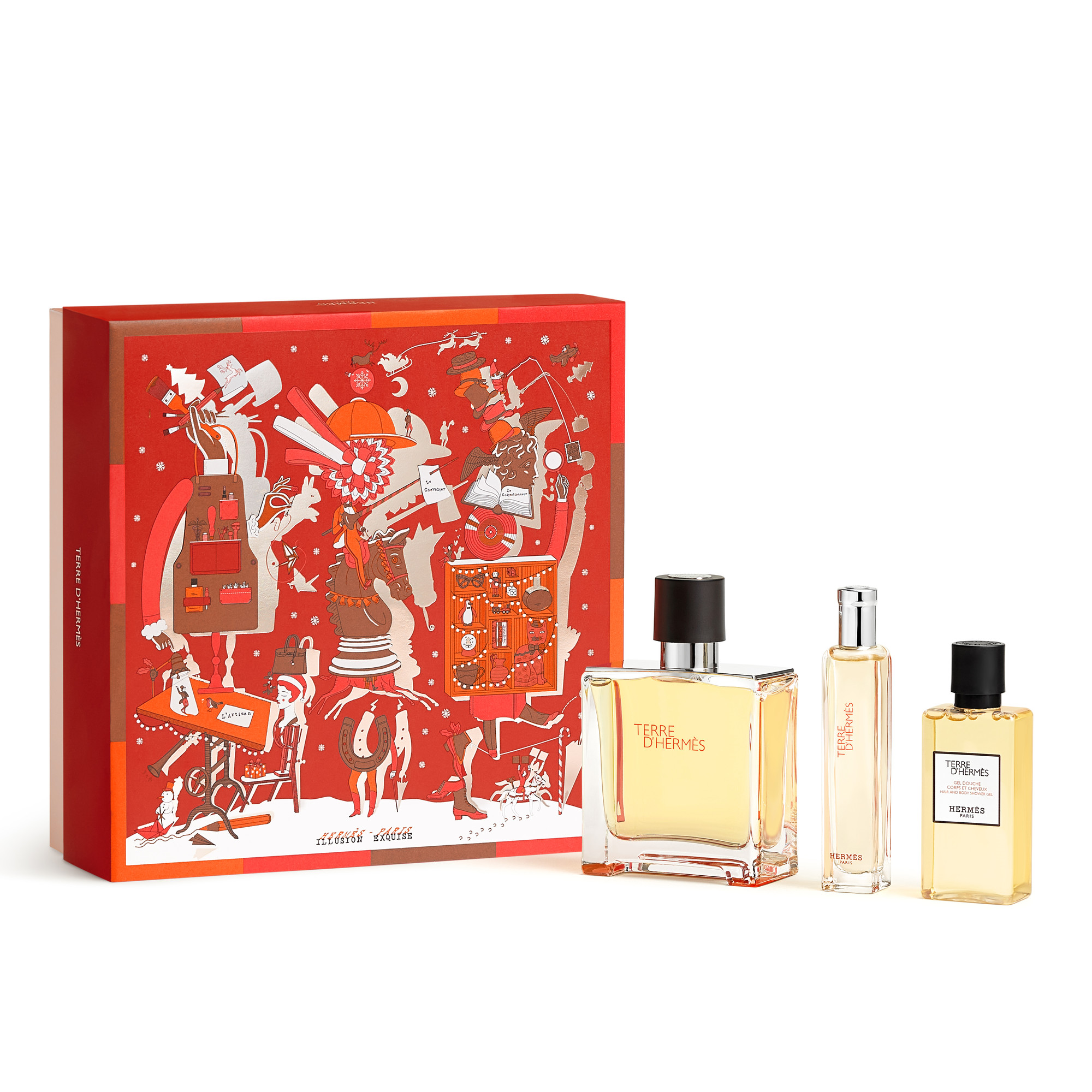
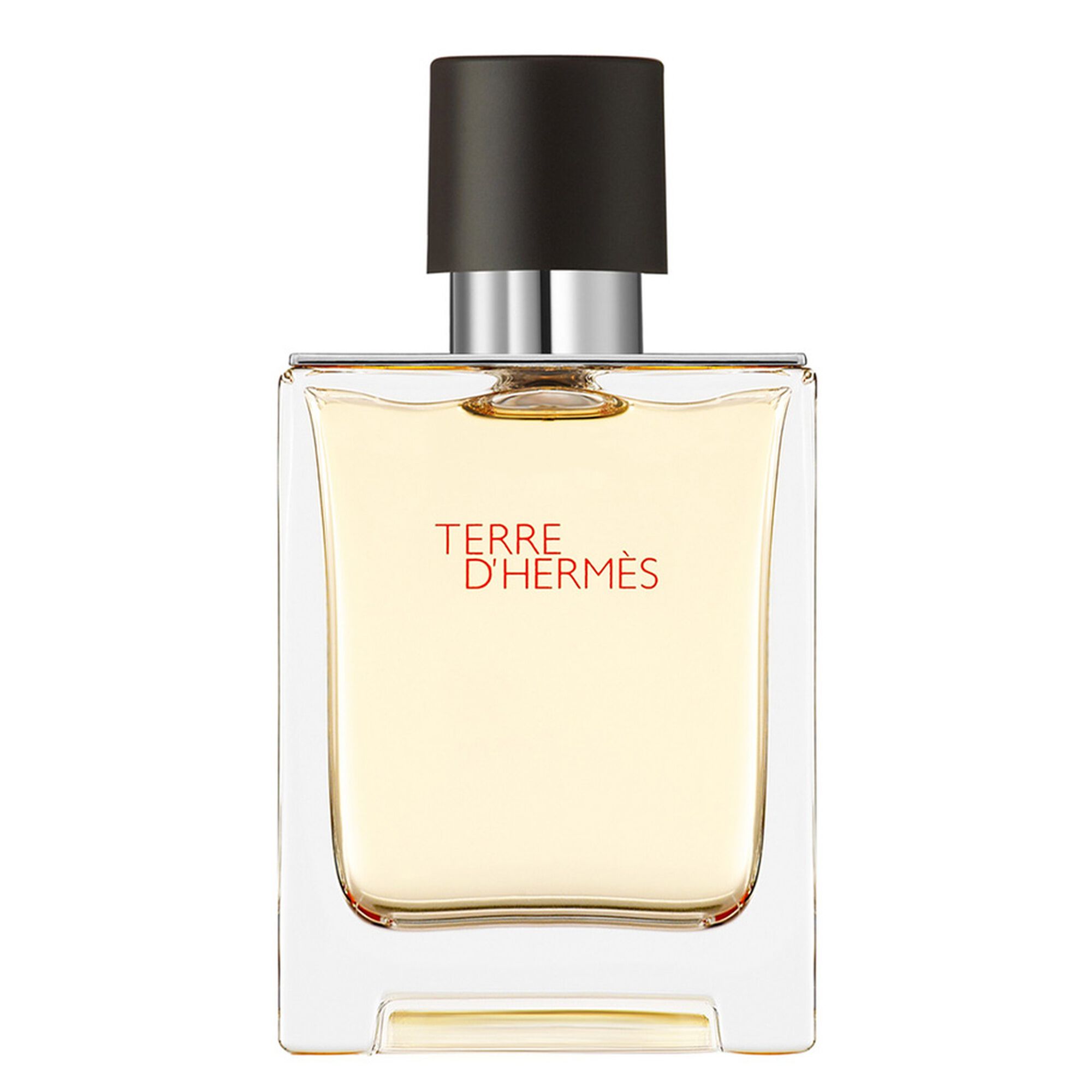
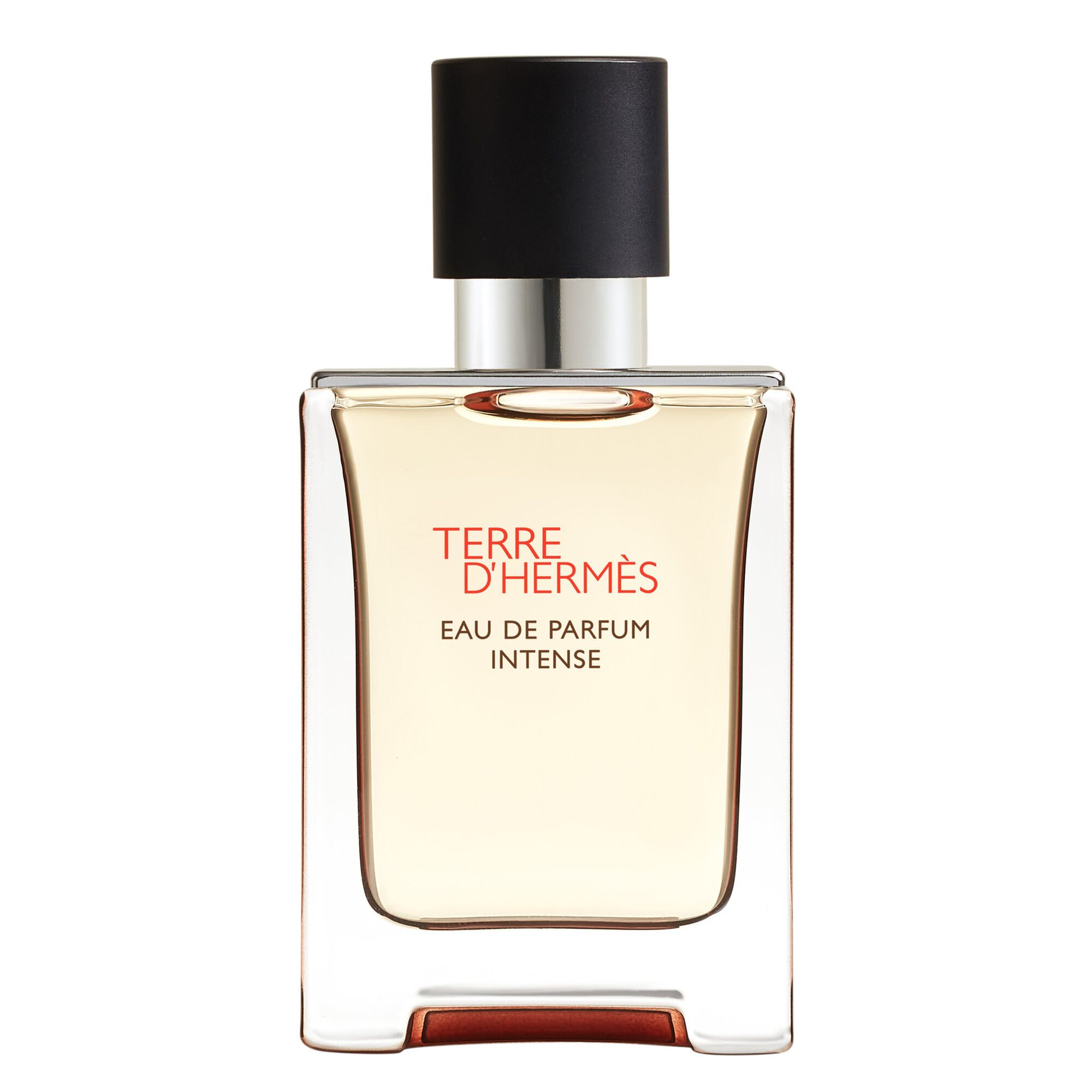
Terre d'Hermès (HERMÈS) is one of the most coherent references for approaching men's autumn wear. Created by Jean-Claude Ellena, this fragrance is built around a mineral, woody architecture: on the surface, vivid citrus notes — orange and grapefruit — that fade quickly to make way for a peppery, slightly floral heart note thanks to pelargonium. The base note, built on vetiver, cedar and patchouli supported by a touch of benzoin, develops that earthy, dry signature that seems tailor-made for hazy autumn days. Its measured projection makes it an obvious choice for the office or daily commutes.
For a more spicy and slightly sweet approach, Boss Bottled (Hugo Boss) offers a composition that has crossed decades without losing its relevance. Its opening of apple, bergamot and plum quickly gives way to a spicy heart note — cinnamon, clove, mahogany — before settling into a woody, vanilla base note blending cedar, sandalwood and vetiver. The whole is warm without being heavy, accessible in the best sense of the word: a fragrance that adapts to almost every professional context of the cold season.
Pour L'Homme (Cacharel) deserves particular attention for lovers of more complex, woody compositions. Its aromatic opening — nutmeg, bergamot, lavender and clary sage — is energetic and fresh, but the base note reveals all its autumnal interest: fir, vetiver, cedar, oakmoss, sandalwood and amber intertwine to compose a fragrance with pronounced forest accents. This is a proposition that suits an ordinary day just as well as a weekend outdoors.
For Him Bleu Noir (Narciso Rodriguez) offers a more contemporary, streamlined take on autumnal spicy woods. Cardamom and nutmeg in the top note give a crisp, spicy opening, quickly absorbed by an intense musky heart note. The base note pairs vetiver, cedar, ebony wood and amber for a depth that is both dark and refined, ideal for a daily routine that calls for presence without ostentation.
Selection for special occasions
La Nuit de L'Homme (Yves Saint Laurent) naturally comes to the fore as soon as autumn evenings call for a parfum with greater intensity. Cardamom in the top note — a spice both fresh and peppery — introduces a composition enriched by a heart note of lavender, Virginia cedar and bergamot of great elegance. The vetiver and caraway base note brings a slightly sharp, almost smoky twist, which sets this parfum apart from its peers and gives it a very assertive nocturnal character. For a dinner, a cultural evening or any moment calling for a bolder olfactory presence, it always finds its rightful place.
Nuit d'Issey (Issey Miyake) explores darker, more contrasted territory, perfect for grand autumn occasions. Bergamot in the opening remains brief before giving way to a dense heart note: leather, black pepper, spices and vetiver form an accord of great intensity. The incense, ebony, tonka bean and patchouli base note establishes a mysterious, almost ceremonial depth, well suited to the evenings of early winter or occasions where one wishes to leave a lasting impression with discernment.
1 Million (Rabanne) represents a more festive, extroverted option for the season's nights out. Its blood mandarin and grapefruit opening quickly gives way to a heart note of cinnamon and spices over a base of rose, before settling into an amber, leathery, patchouli base note of considerable warmth. This is a deliberately seductive choice, one that projects far and lasts long, best reserved for contexts that welcome a strong olfactory presence — an evening among friends, a festive event, a weekend night out.
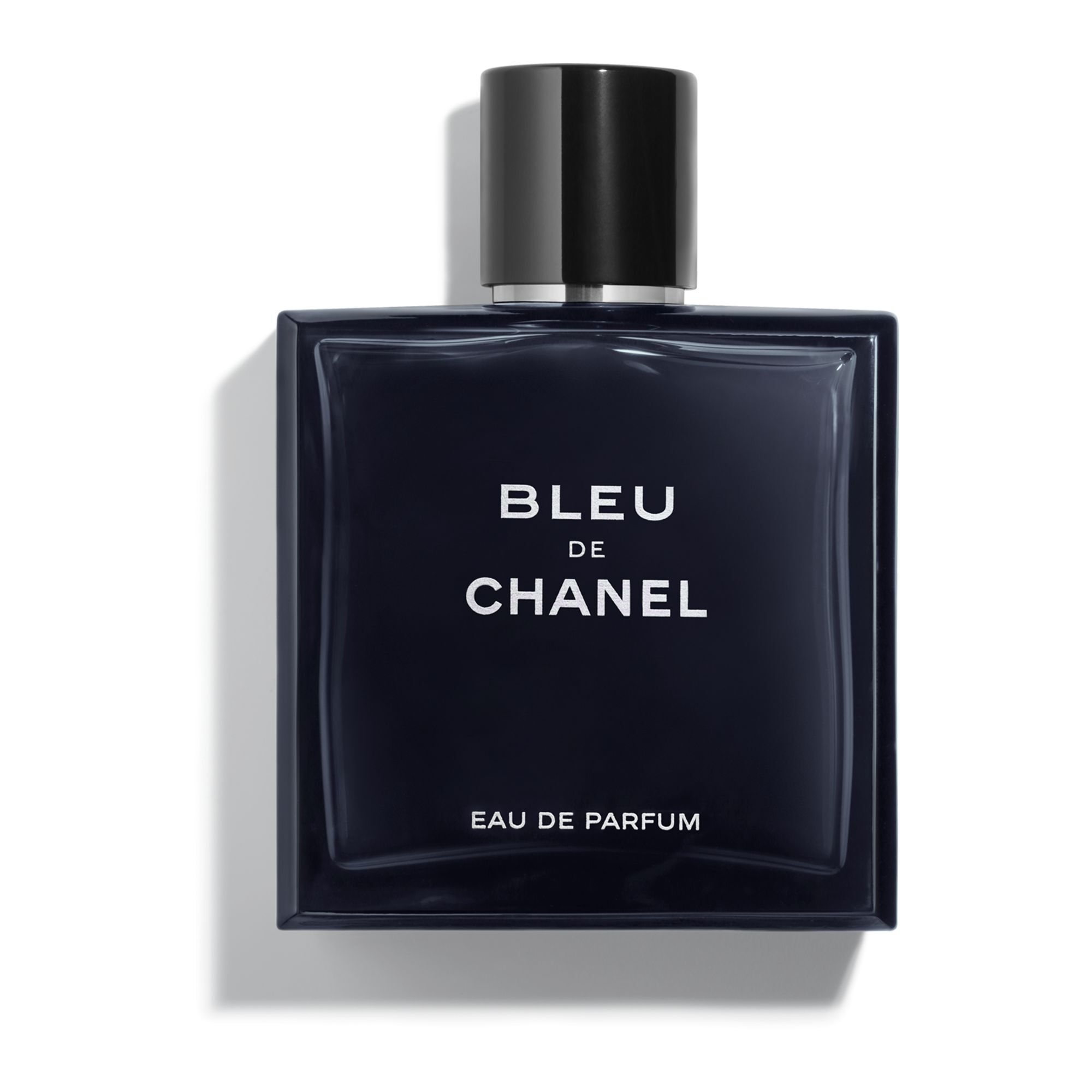
In a more understated register, the house of Chanel offers within its catalogue a great spicy-wood classic whose reputation rests on a remarkably rich cinnamon, sandalwood and tobacco accord. With its notes of Brazilian rosewood, coriander and mahogany in the top note, and its base note built on sandalwood, tobacco, vanilla and leather, this fragrance embodies a form of masculine winter elegance that hasn't aged a day. It suits formal occasions or evenings where one takes particular care over one's image.
Application tips for the cold season
In autumn, application zones need to be rethought compared to summer. Cold slightly contracts the pores and slows the diffusion of odour molecules, meaning that the usually recommended zones — wrists, neck, inner elbow — remain relevant, but the body's natural warmth plays an even more central role. The nape of the neck and the base of the throat, protected by a scarf that retains warmth, become particularly effective application zones: they release the parfum gradually throughout the day.
The question of dosage deserves particular attention. In autumn, it's common to want to apply more parfum to compensate for a perceived reduction in diffusion. This impulse is understandable but can lead to excess: spicy woody and amber fragrances are often highly concentrated and linger on textile fibres as much as on skin. Two to three dabs generally remain sufficient for a full day. Finally, it's worth noting that wool and cashmere garments — typical of the season — absorb and diffuse parfum in a particularly long-lasting way, which can considerably extend the longevity of a fragrance worn near the collar or lapel of a jacket.