Men's fragrance at 50: when the olfactory choice becomes obvious
At 50, fragrance becomes a considered signature. Explore the woody, oriental and chypre families suited to this stage of life.
Turning fifty and fragrance — a deepening relationship
At 50, you no longer choose a fragrance by chance or by imitation. The years have refined your tastes, settled your preferences, and built an olfactory identity that you recognise without needing to justify it. It's not a matter of wisdom or renunciation — it's simply that the experience of body, seasons and emotions has drawn out clear preferences, and the quest for quality now outweighs the desire to please at all costs.
Fragrance then becomes something more intimate. It fits into a more assured relationship with oneself, where the sillage no longer seeks to impress but to extend a presence. Houses that work with material, depth and longevity naturally take precedence over fleeting compositions designed for a broad audience.
The development of olfactory taste at this stage of life
Skin changes with age. Generally slightly less oily in men from their fifties onwards, it holds olfactory materials differently — light notes evaporate more quickly, while deep materials such as dry wood, resin or leather settle with greater singularity. This physical phenomenon naturally leads towards higher concentrations and compositions with generous base notes.
Beyond skin chemistry, the relationship with time also changes. You take the time to let a fragrance develop on your skin rather than settling for the first impression from the flacon. Base notes — vetiver, cedar, oakmoss, olibanum — which once required a certain patience to be appreciated, become the most appealing. Complexity is no longer daunting; it intrigues.
The fragrance families suited to this period
Four major fragrance families find particular resonance at this stage of life. The woody family, first of all, with its dry or smoky variations built around cedar, vetiver or sandalwood, offers that foundation of stability and understated elegance that suits a composed character. Dry woods are especially flattering on mature skin: they blend into it naturally without ever seeming forced.
The oriental family brings the depth and sensuality that can be fully embraced at 50, without the excess sweetness that sometimes characterises orientals aimed at a younger audience. Finely worked tonka bean, soft resins and warm spices compose enveloping sillages that age well throughout the day. Chypres, with their characteristic oakmoss-bergamot accord, are perhaps the most sophisticated family in the men's repertoire — they require a certain olfactory background to be fully appreciated, and that is precisely what your fifties provide. Finally, woody hesperidics allow you to retain freshness and lightness for contexts that call for it, without sacrificing depth.
The notes to favour
Vetiver is among the materials most in keeping with this profile. Earthy, slightly smoky, with an aristocratic dryness, it has signed masculine compositions for decades and gains in complexity on experienced skin. Cedar, softer and pencil-like, echoes it by providing a woody structure without aggressiveness. Together, they form the foundation of many great classics in men's perfumery.
Olibanum, a resinous material with facets both smoky and slightly camphoraceous, lends compositions an almost meditative dimension that pairs well with an acquired inner serenity. Bergamot, a bright, slightly bitter top note, remains valuable for giving lift to compositions that might otherwise seem too heavy. Oakmoss, finally, the emblematic material of the chypre family, adds that slightly damp, forest-like texture that sets fragrances with character apart from forgettable ones.
Selection for everyday wear
To accompany ordinary days — the office, travel, lunches — you need fragrances that hold without imposing, building a coherent sillage from opening to base note. Gentlemen Only (Givenchy) answers this expectation precisely. Its fresh top note, carried by bergamot and pink pepper, gives way to a dense woody heart note — vetiver, cedar, patchouli — that olibanum in the base dresses with elegant restraint. This is the kind of composition that never surprises, but never disappoints either.
In a similar but more lived-in register, Ralph's Club (Ralph Lauren) weaves a woody accord built on Virginia cedar and vetiver around lavender and clary sage. The result is both airy and deep — a duality that works well over a long day. The Parfum version offers superior longevity to the Eau de Parfum, and should be applied sparingly for a natural, lasting effect.
Explorer Extrême (Montblanc) opens with a bright bergamot entry before sliding into a patchouli-vetiver accord that amber and leather in the base come to reinforce. The value for money is remarkable for such a well-constructed composition. This fragrance is particularly well suited to active days when an enveloping sillage without heaviness is needed.
Burberry for Men (Burberry) deserves particular attention for how rich and coherent its structure is. The aromatic top note — mint, Armoise, bergamot, lavender — opens onto a heart note of rare complexity where vetiver, cedar, geranium and sandalwood intertwine. The base of leather, oakmoss and myrrh has an authentically chypre depth. This fragrance tells a complete olfactory story, from morning through to nightfall.
Selection for special occasions
Moments that call for greater presence — dinners, important professional events, evenings out — deserve more assertive compositions, capable of filling a space with character. Invictus Victory Absolu (Rabanne) stands out in this register with a solid architecture: black pepper in the opening cuts through an amber, woody heart note, carried by olibanum, sandalwood and patchouli in the base towards a resolution of beautiful density. This is a fragrance that fully embraces its gravitas without ever tipping into heaviness.
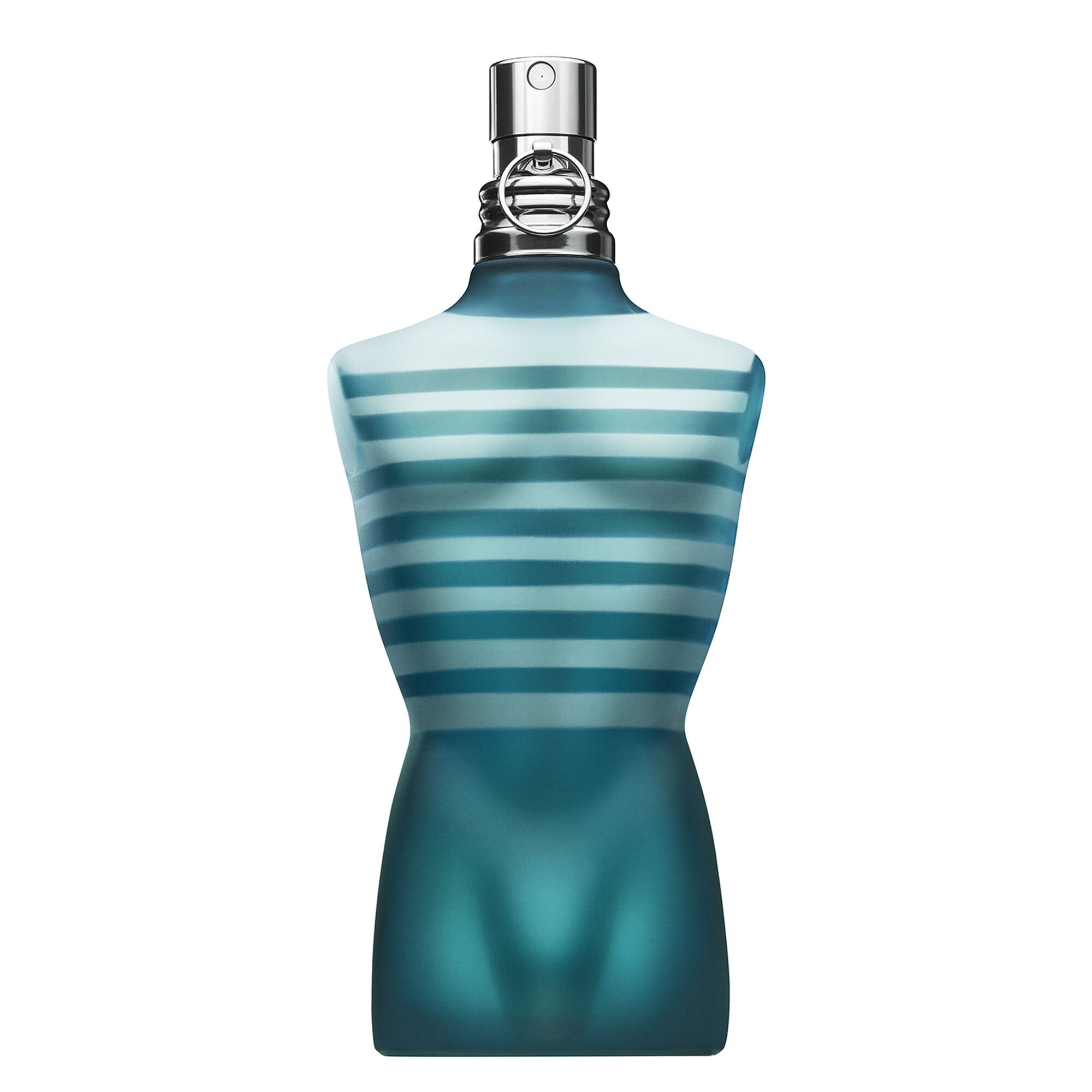
Le Male Le Parfum (Jean Paul Gaultier) is an oriental reinterpretation of a classic, enriched and deepened. Cardamom in the opening sets the spicy tone, then lavender and iris bring an understated, almost powdery floral dimension, before vanilla and oriental woody base notes settle into an enveloping, sensual drydown. At 50, this composition finds an ideal showcase on skin that has learnt to value warm materials.
Scandal pour Homme Le Parfum (Jean Paul Gaultier) plays on more unexpected registers. Pelargonium in the top note brings a slightly herbaceous floral freshness, while tonka bean in the heart note develops a creamy, smoky roundness. Sandalwood in the base grounds the whole in a very flattering woody softness. This is an evening fragrance that doesn't seek to make a statement — it seduces by accumulation, note after note.
Invictus Victory (Rabanne) is a slightly less intense but equally suitable alternative for special occasions. Olibanum and lavender in the heart note create an almost meditative accord, tempered generously by vanilla, tonka bean and amber in the base. This fragrance is particularly well suited to autumn and winter evenings, when the warmth of clothing extends the diffusion of resinous materials.
Practical advice — application, dosage, context
On skin that holds materials differently, application technique deserves a few adjustments. Pulse points — wrists, the hollow of the neck, the inner elbow — remain the reference spots, but it can be useful to add a light spray to the chest or upper back for oriental or woody compositions: body warmth gradually activates diffusion throughout the day.
Quantity is often overestimated. For higher concentrations — parfum or extrait de parfum — two to three sprays are more than enough. Overly heavy sillages lose their subtlety and can become overpowering in enclosed spaces. A subtle sillage that invites people closer is preferable to a projection that fills an entire room. For deep chypre or woody compositions like Burberry for Men, applying it the evening before to the fabric of a scarf or coat can create a very natural sillage effect the following day.
Finally, keeping your flacons away from light and temperature variations remains a fundamental rule that is often overlooked. Noble materials such as vetiver, oakmoss or olibanum are particularly sensitive to oxidation — a flacon exposed to direct light can see its accords change within a few weeks. A drawer, a cupboard, or even the original gift set: all simple havens for preserving the integrity of a carefully chosen composition.