Perfume for women aged 30: self-assertion through olfactive material
What perfumes suit a woman in her 30s? Floral, woody, chypre and oriental families to accompany self-assertion and emerging sophistication.
Your 30s and perfume: a relationship that changes in nature
Turning 30 rarely marks a clean break, but it is almost always accompanied by a gradual shift in one's relationship with oneself. You know yourself better. You embrace more of who you are. And this change, often intangible in everyday life, is felt very concretely in olfactive choices. Perfume stops being just another accessory and becomes a signature, something chosen with more intention and less chance.
It is also the age at which you juggle multiple, demanding contexts: a professional life that gains momentum, a personal life that asserts itself with its own codes, evenings that you choose rather than simply endure. Perfume accompanies these distinct territories, and the idea of a single flacon for every occasion starts to feel insufficient.
The evolution of olfactive taste at 30
In your twenties, you often reach for fresh, fruity, light fragrances — perfumes that ask little of the woman wearing them or of the people who perceive them. At 30, that need for lightness doesn't disappear, but it becomes more complex. You look for compositions with longevity, with depth, with a certain density, without tipping into ostentation.
The perception of raw materials also changes with accumulated olfactive experience. Notes once considered austere or too serious at 22 — powdery iris, earthy vetiver, deep patchouli — suddenly become legible, even desirable. The nose educates the taste, and taste educates the choices. It is this natural movement towards greater complexity that often characterises women's perfumery around the age of 30.
Fragrance families suited to this period
Florals remain a major territory, but they gain in sophistication. Aquatic or fruity florals are gradually set aside in favour of fleshy white florals — tuberose, gardenia, jasmine — or powdery florals built around iris and musk. These compositions flatter without being naive, and they suit a professional context just as well as an evening out.
Chypres see renewed interest at this age precisely because they call for a certain olfactive maturity. Built on an oakmoss, bergamot and patchouli accord, they give off a dry, assertive elegance that suits the need to assert a presence without overdoing it. Woody notes — cedar, vetiver, sandalwood — bring grounding and soft sensuality, while orientals, with their amber, spicy warmth, naturally come into their own for evening occasions.
Notes to favour
Rose remains a central note, but it no longer has anything of the easy rose of teenage years. In an adult composition, it is often presented in facets closer to leather, powder or wax — Grasse Rose or Damask Rose, for instance, offer a depth that simplified synthetic versions cannot replicate. Iris, a flagship note in luxury perfumery, brings a powdery, slightly cool distinction that suits an assertive sillage without aggressiveness perfectly.
Patchouli, far removed from its old hippie associations, is now integrated into balanced compositions where it plays the role of a woody, slightly earthy foundation. It gives body without weighing things down. Vetiver, meanwhile, adds a smoky, refined dimension that reinforces a perfume's impression of solidity. Oud, finally, even at moderate concentration, brings an animalic, resinous warmth that turns any composition into something memorable — a note to approach gradually if it is new to you.
Selection for everyday wear
For everyday wear, you look for fragrances that accompany without imposing, that last through the day without needing a top-up, and that suit a morning meeting just as well as lunch with friends. My Way (Armani) answers this expectation with a sunny, clean floral construction. Orange blossom and bergamot in the opening set a luminous frame, before tuberose and Indian jasmine bring a discreet fullness. The base note of Virginia cedar and Madagascar Vanilla anchors the whole in a soft, feminine drydown, understated enough for the office, warm enough for everything else.
L'Eau des Merveilles (Hermès) offers a more distinctive woody alternative. Created by Nathalie Feisthauer and Ralf Schwieger, this fragrance plays on an orange-amber-wood accord that escapes any obvious categorisation. Elemi resin and cedrat in the top note give an almost mineral opening, before Madagascar Vetiver, oakmoss and benzoin settle into a deep, slightly powdery base note. It's a perfume for those who like to be recognisable without being predictable.
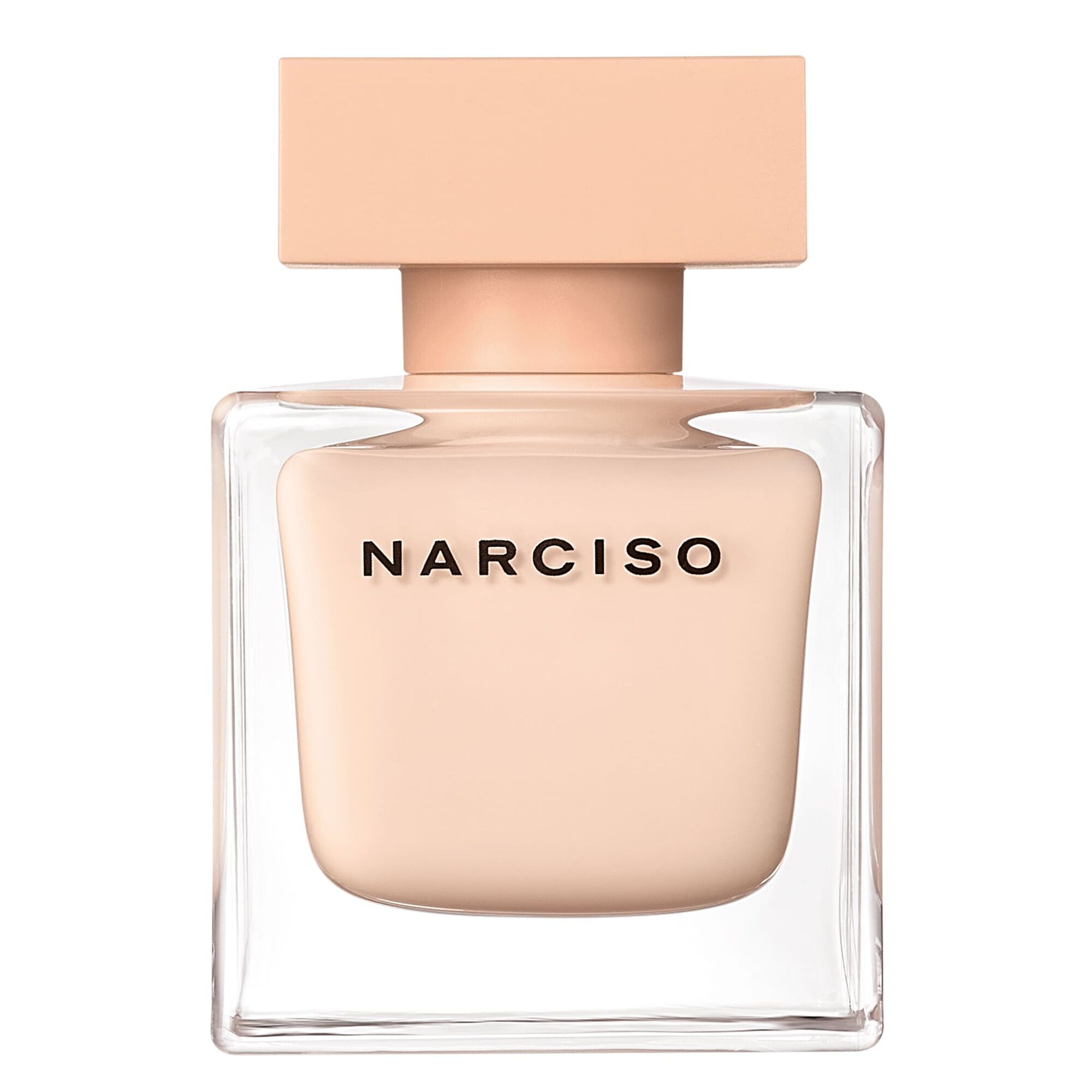
Narciso Ambrée (Narciso Rodriguez) follows the house's musk-floral lineage, but in a more golden, enveloping version. Neroli and frangipani introduce a luminous, creamy flower, which orange blossom and musk in the heart note transform into something almost skin-like. Cashmeran and amber in the base note warm the whole composition. The result is intimate, sensual without excess, and particularly suited to everyday wear in the in-between seasons.
L'Eau Dynamisante (Clarins) deserves a special mention for mornings when you want something lively and aromatic. Amalfi lemon, coriander and caraway compose a very invigorating herbaceous, citrus accord, which patchouli in the base note settles onto the skin with chypre-like lightness. It's less a signature perfume than a wellbeing fragrance, ideal after exercise or as an alternative on days that call for lightness.
Selection for special occasions
For moments that deserve more, you can turn to more elaborate compositions, with a fuller sillage and a more pronounced character. 24 Faubourg (Hermès) is one of the great floral oriental signatures of the 1990s, and it hasn't aged a day. Hyacinth, ylang-ylang and bergamot open with luminous generosity, before a heart note of orange blossom, gardenia, jasmine and iris unfolds the full richness of a complex white bouquet. The base note of patchouli, sandalwood and vanilla settles into a warm, elegant drydown. It's an evening perfume for dressed-up occasions, important dinners, moments when you want to make a lasting impression with measure.
Barénia (Hermès) offers another path, more contemporary and drier. Bergamot fades quickly to make way for a slightly gingery white lily accord, of an almost mineral whiteness. The base note of patchouli, Akigalawood and oak gives a chypre solidity that carries the perfume through long hours. It's a fragrance for those seeking elegance in restraint, a presence that asserts itself through the quality of its materials rather than through projection.
Armani Code (Armani) leans more towards floral orientals and is particularly suited to autumn or winter evenings. Italian orange and bitter orange open on a slightly bitter hesperidic note, before jasmine and orange blossom take centre stage in the heart note. The base note of honey, vanilla and sandalwood settles onto the skin with a golden, slightly gourmand warmth, without ever tipping into sweetness. It's a fragrance that seduces through its construction, assertive in its intentions.
L'Air du Temps (Nina Ricci) deserves reconsideration by those who may have too quickly associated it with a certain generation. This composition, with its impressively rich florals — carnation, rose, jasmine, gardenia, ylang-ylang, orris root — is anchored on a deep base note of oakmoss, vetiver, amber and sandalwood. The aldehydic accord in the top note gives it that signature luminosity of the great classic florals. Worn at 30, it takes on a particular dimension: that of an embraced heritage, an elegance that has no need to prove its modernity.
Practical advice
At 30, skin has often found a more stable hydrolipidic balance than at 20, which can favour a perfume's longevity. The classic pulse points — inner elbow, wrists, nape of the neck, décolletage — remain the preferred application areas, but for amber or patchouli fragrances, applying to the hair (spraying first onto a comb or brush) extends the sillage remarkably.
For professional contexts, 2 to 3 sprays maximum of an understated floral or chypre is advisable, targeting covered areas rather than the neck. In the evening, you can be more generous, particularly with orientals and woody fragrances, which unfold better in a warm environment. Finally, it's worth noting that perfumes with a high concentration of iris or patchouli develop significantly on the skin in the first two to three hours: allow a new flacon time to express itself before judging how well it suits your own skin chemistry.