
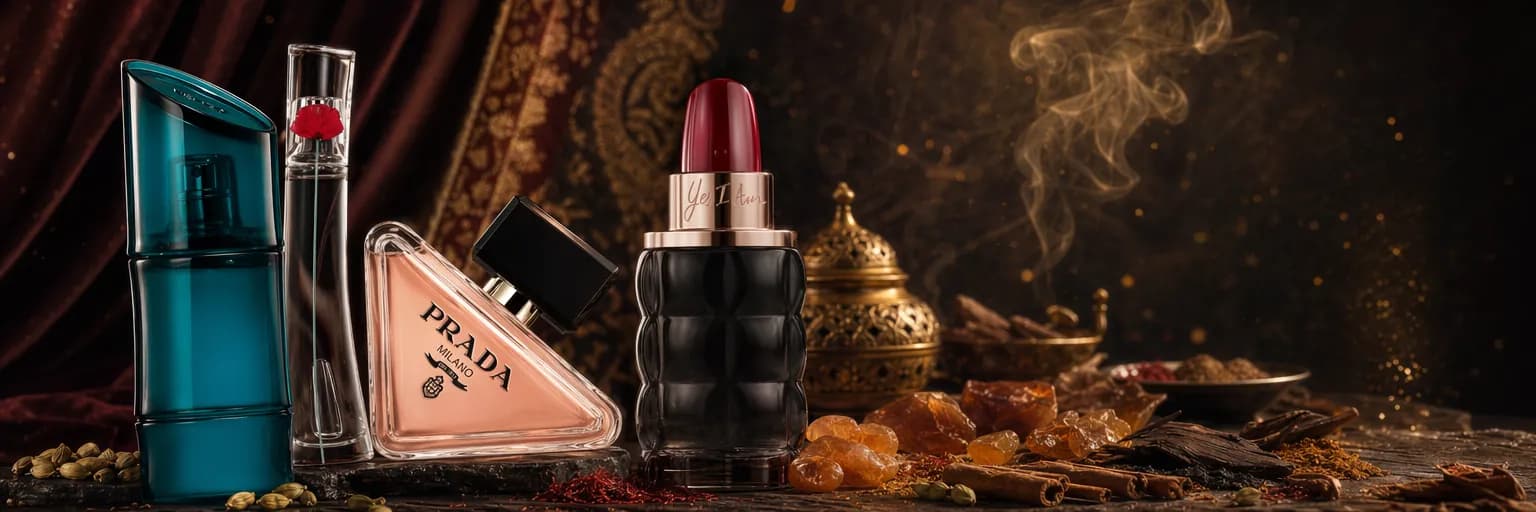
Oriental parfum: the sensual depth of a legendary family
An oriental parfum rests on an amber, woody accord — resins, vanilla, spices, musks — that wraps the skin in a deep, long-lasting warmth. One of the great fragrance families, it comes in five distinct sub-families: from floral oriental to Arabic oud-based parfums, via powdery orientals and warm ambers. This guide will help you choose from our women's and men's fragrances starting at 22 EUR, and understand the real differences between Western oriental parfum, Arabic parfum and Dubai parfum.
What is an oriental parfum?
Olfactory definition: the composition of an oriental parfum
An oriental parfum is recognised by its warm, dense and long-lasting base note. The structure rests on a foundation of resinous, balsamic materials: amber, labdanum, benzoin, opoponax, tonka bean, vanilla. These ingredients create that enveloping, almost tactile warmth associated with the family.
Over this foundation, perfumers often work in deep woods — sandalwood, cedar, patchouli — and spices that warm the composition without overwhelming it. Cardamom, saffron, cinnamon, clove: each brings a different dimension. Saffron adds a coppery, almost metallic texture; cardamom, a slightly camphoraceous freshness; cinnamon, an immediate warmth.
Musk acts as a binder: it fixes the other materials and extends the sillage on the skin. Incense, when present, adds a spiritual, almost sacred dimension. And oud — a precious resin extracted from agarwood — can transform an ordinary composition into something truly intoxicating.
What sets an oriental apart from a woody or a chypre is this warm, opulent dominant note in the base. The heavy molecules evaporate slowly, giving a longevity that can reach 8 to 12 hours on the skin.
Historical origins of oriental perfumery
The materials that make up oriental parfums have travelled for millennia. Incense, balsam resin, spices: their trade already structured the Silk Road long before Europe took an interest. Arabic and Indian traditions developed distillation and maceration techniques that remain benchmarks today.
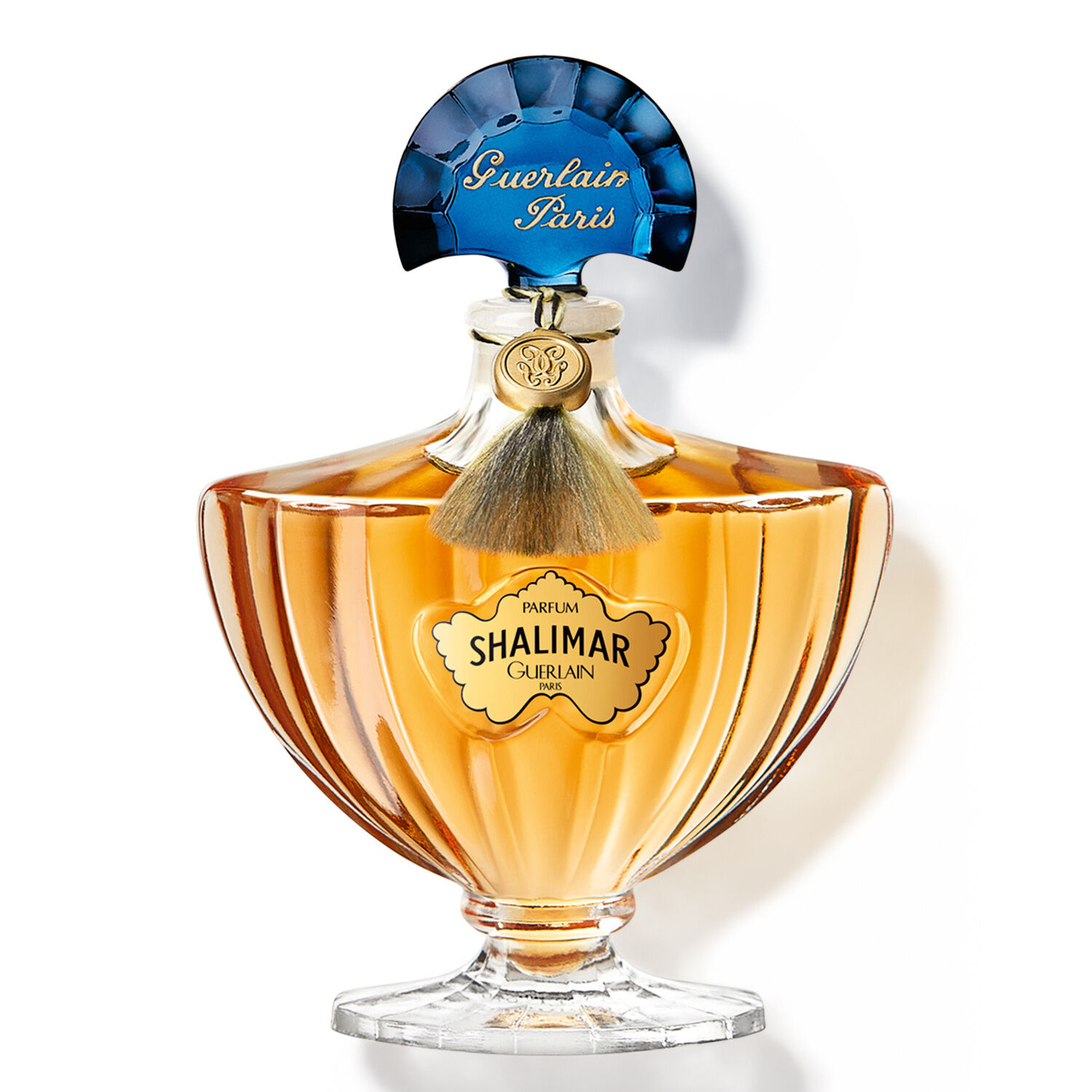
In Europe, these materials arrived in large quantities in the 18th century through colonial trade. French perfumers began integrating them into structured compositions, but everything changed in 1925: Jacques Guerlain launched Shalimar, the first great codified Western oriental. Bergamot and lemon at the top, iris and jasmine at the heart, a base note of vanilla, labdanum and incense. An accord that changed the game for all of fine perfumery.
Habit Rouge by Guerlain (1965), then Opium by Yves Saint Laurent (1977), would extend this lineage and confirm the oriental as a major family in French perfumery.
Why are oriental parfums so captivating?
The answer is partly chemical. The aromatic molecules of oriental materials — resins, balms, musks — are heavy and not very volatile. They evaporate slowly, stay close to the skin, and create an intimate presence rather than an airy sillage. That's why an oriental seems to "cling" to the skin in a way few other families replicate.
There is also a psychological dimension. These materials evoke warmth, intimacy, luxury. Sandalwood recalls temples. Amber, spice markets. Vanilla, something both comforting and sensual. This sensory density creates a memorable presence — people turn around, they ask what you're wearing.
In store, I notice that oriental parfums often trigger strong reactions, one way or the other. Rarely indifference.

Did you know? The oriental family was codified in the 19th century, then theorised within the French classification of fragrance families by Jean Carles, a perfumer at Roure. The work of Edmond Roudnitska helped popularise this analytical approach to families. Shalimar by Guerlain (1925) remains the founding act of the Western oriental as we know it today.
The 5 oriental sub-families
| Sub-family | Olfactory profile | Typical notes | Examples |
|---|---|---|---|
| Vanilla oriental | Gourmand-sensual | Vanilla, tonka bean, honey, sandalwood | Shalimar Guerlain, Un Bois Vanille Serge Lutens |
| Woody oriental | Dry-deep | Oud, sandalwood, cedar, patchouli | Féminité du Bois Serge Lutens, Habit Rouge Guerlain |
| Gourmand oriental | Sweet-foodie | Caramel, praline, vanilla, cacao | Good Girl Carolina Herrera, Angel Elixir Mugler |
| Spicy oriental | Warm-piquant | Saffron, cardamom, cinnamon, ginger, clove | Habit Rouge Guerlain, Tom Ford Noir |
| Floral/powdery oriental | Soft-plush | Damascus rose, iris, jasmine, heliotrope, powdery amber | L'Interdit Absolu Givenchy, Good Girl Carolina Herrera |
Vanilla oriental
This is the most accessible sub-family, often the one through which people first discover orientals. Vanilla here is not edible vanilla: it is worked together with labdanum, tonka bean, sometimes honey, to create something deeper and less sweet.
Shalimar by Guerlain is the founding archetype. Un Bois Vanille by Serge Lutens is the contemporary niche version: the vanilla is almost caramelised by sandalwood, mystical, without the childish sweetness one might fear.
Woody oriental
Drier, more masculine in its traditional codes — though the gender binary no longer makes much sense in perfumery. Oud, sandalwood, cedar and patchouli structure these compositions. The amber base note is still present, but is dominated by the precious wood.
Féminité du Bois by Serge Lutens made history in niche perfumery by offering a warm feminine woody, lifted with plum and spices. Habit Rouge by Guerlain embodies the French woody-spicy masculine. To explore this family further, our woody dossier covers the nuances in detail.
Gourmand oriental
The most contemporary sub-family. It was born with Angel by Mugler in 1992 — the first parfum to incorporate caramel and praline notes into a fine fragrance composition. Since then, gourmand has taken over the shelves.
What distinguishes a gourmand oriental from a pure gourmand is the presence of the amber-resinous base note. The sweetness isn't alone: it is supported by warmth. Good Girl by Carolina Herrera and Angel Elixir by Mugler illustrate this duality well. The gourmand family has its own page if you'd like to dig deeper.
Spicy oriental
Saffron, cardamom, cinnamon, ginger, clove: these spices bring a piquant warmth that electrifies compositions. In Habit Rouge, spiced carnation dialogues with patchouli. In Tom Ford Noir, nutmeg and geranium give an almost coppery texture. This is the sub-family closest to Arabic perfumery traditions, even though the concentrations and intentions differ.
Floral / powdery oriental
Damascus rose, jasmine, iris and heliotrope soften the amber base note and give it a plush, almost velvety texture. These compositions are often described as "powdery": they evoke rice powder, skin after a bath. L'Interdit Absolu by Givenchy and Good Girl by Carolina Herrera both play in this register, with different approaches — one more tobacco-vetiver, the other more cacao-iris.
Our selection: the best oriental parfums for women 2026
For a more targeted selection, our oriental parfums for women page organises the fragrances by profile and occasion.
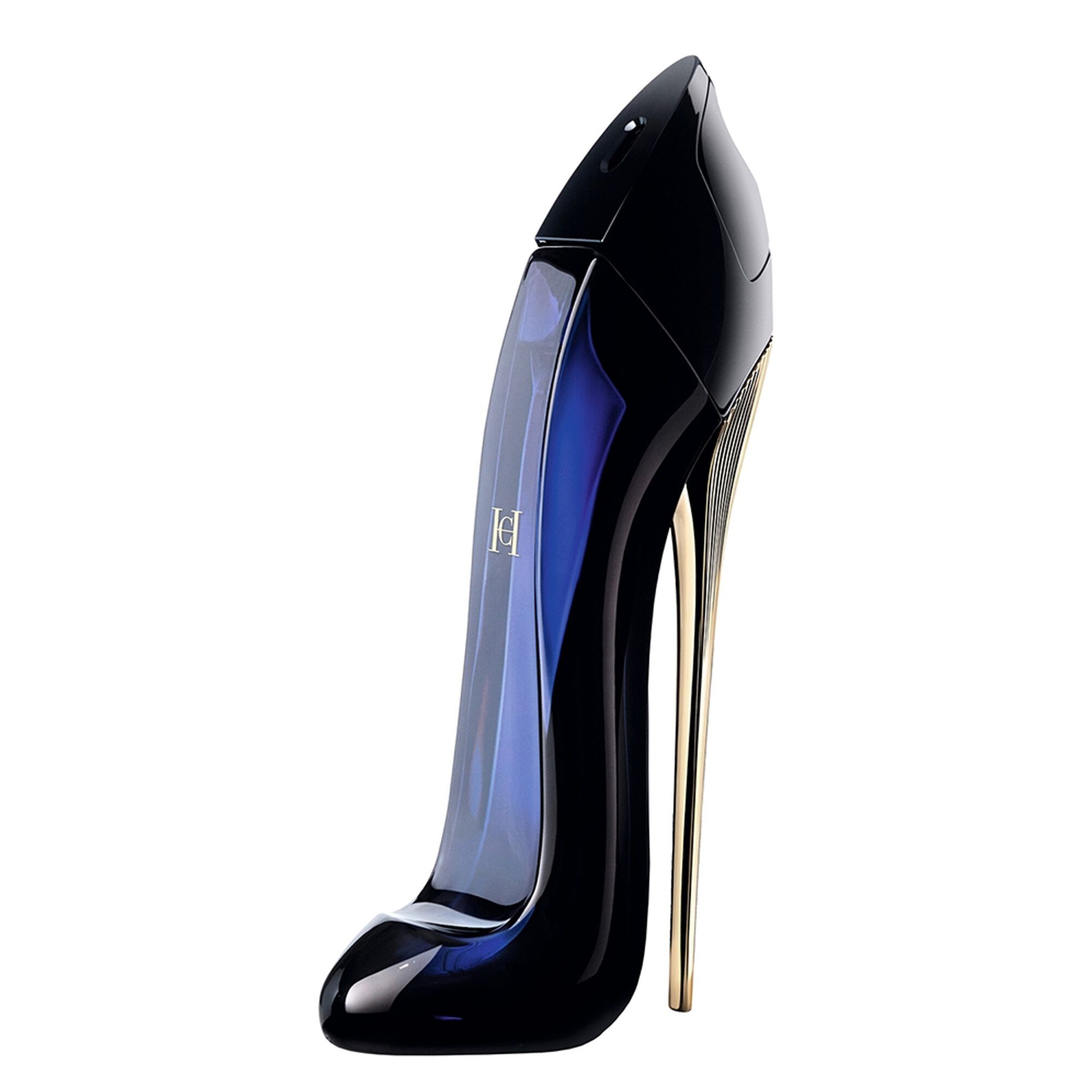
Good Girl (Carolina Herrera) — 55 EUR
The absolute best-seller of the floral oriental family, in its now-iconic stiletto-shaped flacon. Amber, jasmine sambac and cacao at the top, powdery iris in the base: a confidently feminine composition, sensual, playing on the duality of glamour and mystery. Excellent value for money in the premium segment. For the woman who wants a modern, instantly recognisable oriental.
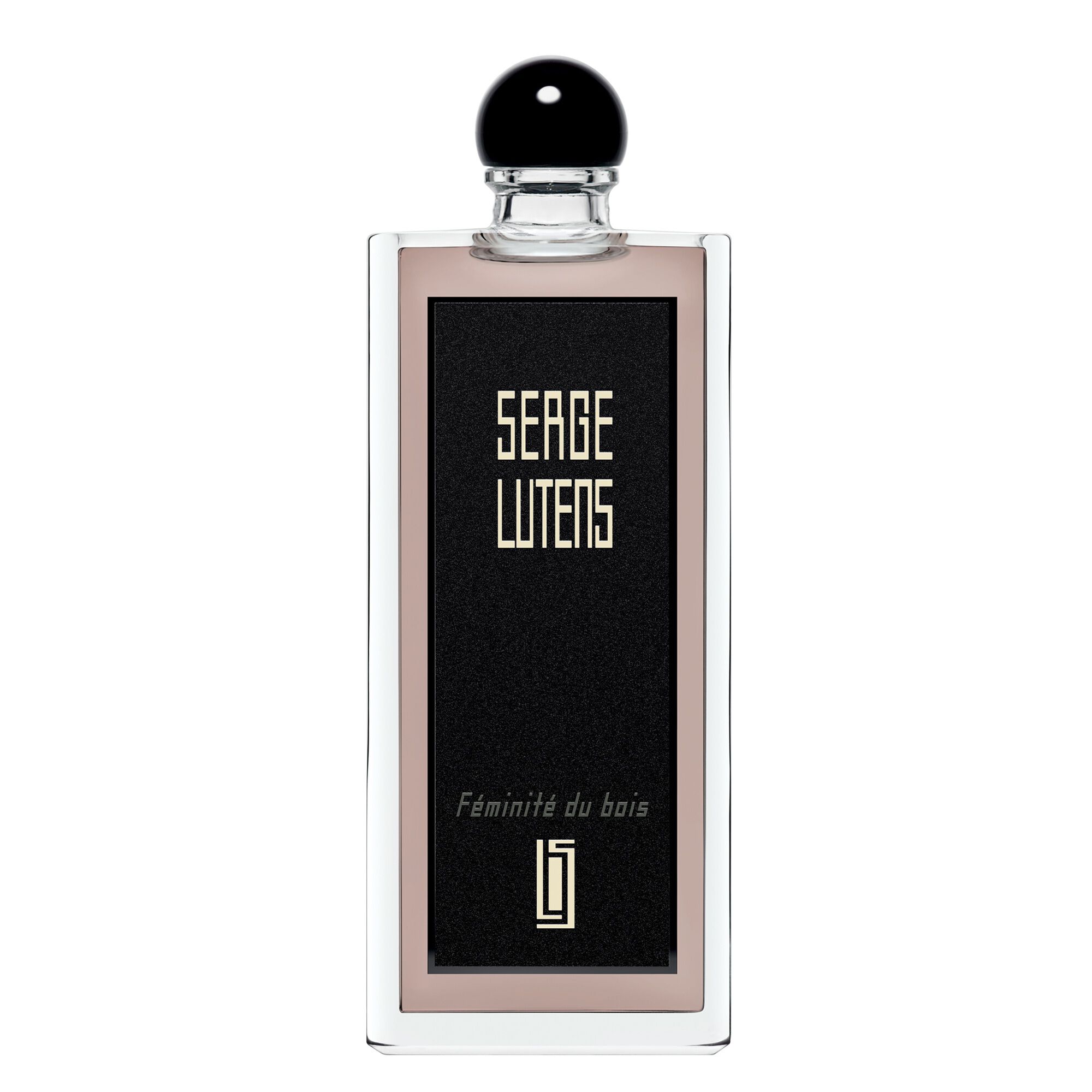
Féminité du Bois (Serge Lutens) — 78 EUR
A pivotal fragrance from the Serge Lutens house within the oriental family. Sweet plum over a heart note of Atlas cedar and sandalwood, lifted with cinnamon and ginger: a feminine vision of woody that has marked niche history since 1992. Warm without being heavy. For those seeking a deep, mysterious woody without masculine clichés.
L'Interdit Absolu (Givenchy) — 62 EUR
The 2024 iteration, denser and more golden than the classic L'Interdit. Neroli and tobacco at the top, jasmine sambac and orange blossom at the heart, Haitian vetiver in the base: a modern amber floral oriental, perfect for evening and mid-season. Notable sillage, solid longevity. For the woman who wants character without veering into sweetness.
Un Bois Vanille (Serge Lutens) — 105.5 EUR
The niche reference for woody vanilla, created by Christopher Sheldrake. Sandalwood is treated here like a caramelised vanilla, almost scorched by coconut. Deep, mystical, without childish gourmand sweetness. For those seeking a pure, captivating vanilla, mysterious, far from mainstream compositions. One of the three Serge Lutens pillars in our selection.
Shalimar Soufflé de Parfum (Guerlain) — 107 EUR
Shalimar laid the foundations of the Western oriental in 1925. This Soufflé version is airier, more floral — amber, iris, jasmine and bergamot — while retaining the legendary vanilla-labdanum base note. More approachable than the original for those new to the great classics. For those who want a refined, timeless classic vanilla, carried by the history of French perfumery.
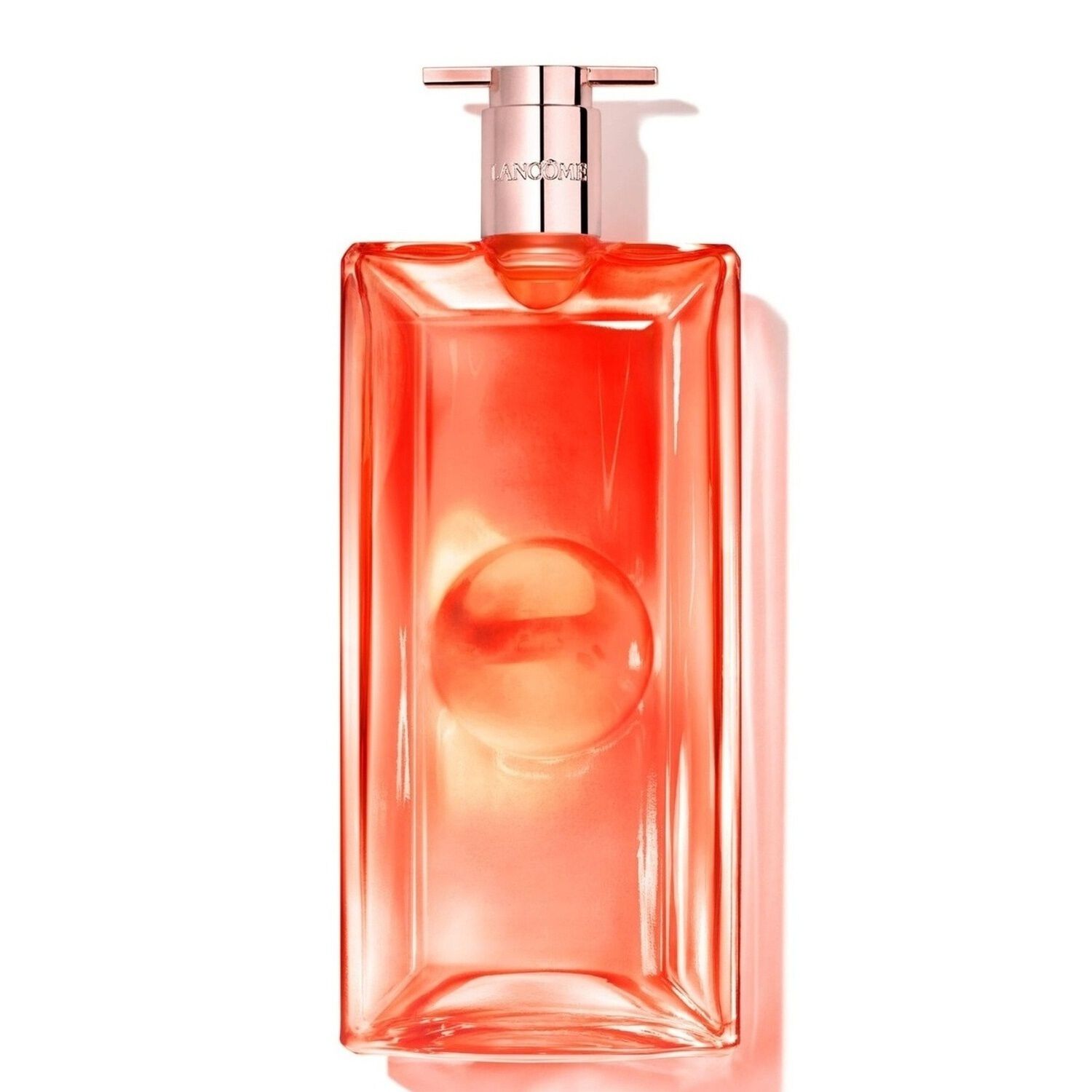
Trésor Midnight Rose (Lancôme) — 84 EUR
The nocturnal, deeper iteration of the classic Trésor. Raspberry and pink pepper at the top, peony and jasmine at the heart, a vanilla-cedar base note: more oriental in its base than its predecessor, perfect for evening wear. A modern, warm rose, for the woman seeking a warm floral without tipping into powdery territory.
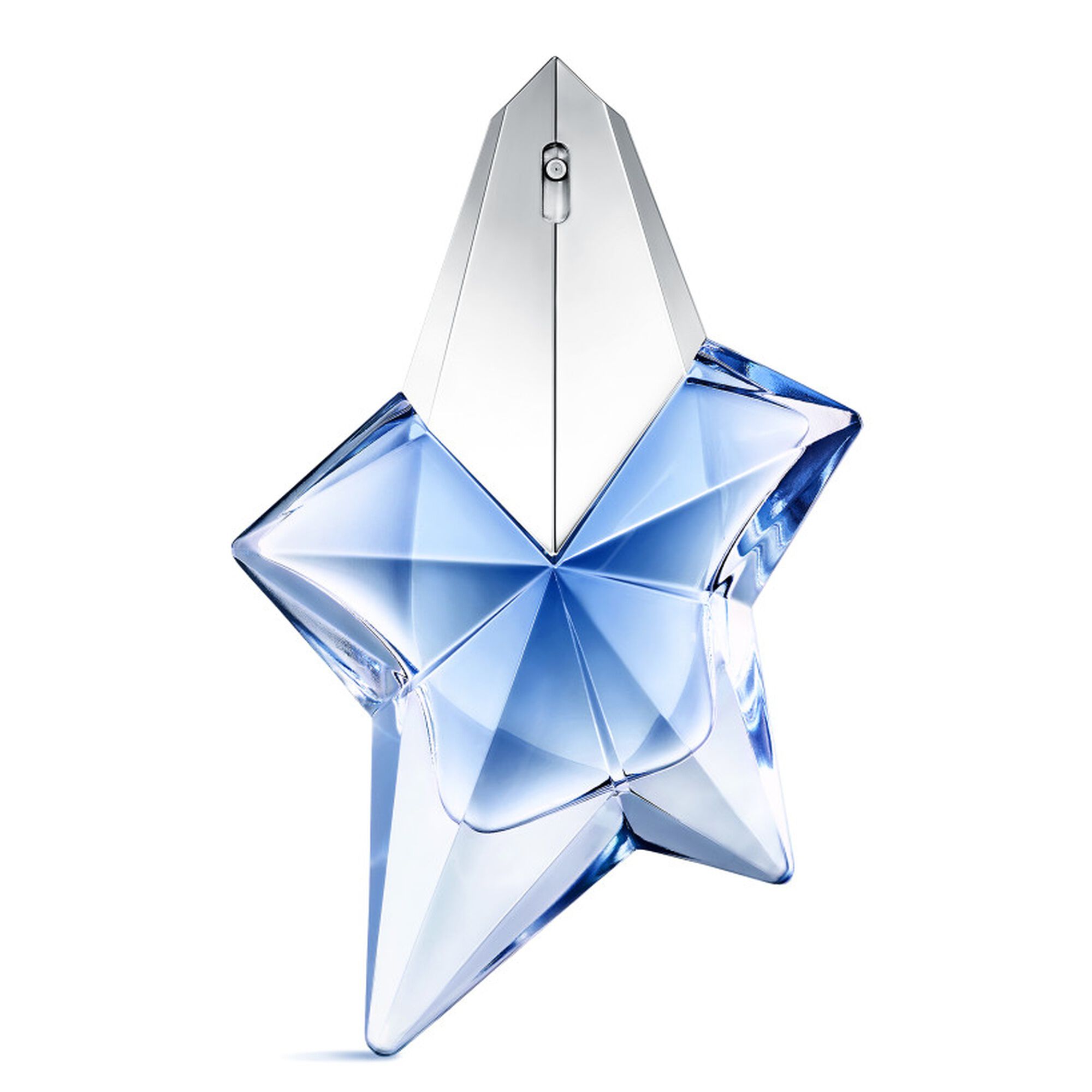
Angel Elixir (Mugler) — 22 EUR
The densest and most resinous version of the iconic Angel, founder of the gourmand family in 1992. Sandalwood, intense amber, jasmine and orange blossom: a powerful, resinous gourmand vanilla, carried by the house's expertise. At 22 EUR, it's the perfect entry point into gourmand orientals without breaking the bank.
A word on the powdery sub-family. Between floral and pure oriental, there exists a plush, soft, almost nostalgic territory: the powdery oriental. Damascus rose, iris, heliotrope, powdery amber. Good Girl by Carolina Herrera offers a modern, glamorous take; L'Interdit Absolu by Givenchy adds a tobacco dimension that makes it more assertive. In a more classic register, Reminiscence Heliotrope remains an editorial reference in this sub-family, even though it's not currently available with us.
Our selection: the best oriental parfums for men 2026
Masculine oriental has its own codes: woody, spicy, amber-leather. Less bare vanilla, more dry depth. The sillage is often more assertive, the longevity remarkable. These are fragrances that own their presence. To go further, our oriental for men selection details the profiles by occasion and season.
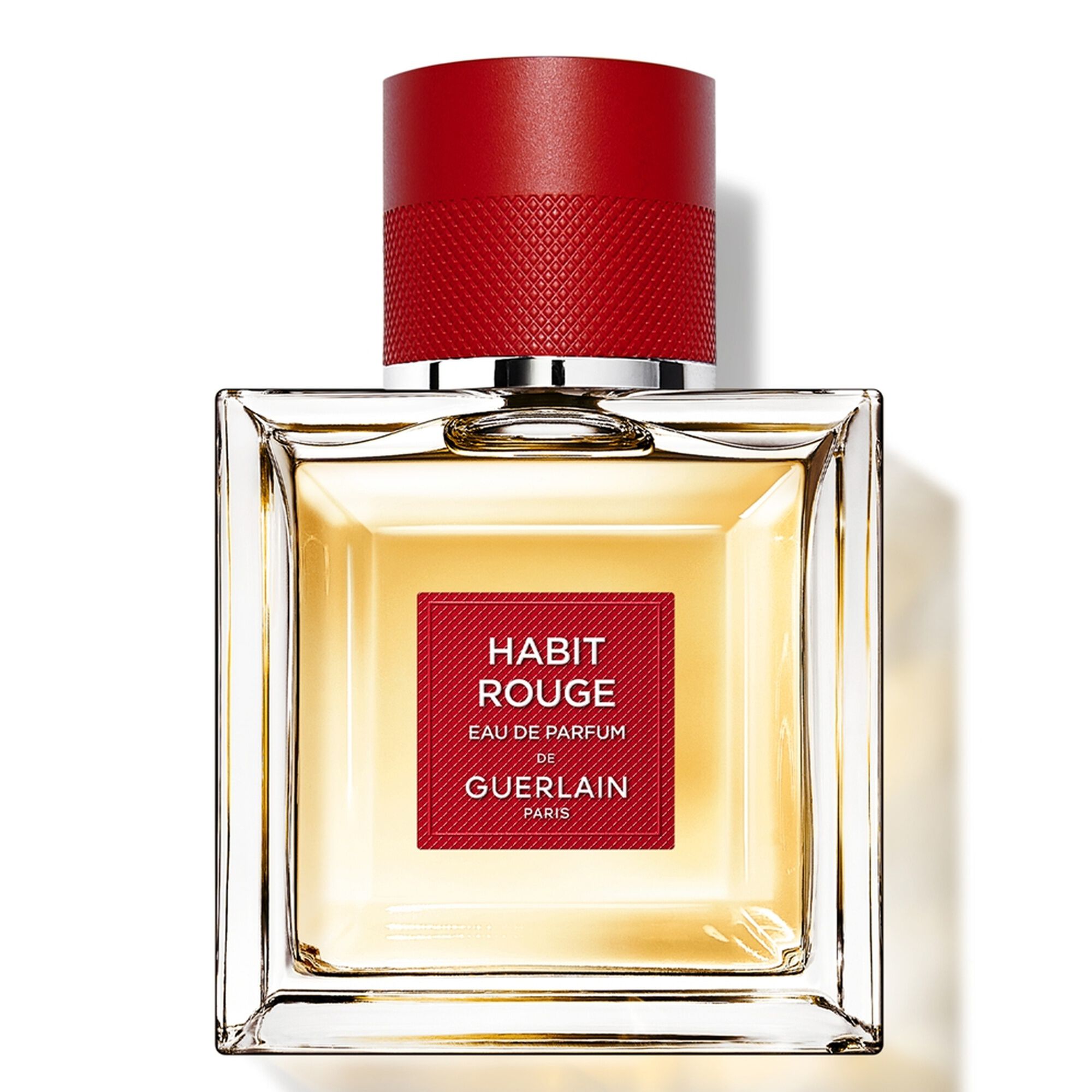
Habit Rouge (Guerlain) — 64 EUR
The absolute icon of French masculine oriental since 1965. Lime and clementine at the top, spiced carnation at the heart, a base note of amber and patchouli: timeless equestrian elegance. For the man who loves a warm, refined sillage that has crossed three generations without ageing. An undisputed Guerlain reference in this segment.
Tom Ford Noir Eau de Parfum (Tom Ford) — 103 EUR
Tom Ford's amber-spicy signature, opulent and chic. Geranium and nutmeg at the top, Bulgarian Rose at the heart, opoponax in the base: a nocturnal woody oriental for the man who embraces a dense, sensual fragrance. To be worn in the evening or for special occasions. Exceptional longevity.
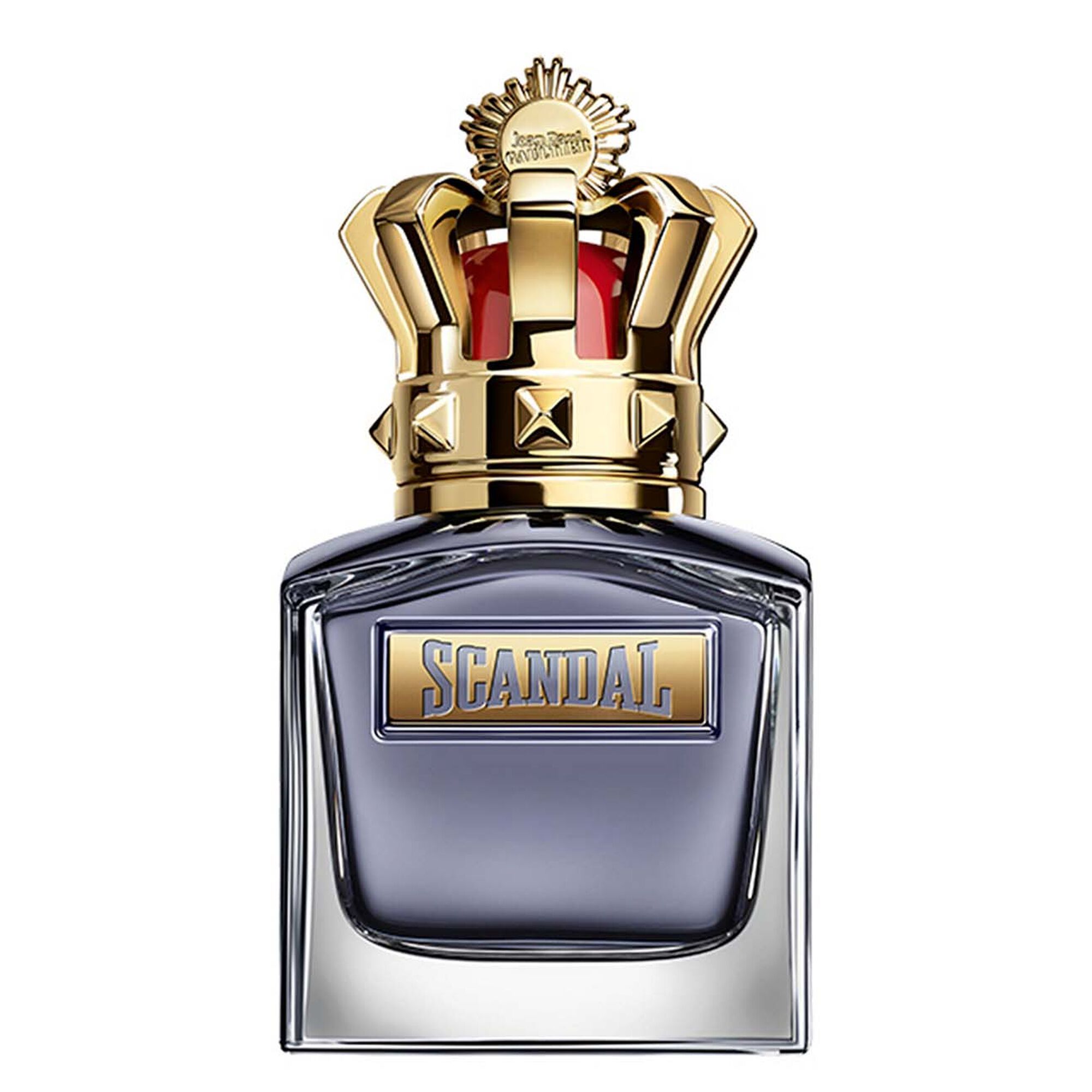
Scandal Pour Homme Intense (Jean Paul Gaultier) — 68.5 EUR
A modern oriental leather, more intense than the original Scandal. Clary sage at the top, leather and vetiver in the base: assertive sillage, solid longevity. For the man seeking a contemporary, distinctive oriental that breaks away from classic amber codes. The most interesting 2025 release in the premium men's segment.
Ambre Sultan (Serge Lutens) — 105.5 EUR
A monument of modern amber, created by Christopher Sheldrake in 1993. Benzoin, labdanum, Tolu balsam, angelica root: an almost solid, balmy fragrance that redefined the perception of sensual warmth in niche perfumery. For those who want an archetypal amber, without any contemporary gourmand tics. The third Serge Lutens pillar in our selection.
Two niche references deserve mention here, even though they extend beyond our catalogue: Tom Ford Tobacco Vanille, which pushes smoked vanilla to its limits, and Maison Francis Kurkdjian Baccarat Rouge 540, the absolute reference for contemporary luxury in the amber-woody family.
Oriental parfum, Arabic parfum, Dubai parfum: what are the differences?
This is the question I hear most often, and the one that deserves the most honest answer. These three terms refer to distinct realities — geographically, culturally, and olfactively.
| Criterion | Western oriental | Arabic parfum | Dubai parfum |
|---|---|---|---|
| Origin | France, Europe (18th-20th c.) | Middle East, millennia-old tradition | Emirates, commercial rise 2010+ |
| Typical concentration | EDP (15-20%), EDT (8-12%) | Parfum / oil (20-40%) | EDP, extrait de parfum (20-30%) |
| Typical price | 50-150 EUR (premium), 100 EUR+ (niche) | 20-200 EUR depending on material | 30-150 EUR |
| Target audience | Western market, fine perfumery codes | Regional tradition, diaspora | Global market, accessible luxury enthusiasts |
Western oriental parfum: the French tradition
The Western oriental was born from the meeting of raw materials from colonial trade and the expertise of French perfumery. Jean Carles, a perfumer at Roure, theorised the classification of fragrance families that still structures the industry's vocabulary today.
Three founding dates: Shalimar by Guerlain in 1925, Habit Rouge in 1965, Opium by Yves Saint Laurent in 1977. Three icons, each defining a decade and a whole imaginary world. Concentrations range from EDT to EDP, prices from 50 to 150 EUR for premium, more for niche. The sillage is controlled, designed for Western social codes.
Arabic parfum: a millennia-old tradition
Arabic perfumery is not conceived in the same way as Western perfumery. It doesn't seek an airy sillage or lightness. It seeks depth, longevity, fusion with the skin.
Attars — concentrated perfumed oils, without alcohol — are the oldest form. Mukhallat are complex blends of several oils. Bakhour refers to burned incense, a tradition of hospitality throughout the Middle East. The raw materials are substantial: natural oud (not synthetic), Ambergris, animal or vegetable musk, taif rose — a Damascus rose grown in Saudi Arabia, among the most precious in the world.
Concentrations are very high, often 30 to 40%. These parfums are not worn like a Western one: a few drops are enough. Houses such as Lattafa, Khadlaj or Maison Alhambra have made these codes accessible at affordable prices, while remaining within the region's tradition.
Dubai parfum: the new oriental scene
Dubai has become, in fifteen years, a global capital of perfumery. The commercial rise began around 2010, driven by tourism, the global diaspora and a very recognisable contemporary luxury aesthetic — gilded flacons, evocative names, effective digital marketing.
Dubai parfums borrow from both traditions: the depth of oriental materials and the presentation codes of Western perfumery. Many emerging brands offer "inspirations" of Western luxury fragrances at lower prices. Quality varies, but the segment has gained credibility with houses investing in serious raw materials.
How to choose between the three worlds?
If you're looking for a fine fragrance with controlled sillage and French perfumery codes, Western oriental is your territory. If you're looking for a concentrated olfactory experience, close to the skin, with raw materials and a millennia-old tradition, turn to Arabic perfumery. If you're looking for a contemporary fragrance with modern design and an accessible premium aesthetic, the Dubai scene has plenty to surprise you.
To continue exploring, our oriental for women selection stays within the Western codes that structure our catalogue.
Oriental woody oud parfum: depth and enchantment
What is oud in perfumery?
Oud is one of the most precious raw materials in existence. It comes from agarwood — the Aquilaria tree — which, when infected by a specific fungus, produces a dark, dense resin to defend itself. This resin, once distilled, yields an oil of remarkable complexity: woody, animalic, slightly smoky, sometimes medicinal.
Geographic origins strongly influence the olfactory profile. Oud from Cambodia and Laos is soft, slightly fruity. That from Vietnam is smokier, more intense. Assam oud (India) is animalic, almost leathery. In Yemen, wood-treatment traditions produce unique, highly sought-after profiles.
The price of the precious raw material can reach 30,000 EUR/kg for the finest qualities. This is why almost all Western parfums use synthetic molecules inspired by it — this isn't cheating, it's an economic necessity. To learn everything about this material, our dossier on oud details the varieties and uses.
Our woody oud selection at Tendance Parfums
Un Bois Vanille (Serge Lutens) — 105.5 EUR — Sandalwood treated like a caramelised vanilla, a pure and mystical woody vision. The niche reference for a warm, deep woody.
Tom Ford Noir EDP (Tom Ford) — 103 EUR — Opoponax and powdery rose over a nocturnal amber-woody base note. Dense, opulent, for evenings that deserve a fragrance to match.
Ambre Sultan (Serge Lutens) — 105.5 EUR — Pure benzoin, labdanum, resinous balsam. The archetype of woody amber in niche perfumery, unapologetically deep.
Reminiscence Oud also deserves mention as an editorial reference in this sub-family: it is one of the first French houses to have made oud accessible in mainstream perfumery. Currently out of stock with us, but worth keeping an eye on.
Feminine oud or masculine oud?
Oud knows no gender binary. Historically, in Middle Eastern cultures, it is worn by women as much as by men — often the same flacons, the same accords. It is Western perfumery that stuck a masculine label on it, probably because its woody-animalic depth matched the codes of masculinity in the traditional classification.
Today, oud compositions come in every register: floral-oud, oud-rose, oud-vanilla, oud-leather. The Serge Lutens house has done much to deconstruct this gender assignment, with confidently unisex fragrances. The Reminiscence house too, in a more accessible register.
How to wear an oriental parfum?
Which season suits an oriental parfum?
Orientals are made for autumn and winter. Cool temperatures slow the evaporation of heavy molecules and further extend longevity. The warm sillage contrasts pleasantly with cold air.
For mid-season — spring or early autumn — the floral oriental and powdery oriental sub-families are better suited: their amber base note is present without being overwhelming. In full summer heat, it's best to avoid heavy oud and massive resins: they can turn cloying on overheated skin.
Oriental parfum for day or evening?
Context matters as much as season. During the day, lighter sub-families are preferable — floral oriental, vanilla oriental in EDT — along with lower concentrations. The sillage remains present without taking over the room.
In the evening, EDPs and extraits de parfum come into their own. Deep woodies, ouds, resinous ambers: this is where they truly shine. For a special occasion, a pure oriental parfum or an extrait de parfum on pulse points (wrists, neck, inner elbow) creates a memorable presence.
How much does a good oriental parfum cost?
The family covers a wide spectrum. At entry level — 25 to 50 EUR — you'll find accessible orientals, often gourmand or vanilla-based, such as Angel Elixir by Mugler at 22 EUR. The premium segment (50 to 100 EUR) offers more complex compositions: Habit Rouge, Good Girl, L'Interdit Absolu. Niche and luxury (100 EUR+) — Un Bois Vanille, Ambre Sultan, Tom Ford Noir — offer rarer raw materials and more distinctive accords. A good oriental exists at every price point.
Frequently asked questions about oriental parfums
What are the best oriental parfums?
It all depends on the profile you're after. For women, Good Girl and Shalimar Soufflé de Parfum are safe bets. For men, Habit Rouge remains a major French reference. In niche, Ambre Sultan and Un Bois Vanille are pillars.
What exactly is an oriental parfum?
An oriental parfum is defined by a warm, long-lasting base note built on resinous materials — amber, labdanum, benzoin, vanilla, musk — often complemented with deep woods and spices. Longevity is long, sillage is notable. It is the most enveloping fragrance family in fine perfumery.
What is the difference between an oriental parfum and an Arabic parfum?
The Western oriental is a creation of French perfumery, with moderate concentrations and a controlled sillage. Arabic parfum is a millennia-old tradition based on concentrated oils, attars and substantial raw materials such as natural oud. For a detailed comparison, our dedicated section explains the three worlds.
Which oriental parfum for women has good longevity?
Un Bois Vanille by Serge Lutens easily lasts 10 to 12 hours on the skin. L'Interdit Absolu by Givenchy and Shalimar Soufflé de Parfum are also very long-lasting. As a general rule, resinous-based oriental EDPs have above-average longevity in fine perfumery.
Which oriental parfum for men would you recommend?
To start, Habit Rouge by Guerlain is the classic French reference, elegant and accessible. For something more contemporary, Tom Ford Noir EDP or Scandal Pour Homme Intense. For a deep niche amber, Ambre Sultan. Our oriental for men selection details each profile.
What is oud in perfumery?
Oud is a precious resin produced by the Aquilaria tree when infected by a fungus. The main origins are Cambodia, Laos, Vietnam and India (Assam). The raw material can reach 30,000 EUR/kg, which explains the dominant use of synthetics in Western perfumery. Our oud dossier details the varieties and uses.
What is the difference between a vanilla oriental and a woody oriental?
Vanilla oriental highlights vanilla, tonka bean and honey over a soft amber base note — Un Bois Vanille is the niche example, Shalimar the classic one. Woody oriental favours sandalwood, cedar, patchouli or oud: drier, deeper, less sweet, with less enveloping roundness. Ambre Sultan illustrates this second register well: the warmth is there, but carved from wood rather than melted into vanilla.
How much does a good oriental parfum cost?
Accessible entry-level options are found between 25 and 50 EUR. The premium segment, with safe bets such as Habit Rouge by Guerlain around 64 EUR, offers excellent value for money. Niche orientals, such as Un Bois Vanille at 105.5 EUR, justify their price through the quality of their materials.