
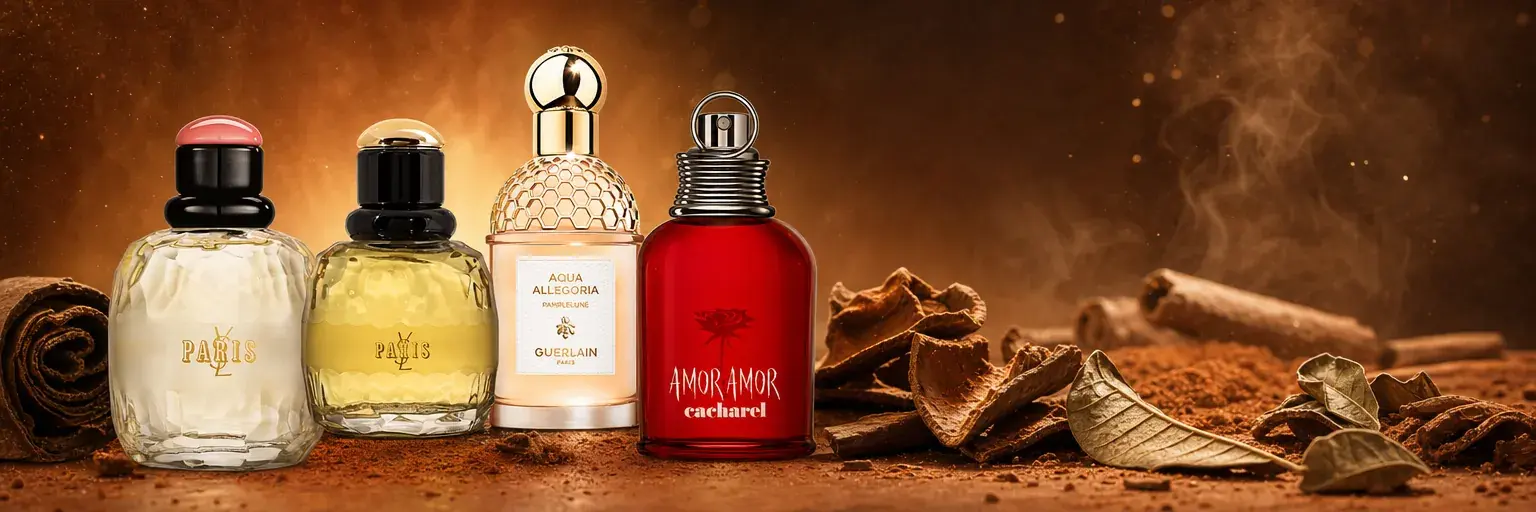
Cassia perfume: buying guide and best fragrances 2026
Cassia is a bittersweet spice drawn from the bark of a tree related to cinnamon. In perfumery, it brings warmth, a slight bitterness and woody-spicy depth without ever overpowering. This note spans genders and seasons, equally at home in a spring floral for women as in a winter oriental for men. This guide will help you identify the fragrances that showcase it and choose the one that suits you.
The cassia note in perfumery: what is it?
Cassia is a spice drawn from the dried bark of Cinnamomum cassia, a tree of the laurel family native to Southeast Asia, closely related to but distinct from Ceylon cinnamon. Its olfactory profile is marked by a more rustic warmth, a slightly woody bitterness and a more direct spicy intensity than classic cinnamon, with which it is often confused.
Olfactory facets
Cassia first releases a dry, powdery warmth, followed by a slightly minty touch and a bittersweet base note. It is less sweet than Ceylon cinnamon, more earthy and robust. Depending on its concentration in the formula, it can appear discreet and smooth or bold and almost spicy-leathery.
Position in the fragrance pyramid
Cassia most often appears as a heart note, where it structures the accord and gives it warmth and longevity. It can also appear as a top note — for a lively spicy opening — or as a base note, blended into woody or oriental base notes to ensure longevity. Its intermediate volatility allows for this versatility.
Natural accords
Cassia pairs remarkably well with:
- Florals: rose, carnation, orange blossom — it warms the petals without overwhelming them.
- Woods: sandalwood, cedar — it enhances their soft dryness.
- Citrus: bergamot, grapefruit — it contrasts their freshness with its warmth.
- Orientals: musk, resins, vanilla — it deepens their richness.
- Fruits: apricot, lychee — it provides a spicy counterpoint to sweetness.
In niche perfumery as much as in mainstream perfumery, cassia is a discreet yet essential connecting note: it links fragrance families together and gives compositions a human, enveloping warmth.
Which are the best fragrances with a cassia note?
Our selection of fragrances featuring the cassia note is based on concrete data: verified reviews from customers who have genuinely purchased the product on Tendance Parfums, and sales volumes measured over the past twelve months. Below you will find ten references covering various families — floral, citrus, oriental, fruity — and prices ranging from 28 EUR to 92,50 EUR, for every profile and every occasion.
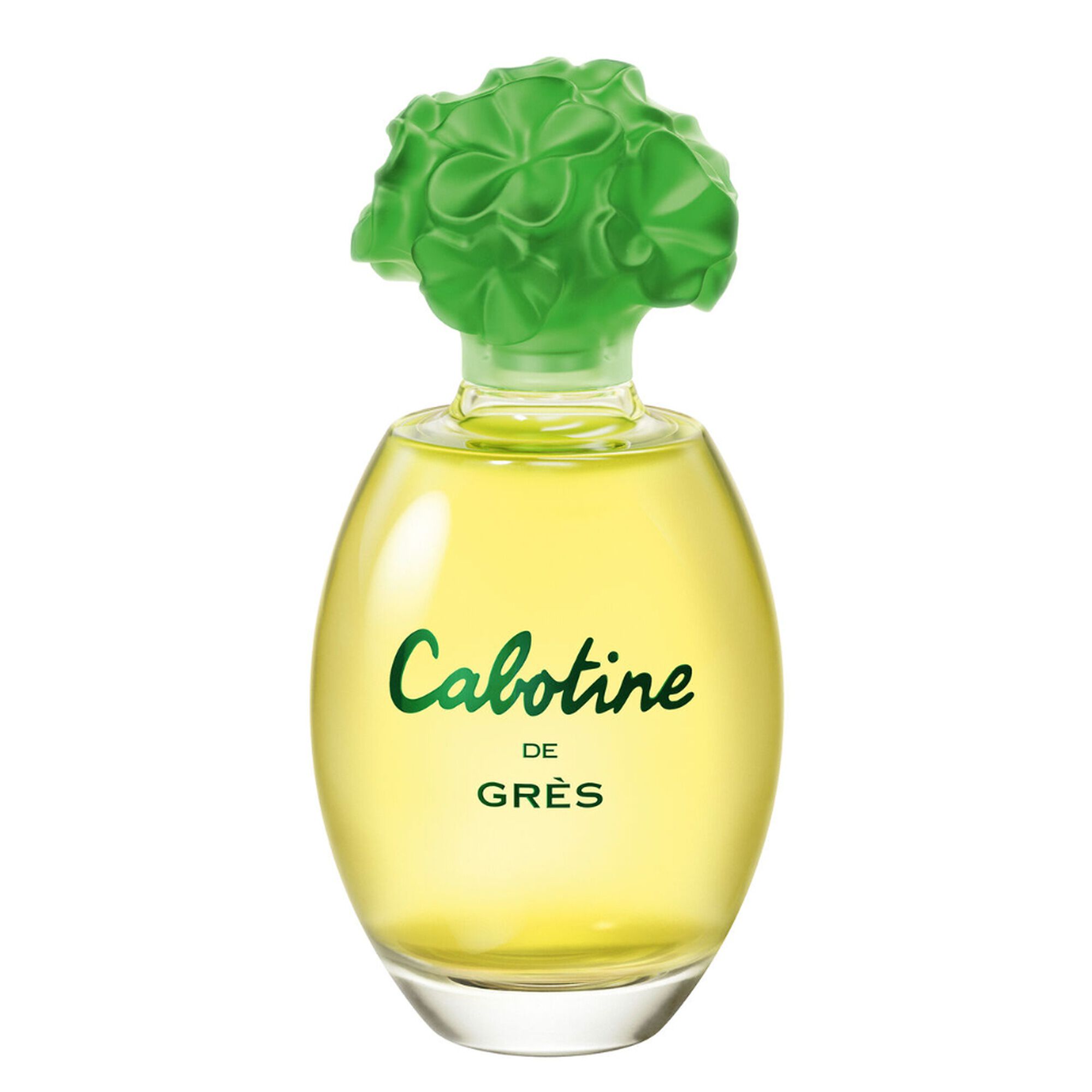
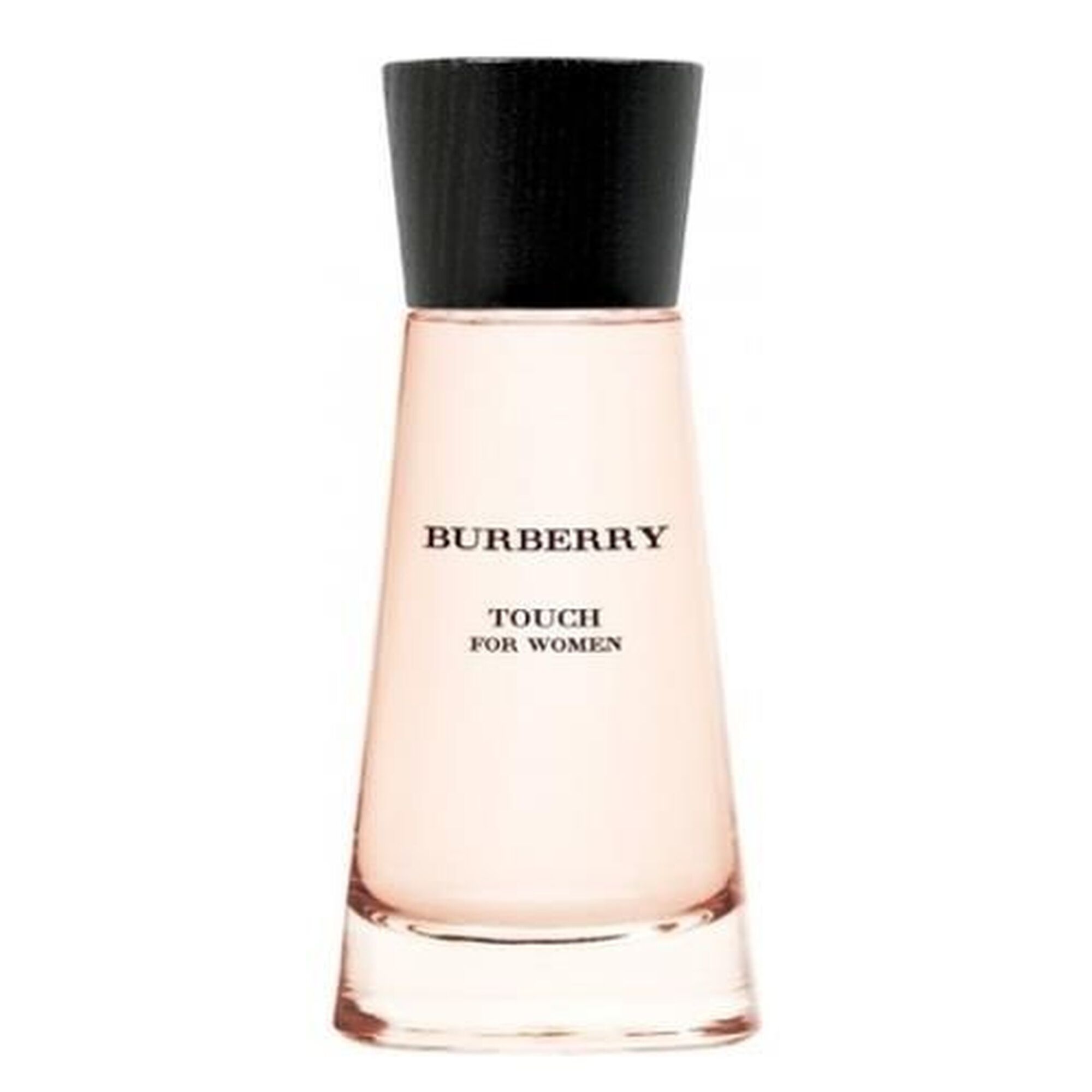
Our favourites, reviewed
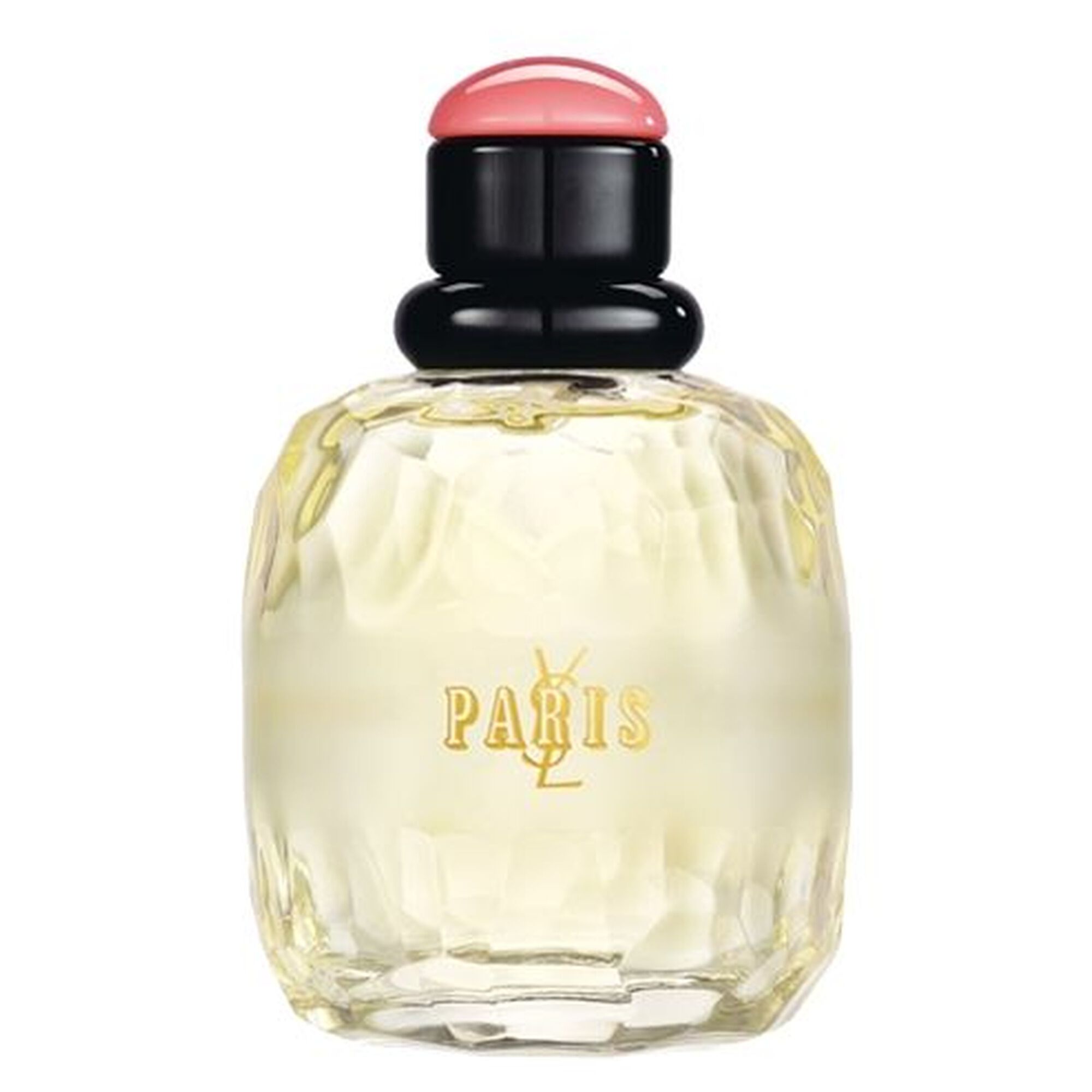
Yves Saint Laurent Paris (Eau de Toilette) — With 129 sales in twelve months and a rating of 4.94/5 from 72 verified reviews, Paris is the most popular cassia fragrance in our catalogue. Its floral heart — rose, geranium, orange blossom — rests on a sandalwood-cedar base note where cassia provides warmth and longevity. A classic loved for its loyalty: "I have nothing particular to say, it's been my perfume for 20 years"
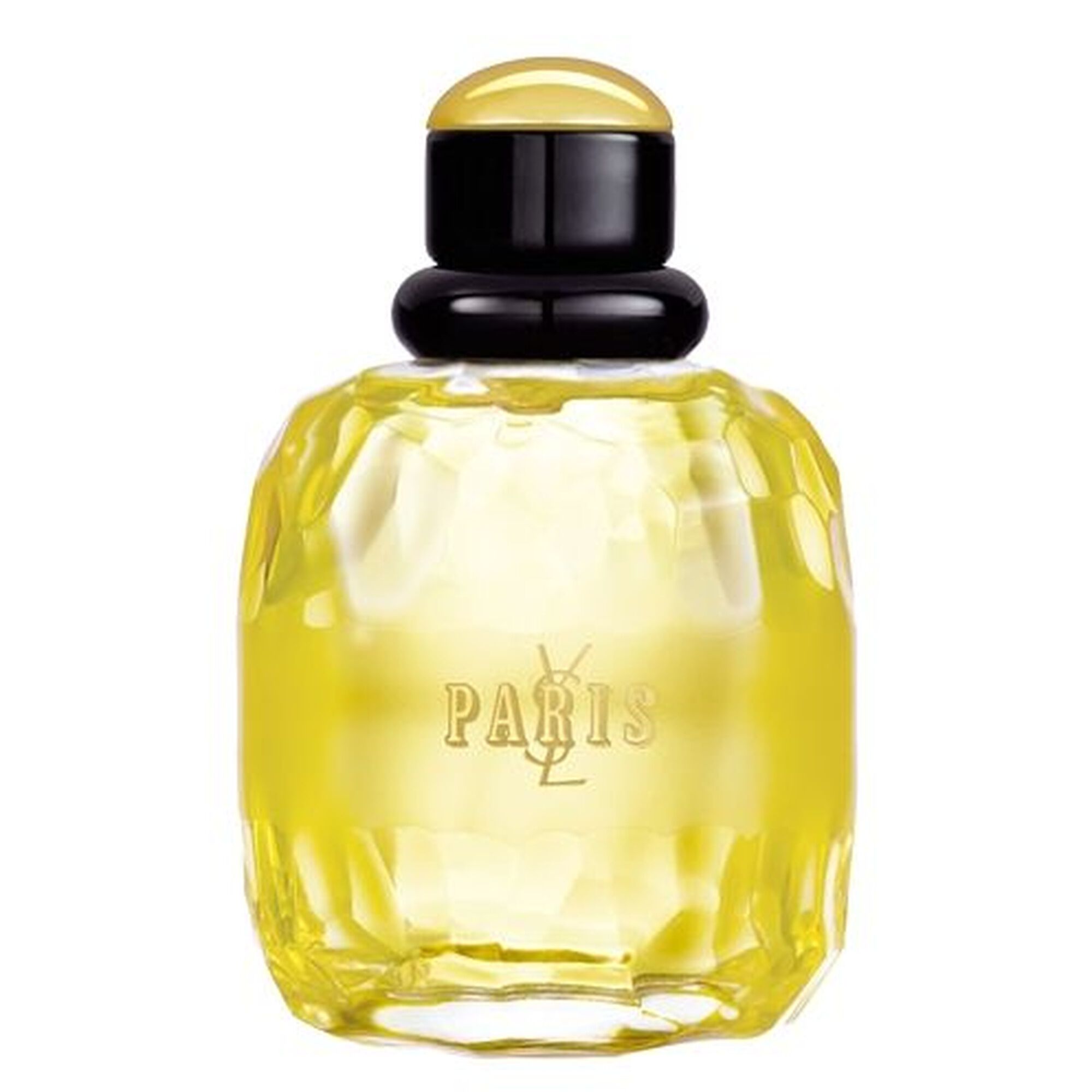
Yves Saint Laurent Paris (Eau de Parfum) — A more concentrated version of the same floral bouquet, the eau de parfum brings together 103 annual sales and 4.9/5 from 73 reviews. Here, cassia takes on more body in the base note, reinforcing longevity on the skin. One customer sums up the appeal of this reference well: "Increasingly hard to find, and at a really attractive price!"
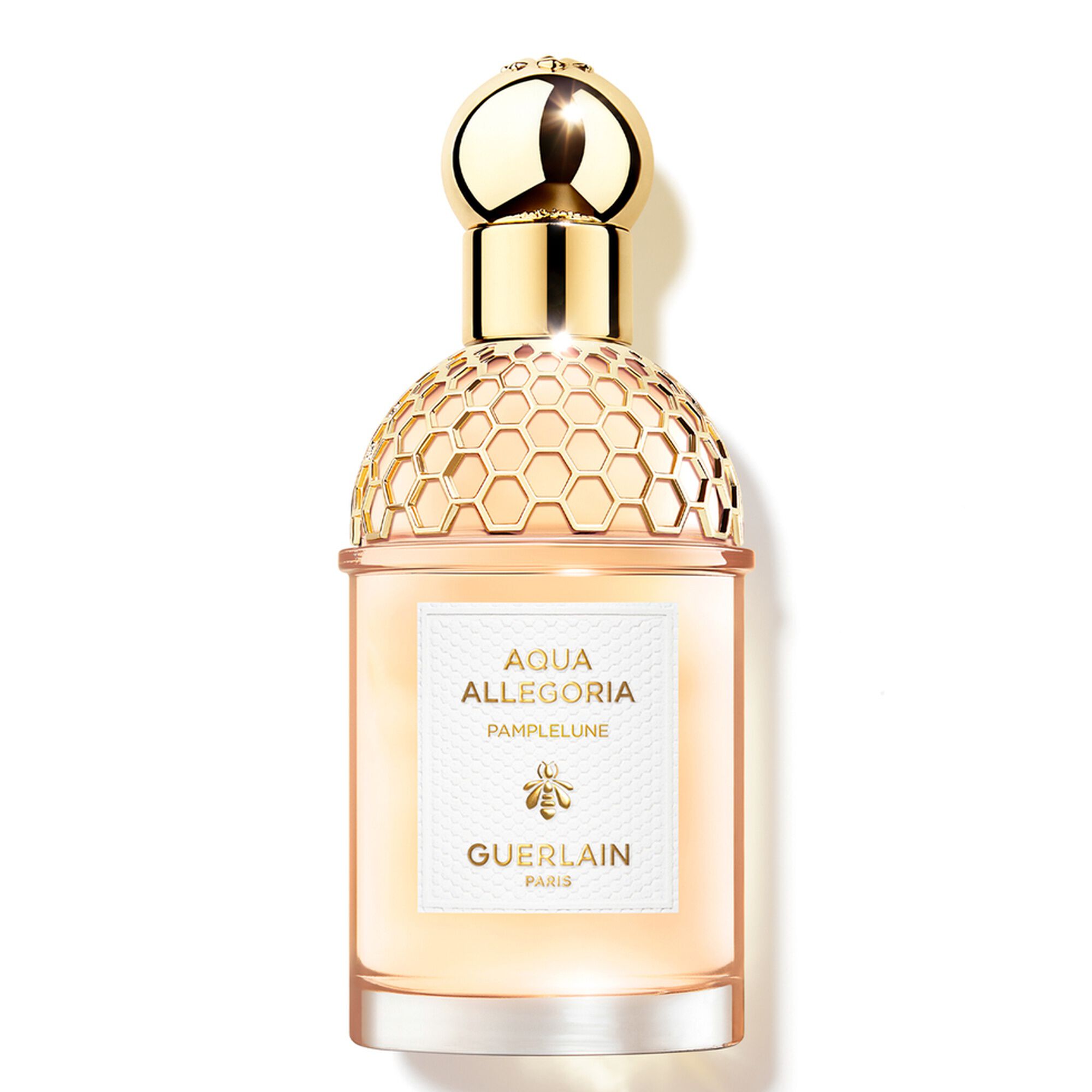
Guerlain Aqua Allegoria Pamplelune — Cassia set within a citrus frame: bergamot, grapefruit and neroli surround the spice and make it light, almost airy. 79 annual sales and 4.8/5 from 101 reviews, the highest review volume in the selection. "My favourite eau for summer": a cassia fragrance you wouldn't expect in this sun-drenched register.
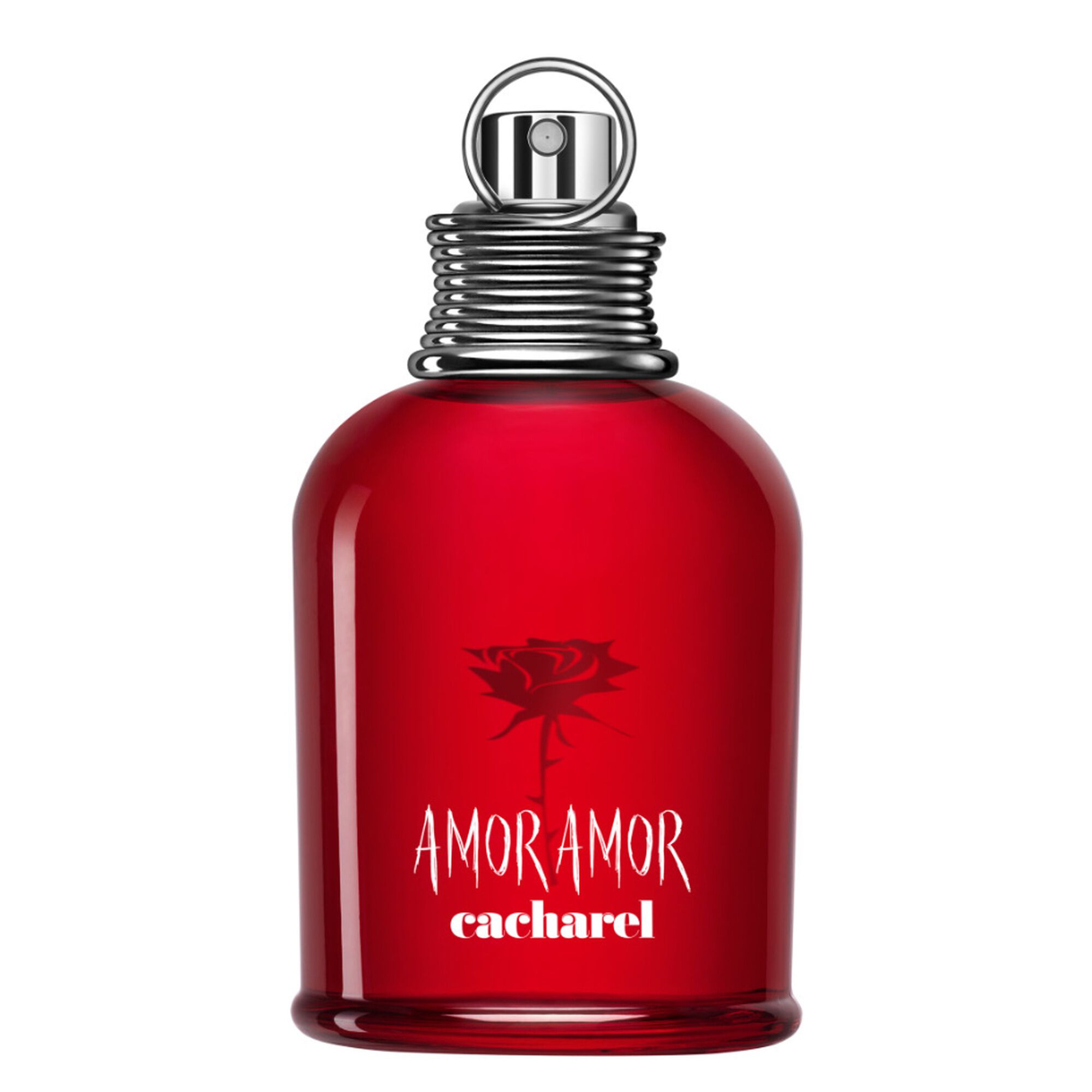
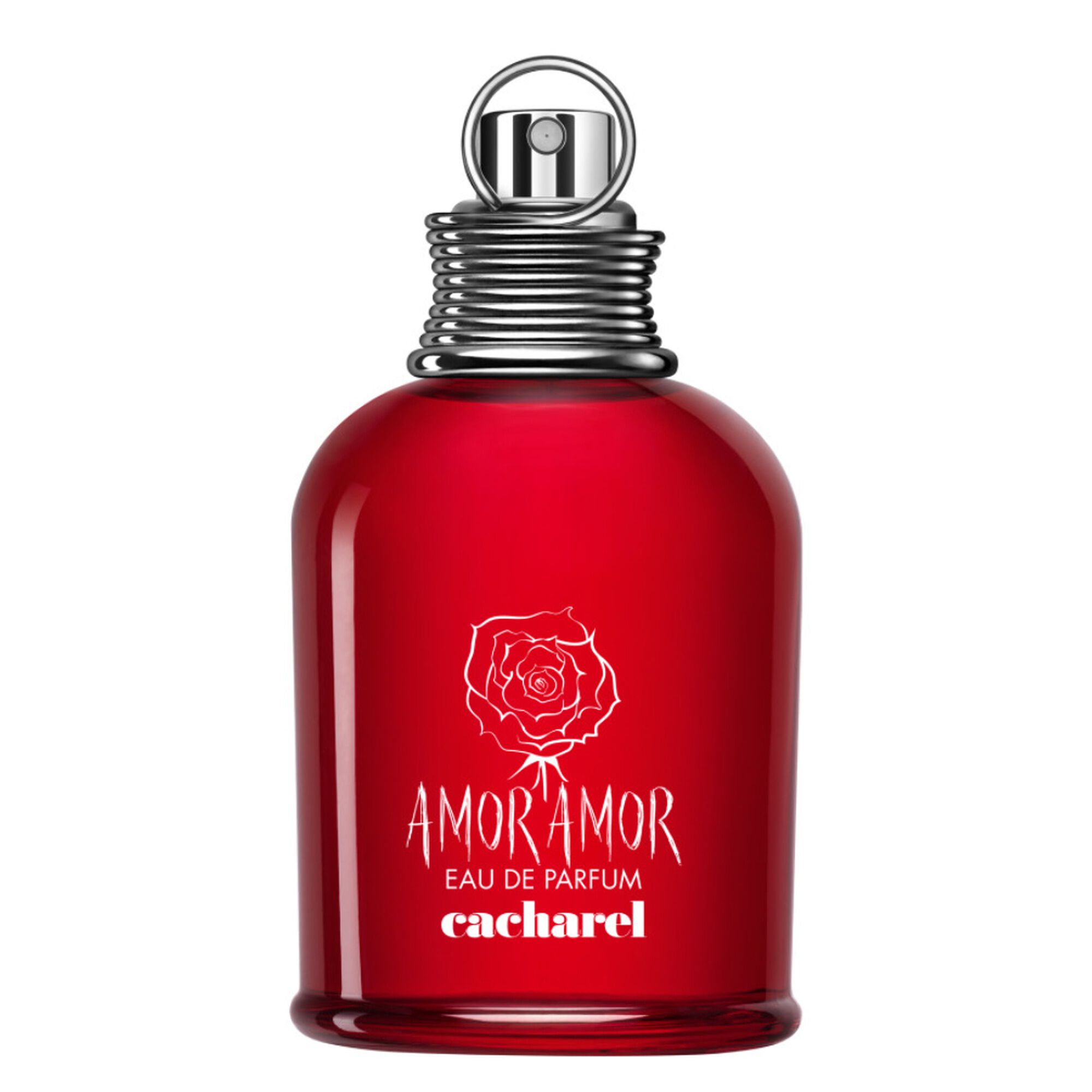
Cacharel Amor Amor (Eau de Toilette) — At 28 EUR, Amor Amor boasts 67 annual sales and a rating of 4.83/5 from 35 reviews. In a fruity floral accord — rose, apricot, muguet, bergamot — the discreet cassia lends a gentle warmth that bridges the freshness of the top notes with the cedar base note. Accessible, generous, ideal as a first spicy-floral fragrance.
Cassia for women, for men: how to choose?
Cassia is not a gendered note: it adapts to whatever composition it joins. Understanding how it expresses itself across fragrance families will help you refine your choice.
For women: cassia warmed and floral
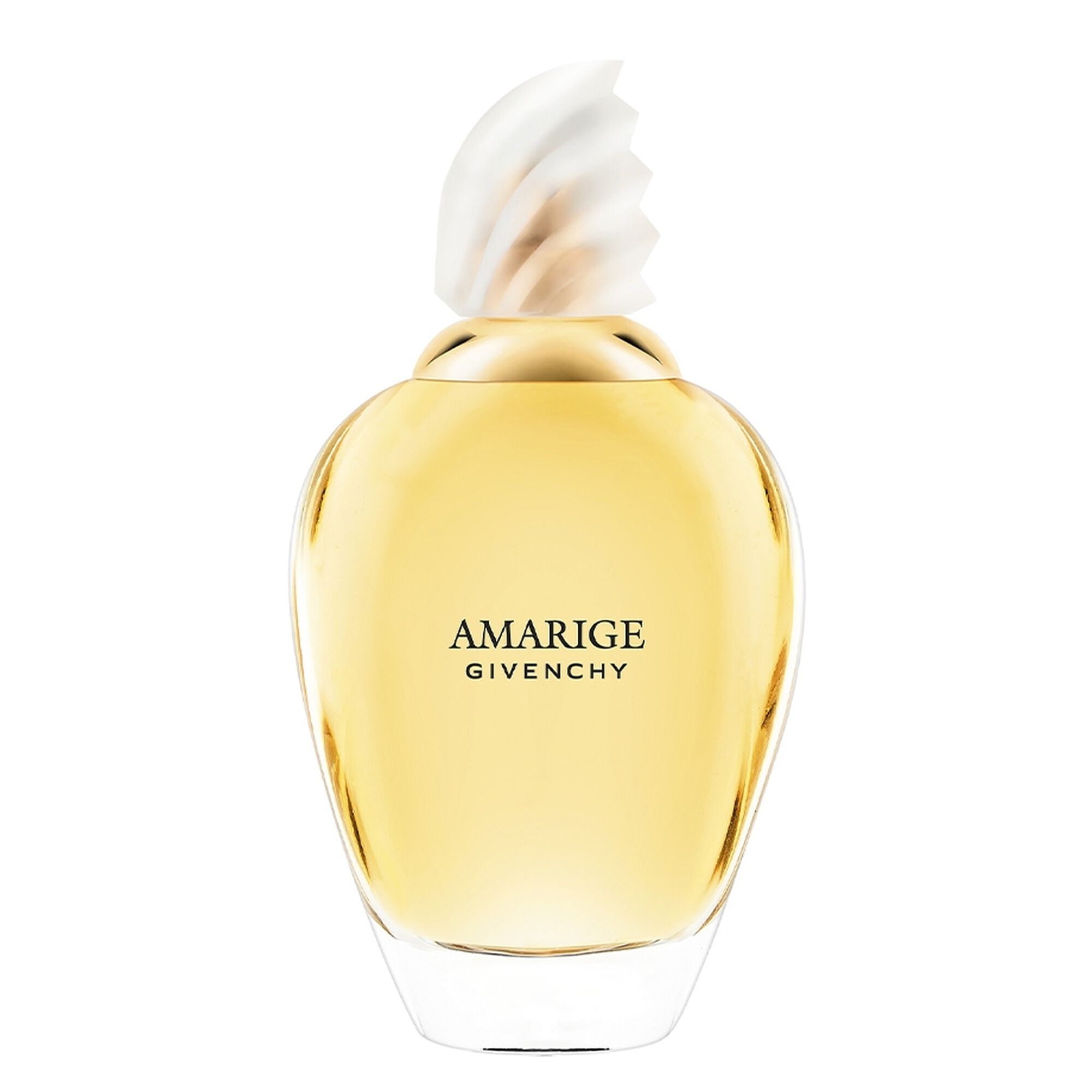
In traditionally feminine fragrances, cassia most often accompanies rich floral heart notes — rose, carnation, orange blossom — and soft woody base notes (sandalwood, cedar). The result is a powdery warmth, enveloping without being heavy. Fragrances such as YSL Paris or Givenchy Amarige illustrate this accord: cassia plays a binding role there, adding depth and longevity to bouquets of bright flowers. Ideal for autumn, winter, and indoor evenings.
For men: cassia dry and spicy
Men's or unisex fragrances often showcase the more robust facet of cassia: dry, slightly woody-leathery, almost bitter. Paired with cedar, oakmoss or tonka bean, it structures fougere or spicy woody accords suitable for everyday wear. For the man seeking a warm base note without sugary heaviness, cassia is a good compass.
Unisex and citrus: fresh cassia
There is a third path: cassia in a citrus accord, as in Guerlain Aqua Allegoria Pamplelune. Grapefruit and bergamot considerably lighten the spice, producing a lively, summery result, worn equally by women and men.
Practical testing tips
- Wear the fragrance for at least 30 minutes before judging it: cassia evolves noticeably with the warmth of the skin.
- In summer, favour eaux de toilette with a citrus or light floral base.
- In winter, opt for eaux de parfum with a woody or oriental base note, where cassia unfolds its full warmth.
Tendance Parfums figures
What our own online perfumery data tells us about the cassia note — figures you won't find anywhere else:
- 18 fragrances featuring the cassia note available in our catalogue, from 14 EUR to 108 EUR (core range 40-84 EUR).
- The bestseller among our customers over the past 12 months: Yves Saint Laurent Paris (129 sales).
- Average rating of our selection: 4.9/5 from 324 verified customer reviews.
- Prices and stock updated continuously; free delivery from 59 EUR of purchases.
Frequently asked questions
What is the cassia note in a fragrance? Cassia is a bittersweet spice extracted from the bark of Cinnamomum cassia, a relative of the cinnamon tree. In perfumery, it brings warmth, a slight bitterness and woody-spicy depth. It differs from Ceylon cinnamon in being more rustic and drier in character, and is found equally as a heart note or a base note.
Are there fragrances with a cassia note for women? Yes, several feminine references incorporate cassia into warm floral accords. YSL Paris and Givenchy Amarige, for example, combine rose, carnation and orange blossom with cassia over a sandalwood-cedar base note. The result is enveloping and long-lasting, particularly suited to autumn and evenings out.
Are there fragrances with a cassia note for men? Cassia suits masculine and unisex compositions very well. It expresses itself there in spicy woody accords — cedar, oakmoss, tonka bean — with a dry, robust facet. Unisex fragrances with a citrus base, such as Guerlain Aqua Allegoria Pamplelune, also offer a lighter cassia worn by men.
What is the difference between cassia and cinnamon in perfumery? Cassia (Cinnamomum cassia) is more intense, drier and slightly more bitter compared with Ceylon cinnamon, which is sweeter and finer. In practice, cassia gives fragrances a more rustic, woody warmth, while Ceylon cinnamon brings more softness. The two can coexist within the same composition.
In which season should you wear a fragrance with a cassia note, and how long does it last? Fragrances with a cassia note are best worn in autumn and winter, when their spicy warmth is most flattering. In a light citrus version, they also suit summer. Longevity is good, especially in eau de parfum: cassia, a heart-to-base note, develops with the warmth of the skin and lasts for several hours.