

Sweet perfume: the gourmand softness of an irresistible family
Twelve years advising customers in perfumery, and the sweet family remains the one that sparks the most reactions — smiles, hesitation, sometimes a touch of wariness ("I don't want to smell like a cake"). What I try to explain every day in-store is that "sweet" doesn't mean "heavy" or "childish". It's an immense family, born in 1992 with Angel by Mugler, which today covers territories as different as a sparkling fruity spring scent and a woody vanilla fragrance for winter evenings.
This guide gives you the keys to understanding the sweet family from the inside: its sub-families, its codes, its best references for women and men, and how to choose according to your profile. Let's begin.
What is a sweet perfume?
Olfactory definition: the composition of a sweet perfume
A sweet perfume is recognisable by one thing: it evokes softness, comfort, something edible or enveloping. But behind this overall impression, the construction is often more complex than it appears.
The signature sweet notes are those that structure the family. Vanilla is its pillar — present in almost every sweet fragrance, whether in natural form or as synthetic vanillin. Around it revolve caramel, honey, praline, almond, cacao, tonka bean, benzoin and heliotrope. The latter deserves a closer look: it's a flower with an almond- and sugar-like scent, often paired with white musk to give that powdery texture so characteristic of classic sweet fragrances. To learn everything about this fundamental note, our feature on the honey note explores its uses in perfumery.
Alongside these base notes, sweet fruity notes bring lightness: peach, raspberry, pear, lychee, fig, red berries. They give rise to the fruity-sweet sub-family, airier and less enveloping.
Finally, gourmand woody notes — creamy sandalwood, gourmand patchouli, sweet amber, white musk — serve as a foundation. These are what make the perfume last on the skin and give it that warm character we associate with autumn and winter sweet fragrances.
Origins of the sweet family in perfumery
Before 1992, the unwritten rule of fine perfumery was clear: food has no place in a luxury flacon. Floral, woody, chypre and oriental accords dominated. Then Olivier Cresp incorporated ethylmaltol — a synthetic molecule smelling of candy floss and cooked sugar — into Angel by Mugler. The result was disconcerting, almost provocative.
The perfume took time to establish itself. Industry buyers were sceptical. But the public embraced Angel in droves. The gourmand-sweet family was born.
Since then, the family has evolved in every direction: towards softer vanilla-sweet, towards lighter fruity-sweet, towards romantic floral-sweet, towards masculine woody-sweet. What was an anomaly in 1992 has become one of the most widely worn families in the world.
Why are sweet perfumes so addictive?
The answer is both chemical and psychological. The molecules that make up sweet accords — vanillin, ethylmaltol, heliotropin — are round, light molecules that diffuse slowly and linger on the skin for a long time. They don't evaporate abruptly the way some green or citrus notes do.
On the psychological side, the olfactory association with food and childhood plays a major role. The scent of vanilla or caramel activates brain areas linked to pleasure and comfort. It's a conditioned, almost universal response. It's no coincidence that sweet perfumes work so well as "seduction perfumes": they create an instinctive closeness, a desire to draw near.

Did you know? Angel by Mugler (1992) is considered the first gourmand perfume in history. Olivier Cresp dared to incorporate ethylmaltol — a molecule smelling of candy floss — into a fine fragrance, shaking up the codes of modern perfumery. No perfumer had dared cross that line before him.
The 5 sweet sub-families
| Name | Olfactory profile | Typical notes | Examples |
|---|---|---|---|
| Vanilla-sweet | soft-enveloping | vanilla, tonka bean, benzoin, white musk | La Vie Est Belle, Samsara |
| Gourmand-sweet | foodie-intense | caramel, praline, cacao, almond, honey | Angel, Prada Candy |
| Fruity-sweet | light-sparkling | peach, raspberry, pear, lychee | Idôle Peach'n Roses |
| Floral-sweet | romantic-powdery | sweet rose, peony, honeyed jasmine, heliotrope | Black Opium, Flowerbomb |
| Woody-sweet | warm-masculine | creamy sandalwood, gourmand patchouli, sweet amber | A*Men, Wanted By Night |
Vanilla-sweet
This is the most accessible sub-family, the one I most often recommend to people who "don't like sweets that are too strong". Vanilla-sweet is built on an accord of softness: vanilla, tonka bean, benzoin, white musk, sometimes Tolu balsam. The result is enveloping without being heavy, creamy without being suffocating.
Lancôme La Vie Est Belle is the best-selling example in the world. Guerlain Samsara, older (1989), brings woody depth to the vanilla-sweet profile through sandalwood. Both are references of the family.
Gourmand-sweet
Here we enter foodie territory. Gourmand-sweet borrows directly from the codes of pâtisserie: caramel, praline, cacao, almond, honey. It's intense, addictive, sometimes almost edible. The boundary with the gourmand family is porous — one could argue that gourmand-sweet is the version most directly linked to sweet softness, whereas pure gourmand can incorporate spicy or tobacco notes.
Mugler Angel (1992) remains the absolute reference. Prada Candy, with its caramel + caramel note + white musk + benzoin accord, offers a more refined and contemporary version.
Fruity-sweet
Lighter, more sparkling. Fruity-sweet combines notes of peach, raspberry, pear, lychee, fig or red berries with a slightly sweet base. It's the most-worn sub-family in spring and summer, because it retains a freshness that gourmand-sweets lack.
Lancôme Idôle Peach'n Roses is a recent illustration. Viktor & Rolf Flowerbomb Nectar (factual mention) pushes the fruity register towards greater density. To explore this territory further, our feature on the fruity family details the profiles.
Floral-sweet
Floral-sweet is romantic, sometimes powdery. It combines flowers — sweet rose, peony, honeyed jasmine, heliotrope, powdery iris — with a soft base. It's a very feminine sub-family in its traditional codes, though certain floral-sweet accords work very well on all skin types.
YSL Black Opium is its most modern and most distinctive version. Viktor & Rolf Flowerbomb, with its jasmine + rose + patchouli + vanilla accord, is a reference of the segment. Nina Ricci Nina, factual mention, represents the softer, more powdery floral-sweet.
Woody-sweet
This is the sub-family that has allowed sweet perfumes to establish themselves lastingly in the men's wardrobe. Woody-sweet combines creamy sandalwood, gourmand patchouli, sweet amber with a touch of caramel or vanilla. The result is warm, masculine, cosy.
Mugler A*Men (1996) is the founder on the men's side. Azzaro Wanted By Night offers a more accessible and versatile version.
Our selection: the best sweet perfumes for women in 2026
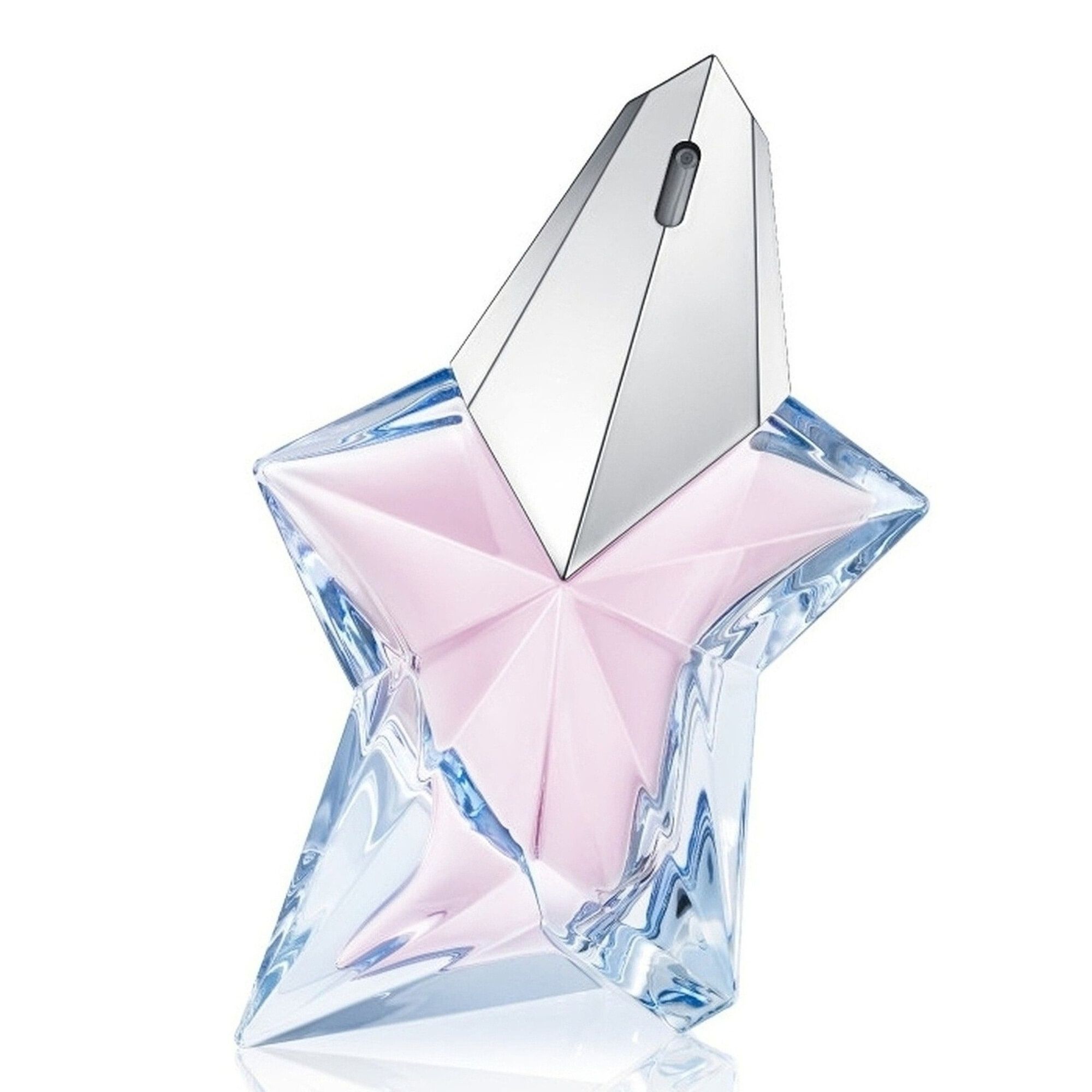
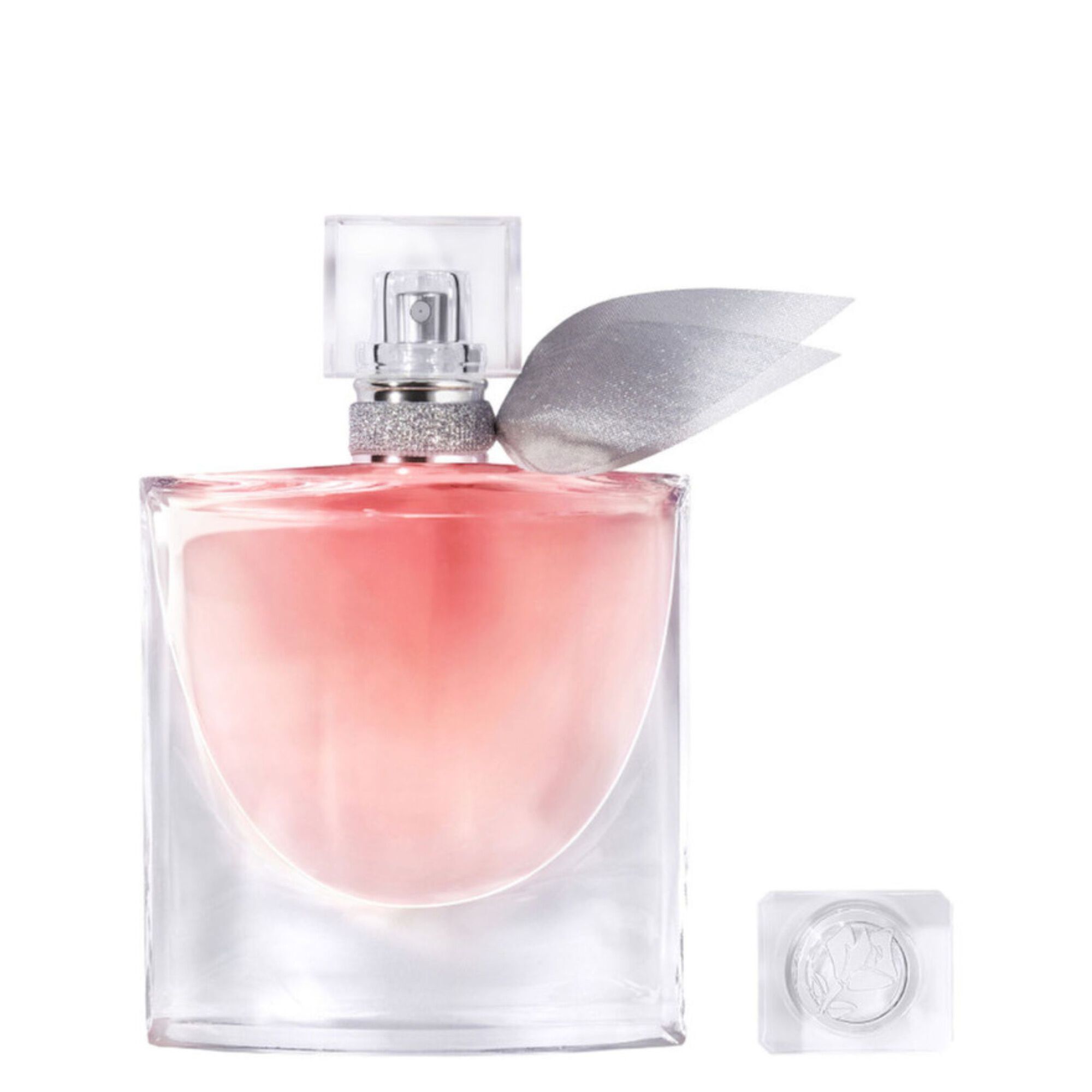
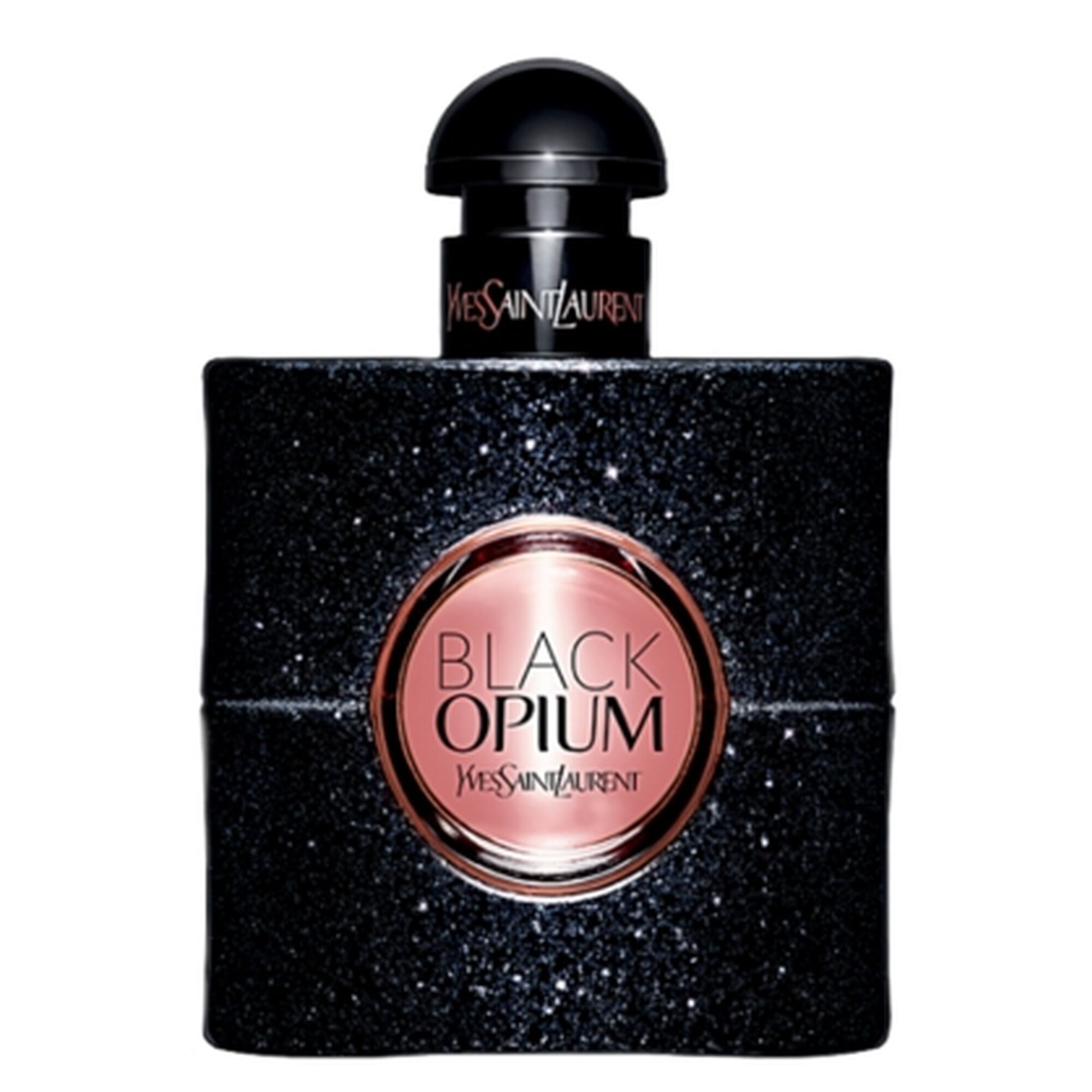
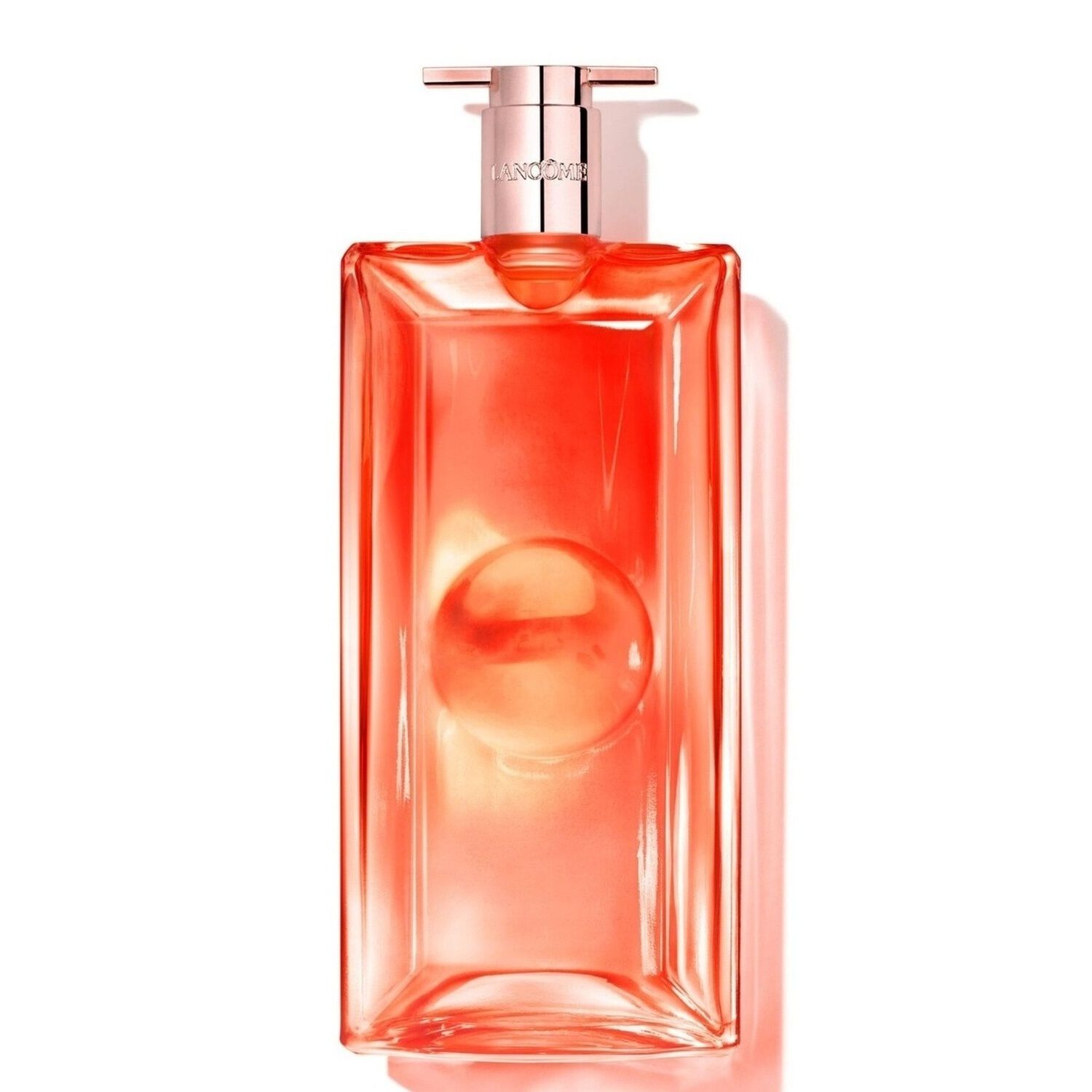


Our sweet perfumes for women selection covers all the sub-families, from light fruity to intense gourmand. Here are the eight references I recommend most regularly.
Angel EDP — Mugler
Angel EDP — Gourmand-Sweet — Mugler, 1992.
The founder of the gourmand-sweet family. Praline + patchouli + vanilla + caramel: an intense, enveloping accord that changed the game in perfumery. Olivier Cresp incorporated ethylmaltol for the first time into a fine fragrance. For anyone who wants a sweet that makes a lasting impression and lasts all day.
La Vie Est Belle EDP — Lancôme
La Vie Est Belle EDP — Vanilla-Sweet — Lancôme, 2012.
Global best-seller of feminine vanilla-sweet. Iris + praline + vanilla + patchouli: a creamy, feminine softness, enveloping without heaviness. Works just as well for sweet-perfume lovers as for those seeking a warm floral. A pivotal reference of the family.
Black Opium EDP — Yves Saint Laurent
Black Opium EDP — Floral-Sweet — YSL, 2014.
Coffee + jasmine + vanilla: a warm, sensual, slightly addictive accord. Modern floral-sweet at its finest, with real character. Far from overly smooth sweetness. Notable sillage, solid longevity. For the woman who wants an assertive, contemporary sweet.
Idôle Peach'n Roses EDP — Lancôme
Idôle Peach'n Roses EDP — Fruity-Sweet — Lancôme.
Juicy peach over a heart note of fresh rose and a base note of white musk: light, sparkling, warm. Lancôme's fruity-sweet, without heaviness. Perfect in spring and summer, for those seeking an airy sweet. Covers the fruity-sweet sub-cluster for women.
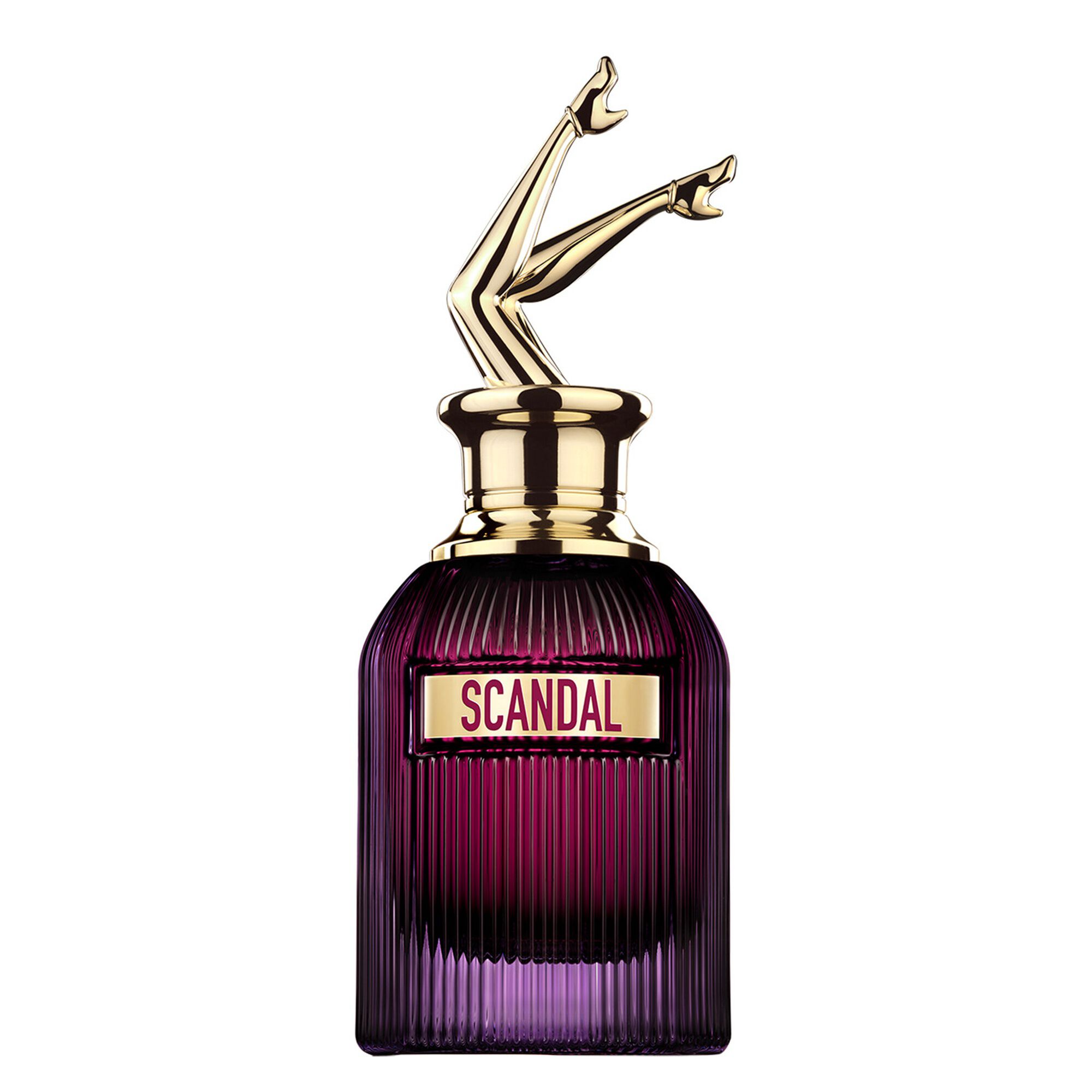
Scandal Intense EDP — Jean Paul Gaultier
Scandal Intense EDP — Gourmand-Sweet — Jean Paul Gaultier.
Honey + gardenia on top, patchouli in the base: a floral-sweet accord with character. Less classic than Angel, more floral and contemporary. For the woman who wants an assertive gourmand without falling into an overly vanilla-heavy register. Generous sillage, assertive presence.
Flowerbomb EDP — Viktor & Rolf
Flowerbomb EDP — Floral-Sweet — Viktor & Rolf, 2005.
A composition of white flowers — jasmine, rose, freesia, orchid — over a base of patchouli and vanilla. Soft, enveloping, comforting. For anyone seeking a generous, feminine floral-sweet that lasts all day. A reference of the segment.
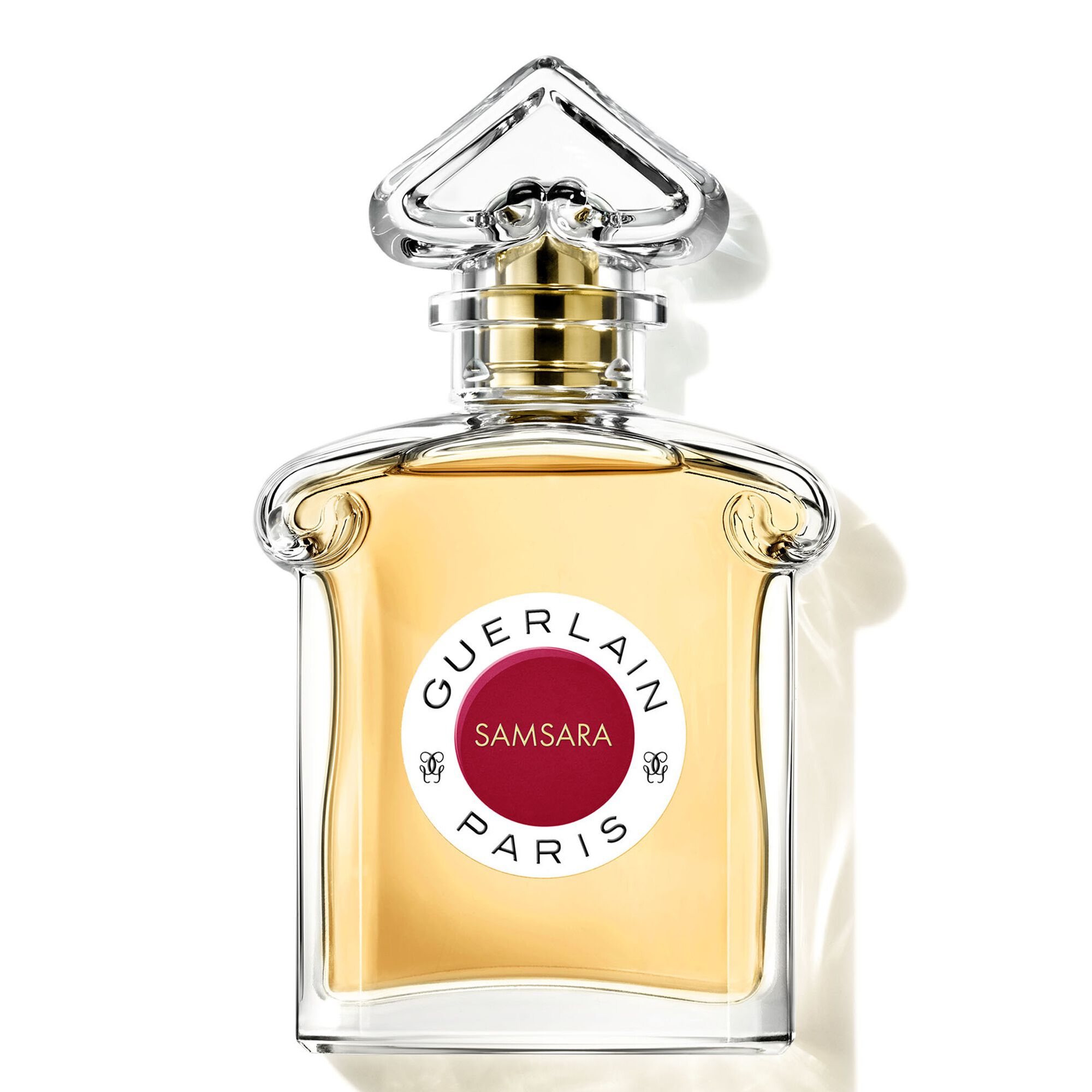
Samsara EDP — Guerlain
Samsara EDP — Vanilla-Sweet — Guerlain, 1989.
Creamy sandalwood + vanilla + jasmine: a deep, sensual, timeless softness. For anyone seeking a vanilla-sweet with woody depth, far from overly smooth modern sweets. Guerlain's reference of the family, to wear in the evening or in autumn.
Candy EDP — Prada
Candy EDP — Gourmand-Sweet — Prada, 2011.
Caramel + white musk + benzoin: a refined, almost minimalist gourmand-sweet accord. For anyone who wants a direct sweet, without floral frills, warm and creamy. A modern reference of feminine gourmand-sweet, to wear both day and night.
Floral-sweet in a nutshell
Within the feminine sweet family, floral-sweet deserves particular attention. It combines flowers — sweet rose, peony, honeyed jasmine, heliotrope, powdery iris — with a soft, enveloping base. It's the most romantic sub-family, often powdery, sometimes lightly amber. YSL Black Opium is its most modern and most distinctive version, with its coffee-jasmine-vanilla accord. Viktor & Rolf Flowerbomb offers a more floral, generous version. Two very different profiles for the same family.
Our selection: the best sweet perfumes for men in 2026
Men's sweet perfume has its own codes. It's a far cry from feminine vanilla-sweet or floral-sweet: here, the softness is expressed through woody, amber, vanilla-spicy, caramel-patchouli registers. It's an assertive sweet, often intense, that fully embraces its gourmand character without ever tipping into femininity as traditionally defined.
Our sweet perfumes for men selection details the profiles by occasion and intensity.
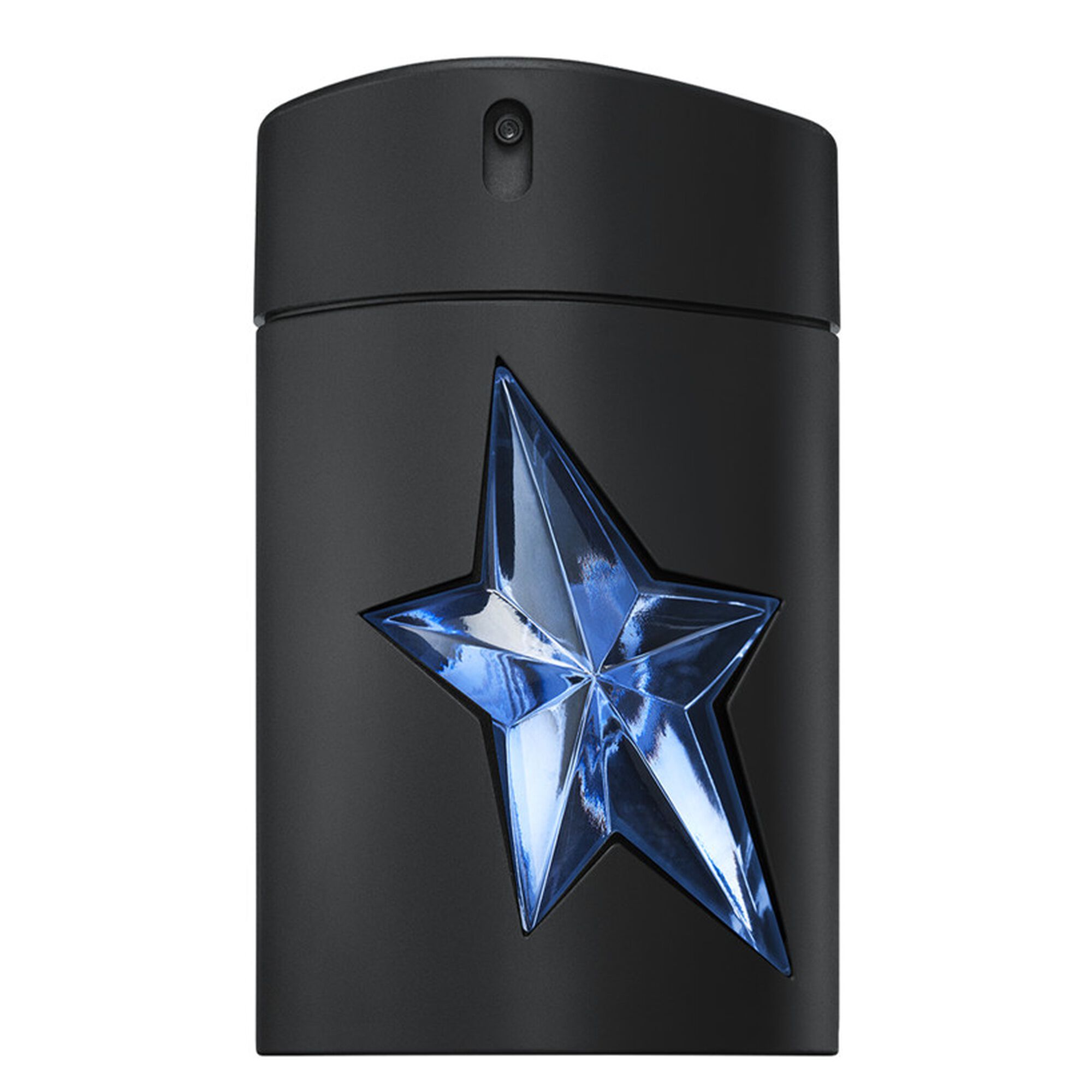
A*Men EDT — Mugler
A*Men EDT — Woody-Sweet — Mugler, 1996.
Tar + coffee + caramel + patchouli + vanilla: an intense, almost provocative masculine woody-sweet. Angel's masculine answer. For the man who wants an assertive sweet, far from sedate woods. Founding reference of masculine sweet. A pivot of the Mugler range.
Wanted By Night EDP — Azzaro
Wanted By Night EDP — Woody-Sweet — Azzaro.
Cardamom + lemon + iris + cedar + vanilla + amber + musk: a warm, cosy accord, easy to wear. Accessible, versatile masculine woody-sweet. For the man who wants a sweet without excess, elegant for everyday wear. Covers the "men's woody-sweet perfume" sub-cluster.
The Most Wanted EDP — Azzaro
The Most Wanted EDP — Woody-Sweet — Azzaro.
Cardamom + amber + vanilla: a warm, assertive masculine woody-sweet, tailor-made for autumn evenings. For the man seeking a sweet with character, between elegance and indulgence. A fine alternative to the vanilla-spicy register.
To go further into masculine sweet perfumery, a few factual references deserve mention. Mugler AMen Pure Malt is a niche variation of the AMen range, incorporating a malt whisky note over the sweet-woody base. Serge Lutens Un Bois Vanille is a niche unisex vanilla reference, often cited by lovers of deep, woody sweetness — a profile that works just as well on a woman as on a man.
Sweet perfume, fruity perfume, gourmand perfume: what's the difference?
This is the question I hear most often in-store. Recently, a customer told me: "I want something sweet but not too gourmand, you know?" I knew what she meant. But I realised I first needed to explain the difference between these three families, because without that reference point, you go round in circles.
| Family | Sweet intensity | Dominant notes | Occasion |
|---|---|---|---|
| Sweet | Medium to strong | Vanilla, caramel, honey, benzoin | Autumn/winter, evening |
| Fruity | Light to medium | Peach, raspberry, pear, lychee | Spring/summer, daytime |
| Gourmand | Strong to very strong | Praline, cacao, caramel, almond | Evening, autumn/winter |
Sweet perfume: softness as a signature
Sweet perfume is the broadest of the three terms. It refers to all perfumes where softness is the dominant note — whether that softness comes from vanilla, caramel, honey, benzoin or a honeyed floral accord. It's an enveloping, comforting family that covers very different profiles depending on the notes used.
Gourmand perfume: when perfumery borrows from pâtisserie
Gourmand is a subset of sweet, but it goes further in borrowing from pâtisserie codes. Since Angel in 1992 and Olivier Cresp's incorporation of ethylmaltol, the gourmand family fully embraces its food references: praline, cacao, almond, cooked caramel. The intensity is stronger, the sillage denser. This is not a subtle sweet.
Fruity-sweet perfume: lightness and sparkle
Fruity sweet perfume is the opposite of gourmand in terms of texture. Peach, raspberry, pear, lychee: fruity notes bring freshness and lightness. The base remains slightly sweet, but the overall impression is airy, sparkling. It's the ideal profile for warmer months or for those who want a sweet without density.
How to choose between sweet, fruity and gourmand?
A few practical pointers. If you're looking for something enveloping for autumn and winter, go for a vanilla-sweet or a gourmand. If you want a light sweet for spring or the office, fruity-sweet is your territory. If you're torn between the two, floral-sweet or woody-sweet can be a good compromise.
At Tendance Parfums, our selection covers these three profiles: Angel EDP for intense gourmand, Idôle Peach'n Roses for light fruity-sweet, La Vie Est Belle for enveloping vanilla-sweet.
Sweet vanilla perfume: the signature note of a timeless family
Vanilla in perfumery: where does this irresistible note come from?
Vanilla used in perfumery mainly comes from Vanilla planifolia, a climbing orchid grown in Madagascar, Tahiti and Mexico. Extraction yields a rich, complex absolute, slightly woody and smoky — very different from synthetic vanillin, which is cleaner and more directly sweet.
In modern perfumery, both coexist. Synthetic vanillin is used for its consistency and sweetening power. Natural absolute brings depth and a slight animalic quality. The vanilla note deserves a feature all to itself, given how much it structures the sweet family. It naturally pairs with tonka bean, which shares its coumarin content and brings an almondy-milky dimension. In oriental perfumes, vanilla often acts as a bridge between spices and resins.
Our sweet vanilla selection at Tendance Parfums
La Vie Est Belle EDP — Lancôme Iris + praline + vanilla: enveloping softness at its finest. Feminine, creamy, timeless. Lancôme's pivotal reference of vanilla-sweet.
Angel EDP — Mugler Praline + vanilla + gourmand patchouli: the founder of the family. Vanilla here is intense, carried by ethylmaltol and praline. A gourmand-sweet that changed everything.
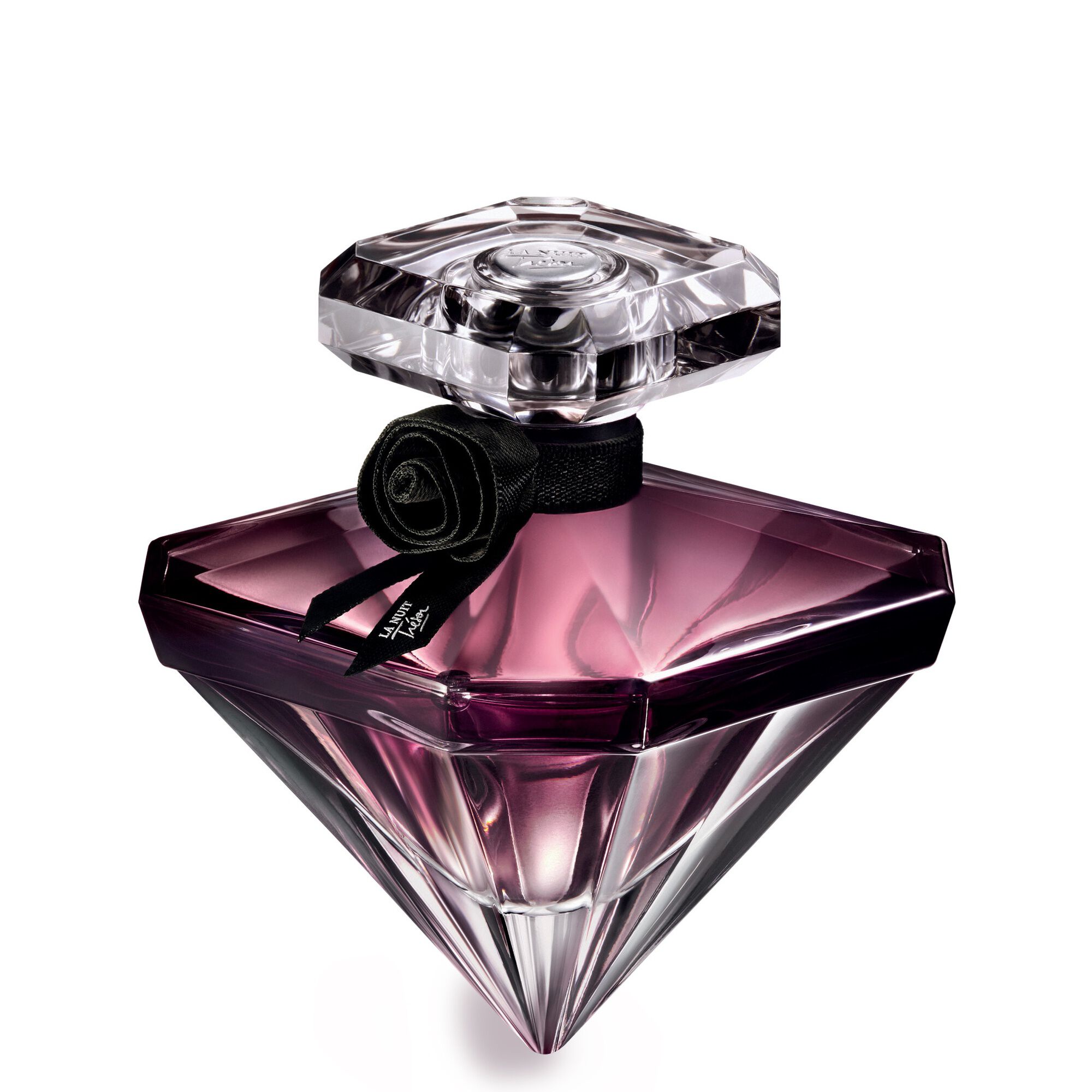
La Nuit Trésor EDP — Lancôme Vanilla + rose + raspberry: a romantic, nocturnal sweet. Vanilla here is carried by a fruity-floral accord, lighter than La Vie Est Belle. Ideal for autumn evenings.
Sweet vanilla: feminine or masculine?
Vanilla has no gender. It's a cultural construct, not a chemical reality. Angel by Mugler, created for women in 1992, was embraced by men in droves. A*Men, its masculine counterpart, rests on the same vanilla-sweet foundation. Guerlain Samsara, classified as feminine, works very well on all skin types. Serge Lutens Un Bois Vanille is unisex by nature. Maison Francis Kurkdjian Baccarat Rouge 540, factual mention, has become a reference of unisex amber vanilla in the contemporary luxury segment. Sweet vanilla belongs to everyone.
How to wear a sweet perfume?
Sweet perfume for which season?
Deep gourmands and vanillas are made for autumn and winter. The warmth of the skin amplifies sweet notes — in summer, an intense gourmand can quickly become overwhelming. Fruity-sweets, on the other hand, work very well in spring and summer: their lightness holds up better in the heat. Floral-sweet is a good option for mid-season, April-May or September-October, when evenings are still mild.
Sweet perfume for day or evening?
Context of use changes everything. During the day, at the office or while travelling, I recommend a fruity-sweet in eau de toilette or a light floral-sweet. In the evening, a gourmand in eau de parfum or a deep vanilla in extrait de parfum comes into its own. For a special occasion — a dinner, a dressed-up evening out — deep vanillas and woody-sweets are perfect: they create a memorable sillage without being overpowering in an enclosed space.
How much does a good sweet perfume cost?
The sweet family covers every budget. At entry level (€25-50), you'll find accessible fruity-sweets and vanillas that remain good quality. The premium segment (€50-100) is the densest: this is where Angel, La Vie Est Belle, Black Opium and Flowerbomb sit. Above €100, you enter niche and luxury territory — Serge Lutens, Maison Francis Kurkdjian — with higher concentrations and rarer raw materials. A good sweet perfume doesn't necessarily require a high budget: the family is generous at every price point.
Frequently asked questions about sweet perfumes
What are the best sweet perfumes?
Among the references that command consensus: Angel EDP by Mugler for intense gourmand, La Vie Est Belle by Lancôme for feminine vanilla-sweet, Black Opium by YSL for modern floral-sweet. The "best" mostly depends on your profile and the season.
What is a sweet perfume in perfumery?
A sweet perfume is a fragrance whose dominant olfactory note evokes softness — vanilla, caramel, honey, praline, sweet fruits. It's one of the most widely worn families in the world, born in 1992 with Angel by Mugler and the incorporation of ethylmaltol into a fine fragrance.
What is the difference between a sweet perfume and a gourmand perfume?
Gourmand is a subset of sweet, but more intense and more directly food-like — praline, cacao, almond. Sweet is broader: it includes soft vanillas, sweet fruities and honeyed florals. Every gourmand is sweet, but not every sweet is gourmand.
What are the best sweet perfumes for women?
La Vie Est Belle for enveloping vanilla-sweet, Angel EDP for intense gourmand, Black Opium for floral-sweet with character, Idôle Peach'n Roses for light fruity-sweet. Four profiles, four different occasions.
Which sweet perfume for men would you recommend?
A*Men by Mugler for an intense, assertive masculine woody-sweet, The Most Wanted by Azzaro for a more accessible, versatile woody-sweet. Both cover the masculine sweet spectrum, from intense to everyday wear.
Which sweet perfume lasts the longest?
Eau de parfum and extrait de parfum built on deep vanilla and gourmand patchouli generally last the longest — 8 to 12 hours on the skin. Angel EDP and Black Opium EDP are known for their excellent longevity. Fruity-sweets in eau de toilette last less long, 4 to 6 hours on average.
How was the first gourmand perfume in history born?
In 1992, perfumer Olivier Cresp incorporated ethylmaltol — a synthetic molecule smelling of candy floss — into Angel by Mugler. No perfumer had dared cross that line before him. The result shook up the codes of fine perfumery and founded the gourmand-sweet family as we know it today.
Which sweet perfume should I choose depending on the season?
Spring-summer: opt for a fruity-sweet or a light floral-sweet, in eau de toilette. Autumn-winter: deep vanilla-sweets and intense gourmands in eau de parfum are ideal. Idôle Peach'n Roses for the warmer months, La Vie Est Belle or Angel for colder ones.