The faces of men's fragrances: icons of seduction in a flacon
From Cary Grant to Pharrell Williams, discover how male ambassadors have shaped the history of men's fragrances and redefined seduction.
When a fragrance seeks a face
A fragrance does not exist solely in its juice. It exists in the collective imagination, carried by a silhouette, a look, a voice that we recognise before we have even read the name of the fragrance. The male ambassador is far more than an advertising representative: he embodies an olfactory promise, a certain idea of masculinity that the brand seeks to distil in the consumer's mind. This phenomenon, which may seem contemporary in the age of social media and billion-pound contracts, actually has roots that run much deeper into the history of perfumery.
For a long time, perfume houses preferred to let mystery work its magic alone, without imposing a face. The flacon, the typography, the name were enough to tell a story. Everything changed in the mid-twentieth century, when the advertising industry realised that a human face — especially that of a desirable or admired man — could exponentially multiply a fragrance's power of evocation.
The pioneers: when Hollywood entered the flacon
The first notable collaborations between perfumers and male personalities date back to the 1950s and 1960s, an era when Hollywood cinema dictated the canons of masculine elegance. Cary Grant, the archetype of the refined Anglo-Saxon gentleman, lent his image to several advertising initiatives without ever putting his name to a juice — the distinction between endorsement and creation had not yet been established. It was during this period that Rochas, then Hermès, began associating their men's fragrances with cultured, well-travelled men, masters of their own destiny.
The turning point came with the 1970s and the emergence of fragrance as a marker of assertive male identity. In 1973, Paco Rabanne launched its iconic Paco Rabanne pour Homme with campaigns featuring a free, sensual man, comfortable in his own body — a clear break from the sobriety of the classic bourgeois fougère. Men's fragrance advertising abandoned the formal suit for the bare torso, seeking its models among athletes and Mediterranean seducers.
The golden age of the male ambassador: from the 1990s to the 2000s
If the history of male fragrance ambassadors has a pivotal moment, it is without doubt the Obsession for Men campaign by Calvin Klein in 1985, which propelled an unknown young man named Mark Wahlberg — then still Marky Mark — to international fame. Herb Ritts' photography, the black-and-white bodies, the unsettling ambiguity between strength and vulnerability: a new visual grammar was born. It would go on to dominate the entire following decade.
The 1990s cemented the era of the male supermodel turned ambassador. Kate Moss and her male contemporaries — Marcus Schenkenberg, Tyson Beckford, Antonio Sabato Jr. — filled the pages of beauty magazines wearing the fragrances of the great houses. But it was Davidoff with its fragrance Cool Water, launched in 1988, that pushed the logic of the idealised man the furthest: the blue-eyed surfer, wet hair, the sea horizon — an image so powerful that it still defines the aesthetic of the aquatic men's fragrance today. Actor David Hasselhoff, and later sportsmen with Karl Lagerfeld as a surprise guest, followed one another within the German brand's universe.
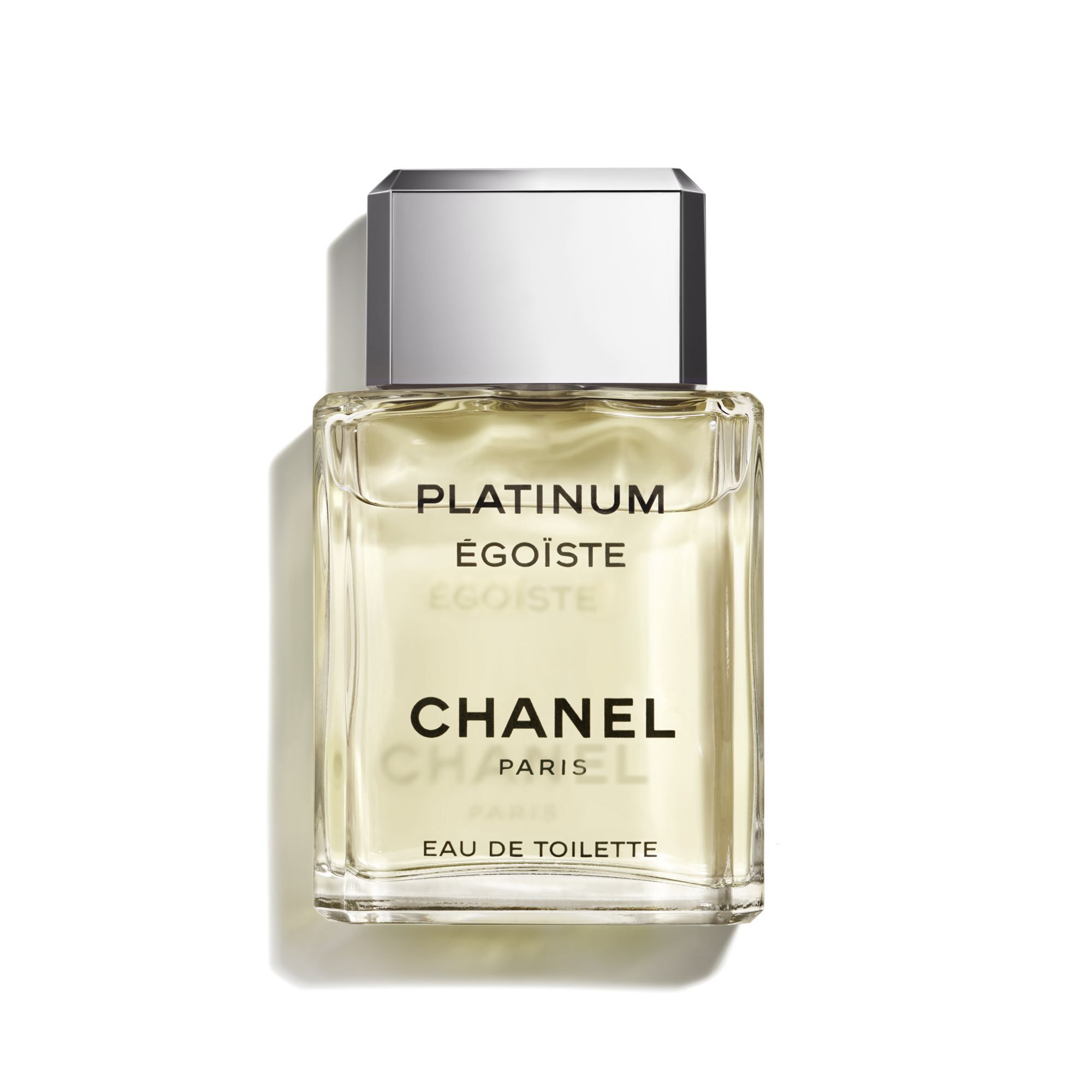
The decade closed with an unprecedented advertising event: in 1995, Chanel entrusted Brad Pitt with the Chanel No 5 campaign — but for a women's fragrance. This paradox reveals something essential: a male ambassador can perfectly embody female desire, and the houses do not hold back from using this. Egoïste by Chanel, launched in 1990, played on a different register, with highly theatrical campaigns in which the man is portrayed as capricious, almost tyrannical in his passions — here the ambassador fades behind the concept.
The turning point of the 2000s: sportsmen, actors and the globalisation of desire
The entry into the twenty-first century marked a spectacular diversification in the profiles chosen to embody men's fragrances. , reformulated in 2005 under the creative impetus of Hedi Slimane and the house's artistic direction, chose Jude Law — a British actor then at the peak of his career — to embody its vision of a man who was both sophisticated and gently melancholic. The collaboration lasted several years and helped establish the fragrance within the luxury segment of men's perfumery.
This was also the era in which sport became an inexhaustible reservoir of ambassadors. Armani, which had launched Acqua di Giò in 1996 without a defined ambassador, multiplied its collaborations with footballers and international sportsmen for its Armani Sport lines. Beckham — David, of course — became the most sought-after face in the world of men's fragrance between 2003 and 2010. His ability to embody athletic performance, committed fatherhood and urban style all at once made him an ideal ambassador for fragrances seeking to reach a broader male clientele.
The Thierry Mugler phenomenon with Angel Men — launched in 1996 but revitalised by bold campaigns in the 2000s — illustrates another trend: that of mystery rather than a familiar face. The advertisements relied on androgynous silhouettes, sculpted and anonymous bodies, letting the fragrance itself become the ambassador. This strategy, less common, reflects absolute confidence in the evocative power of the juice.
The contemporary era: the ambassador as cultural manifesto
Since the late 2010s, choosing a male ambassador for a fragrance has become an editorial act in its own right, charged with cultural and political meaning. Chanel caused a sensation in 2015 by announcing Pharrell Williams as ambassador for — the first hip-hop artist to represent a men's fragrance from a traditional haute couture house. This choice, far from insignificant, signalled the house's desire to broaden its community and acknowledge the influence of American urban culture on the contemporary definition of masculine refinement.
Dior followed a similar path with Johnny Depp for from 2015 — a choice that proved both commercially triumphant and ethically controversial during the trials that followed. This episode illustrates a risk inherent to the ambassador strategy: linking a fragrance's image to an individual means accepting that his personal life will reflect back onto the fragrance. Some houses have learned this lesson by diversifying their ambassadors or choosing personalities whose subtlety is a guarantee in itself.
Prada stands as a calculated exception with its fragrance Luna Rossa: for several years, the Italian house has relied on French skipper François Gabart and the world of competitive sailing to build a coherent brand universe, founded on performance and exploration rather than traditional celebrity. Here, the ambassador becomes an expert, a passionate practitioner, whose legitimacy within his field validates the fragrance's promise.
Tom Ford, whose campaigns for Oud Wood or Tobacco Vanille have always played on unabashed eroticism, long preferred the anonymity of models to the fame of celebrities — a choice that places desire at the forefront, without the personality of an actor or singer interfering with the projection the consumer makes. This approach, also found at Maison Margiela with Replica or at Byredo, corresponds to a certain idea of niche perfumery in which the juice takes precedence over image marketing.
Today, as men's perfumery frees itself from rigid categories — floral, powdery, sweet fragrances once reserved for women are now worn by men without hesitation — ambassadors are evolving in kind. Timothée Chalamet for has, since 2023, embodied a masculinity that is at once classic in its references and resolutely contemporary in its assured fluidity. The face chosen for a men's fragrance is no longer just a sales argument: it is a statement about what masculinity can and should be at a given moment in cultural history.